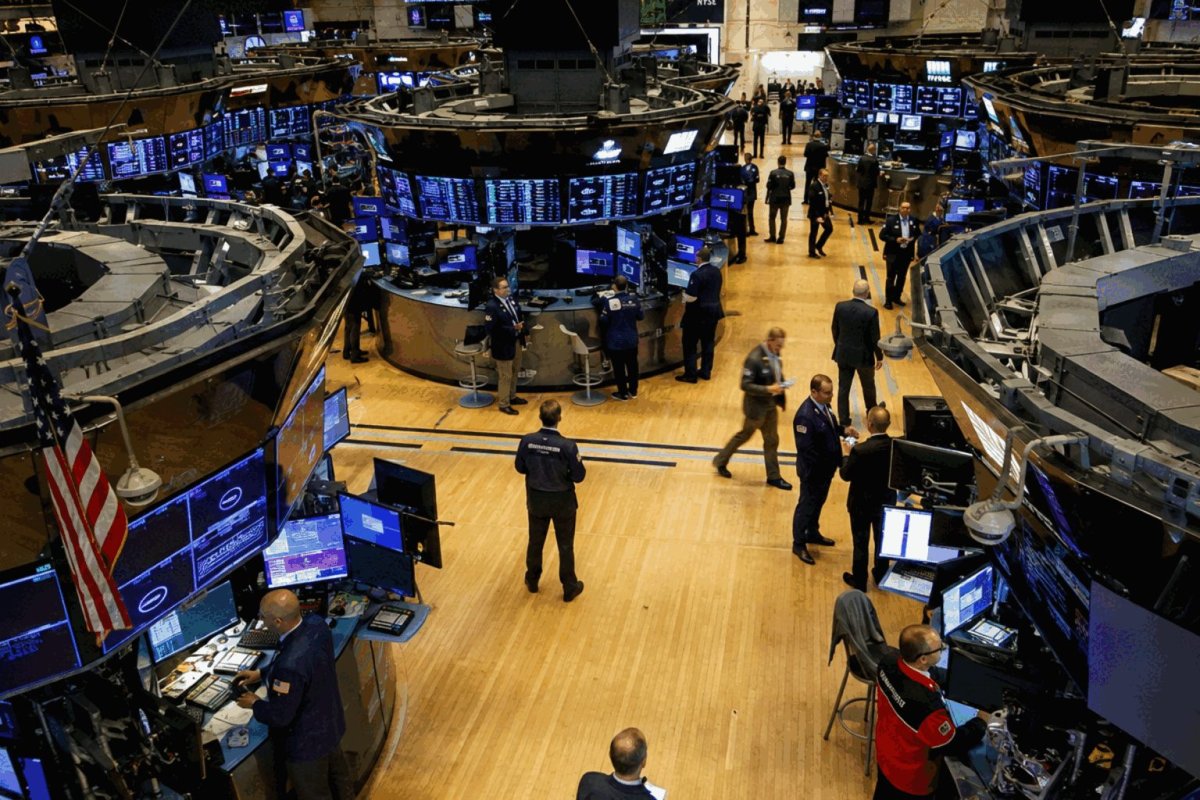
U.S. equities advanced Thursday afternoon, with the Nasdaq Composite climbing 0.89% to 26,824.18 as of 14:24 EDT. The tech-heavy index remains approximately 1.35% below its June intraday peak of 27,190.21, leaving a gap of roughly 366 points to close. The S&P 500, meanwhile, touched a new intraday record, while the Dow Jones Industrial Average lagged with a modest 0.21% gain.
Market Drivers
The Nasdaq's outperformance was driven by semiconductor stocks, a decline in Treasury yields, and softer oil prices. The 10-year Treasury yield fell about 7.3 basis points to 4.619%, easing valuation pressures on technology companies whose future earnings are discounted at lower rates. Brent crude dropped 2.54% to $86.72 per barrel, reducing near-term inflation concerns.
Traders now price in a 65% probability that the Federal Reserve will hold rates steady in September, up from 50% on Wednesday. This shift follows producer price data showing no change in July, as goods costs declined while services rose modestly. Combined with subdued consumer inflation figures, the data reinforced expectations of a patient Fed.
Leading and Lagging Stocks
Chip and storage names provided the strongest support. Sandisk Corporation (NASDAQ:SNDK) surged 15% after announcing a 50% cash flow target, while Micron Technology (NASDAQ:MU) advanced 5.6%. Microsoft (NASDAQ:MSFT), NVIDIA (NASDAQ:NVDA), and Apple (NASDAQ:AAPL) posted more moderate gains. The PHLX semiconductor index rose 1.8%, and S&P 500 information technology gained 0.9%.
However, not all tech stocks participated. Cisco Systems (NASDAQ:CSCO) fell roughly 9% despite guiding fiscal 2027 revenue above estimates, as investors focused on margin concerns. The market's reaction underscores a continued preference for profitable AI expansion over top-line growth alone.
Analyst Perspectives
Jefferies economist Mohit Kumar recommended an overweight position in AI, citing "no signs of slowdown in Capex" and robust infrastructure earnings. Citigroup's Scott Chronert kept the S&P 500 target at 8,100 while raising the 2026 EPS projection to $365, expecting further AI adoption. J.P. Morgan initiated coverage of Salesforce (NYSE:CRM) with an Overweight rating and a $250 price target, arguing that AI disruption concerns are overstated. Conversely, BTIG's Jonathan Krinsky adopted a cautious stance on tech momentum, warning of a potential 9%–10% pullback to a standard technical correction.
Technical Outlook
For the Nasdaq to confirm a breakout, it must close above 27,093.90 to set a record close, and surpass 27,190.21 to exceed the intraday high. Thursday's advance narrowed the gap, but risks remain if Treasury yields rebound, oil prices recover, or AI earnings disappoint. The index's cap-weighted structure means gains in large-cap and semiconductor names can lift the entire index even as smaller stocks lag.
As trading continues, all eyes are on whether the tech rally can sustain momentum and erase the remaining gap. The confluence of lower yields, soft commodity prices, and steady Fed expectations provides a supportive backdrop, but market participants remain alert to sudden shifts in sentiment.