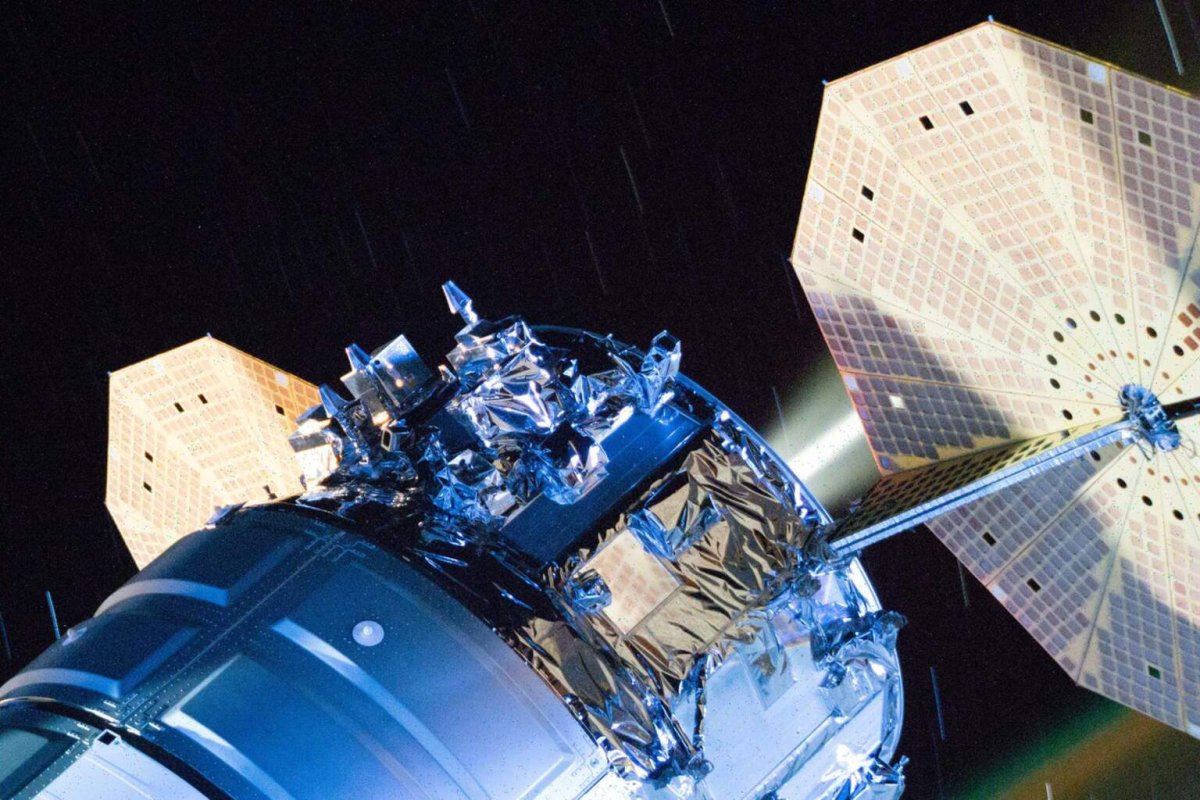
In a routine yet critical orbital adjustment, Northrop Grumman's Cygnus XL cargo spacecraft executed an 18-minute engine burn on September 25, raising the International Space Station's (ISS) orbit. The maneuver, confirmed by NASA, increased the station's apogee by 1.5 miles (2.4 kilometers) and its perigee by 0.8 mile (1.3 kilometers), placing the ISS in a 265.5-by-256.8-mile orbit. This reboost is a standard operational procedure, not a test, designed to align the station's trajectory for the upcoming arrival of SpaceX's Crew-13 mission.
Understanding the Orbital Mechanics
An orbital reboost is often misunderstood as a simple vertical lift, but in reality, it involves adding velocity along the spacecraft's flight path to increase orbital energy. This change raises the orbit on one side and alters the timing of the station's passes over specific points on Earth. The Cygnus XL, attached to the station's Unity module, used its gimbaled delta-velocity engine to perform the burn, allowing controllers to manage thrust direction while maintaining the combined vehicle's attitude.
The September 25 burn was specifically tailored to prepare the orbital geometry for Crew-13's rendezvous. NASA has targeted the launch for no earlier than October 1, though the mission was previously delayed due to an oxidizer leak in the Dragon spacecraft. The reboost removes one orbital constraint, but launch readiness, weather, and range conditions remain separate gates.
Reboost Data at a Glance
- Engine firing: 18 minutes
- Apogee gain: 1.5 miles (2.4 km)
- Perigee gain: 0.8 mile (1.3 km)
- Resulting apogee: 265.5 miles (427.3 km)
- Resulting perigee: 256.8 miles (413.3 km)
- Next milestone: Crew-13, no earlier than Oct. 1
The new orbit remains elliptical, with an 8.7-mile difference between its high and low points, which is normal for a working low-Earth orbit. Controllers can target one end of the orbit more than the other depending on mission needs, as evidenced by the previous Cygnus XL burn on August 27. That 20-minute, 43-second firing increased apogee by just 0.2 mile but raised perigee by 2.6 miles, preparing for the Progress 96 cargo flight. The varying results highlight how reboosts can shape an orbit for specific traffic plans.
The Role of a Cargo Ship as a Space Tug
Cygnus XL, berthed to Unity's Earth-facing port after being captured by Canadarm2 in April, effectively becomes a temporary space tug during such maneuvers. This role extends the value of the resupply mission, which delivered over 11,000 pounds of supplies and science experiments. Northrop Grumman highlights Cygnus XL's reboost capability as a key feature, allowing the spacecraft to contribute to station operations beyond cargo delivery.
Reboosts are essential because low Earth orbit is not a vacuum. Thin atmospheric particles continuously drag the station, causing it to lose roughly 100 meters of altitude per day, according to the European Space Agency. The actual rate varies with solar activity and station attitude. A higher orbit reduces immediate drag losses, but altitude maintenance is only part of the job. Controllers must also position the station where arriving vehicles expect it, a relationship called phasing.
Preparing for Crew-13 and Beyond
Crew Dragon's approach to the station involves a series of burns to raise and adjust its orbit, during which the station moves thousands of miles. The September 25 reboost ensures the station is on the planned trajectory for Crew-13's rendezvous. If the launch slips, controllers may perform additional phasing adjustments. The burn also contributes to routine altitude maintenance, counteracting drag.
NASA did not disclose propellant consumption or targeting error, making a full efficiency comparison with the August burn impossible. Duration alone is not a reliable metric, as thrust and spacecraft mass vary. The altitude gains are not permanent; drag will begin lowering the orbit again, and future visiting-vehicle needs may require further adjustments.
This Cygnus is the second XL vehicle to reach the station, following its April arrival on Northrop Grumman's 24th commercial resupply mission for NASA. The next public test will be Crew-13's launch and successful docking, which would confirm the entire phasing sequence. NASA plans to unberth Cygnus XL in October after loading it with disposal cargo.