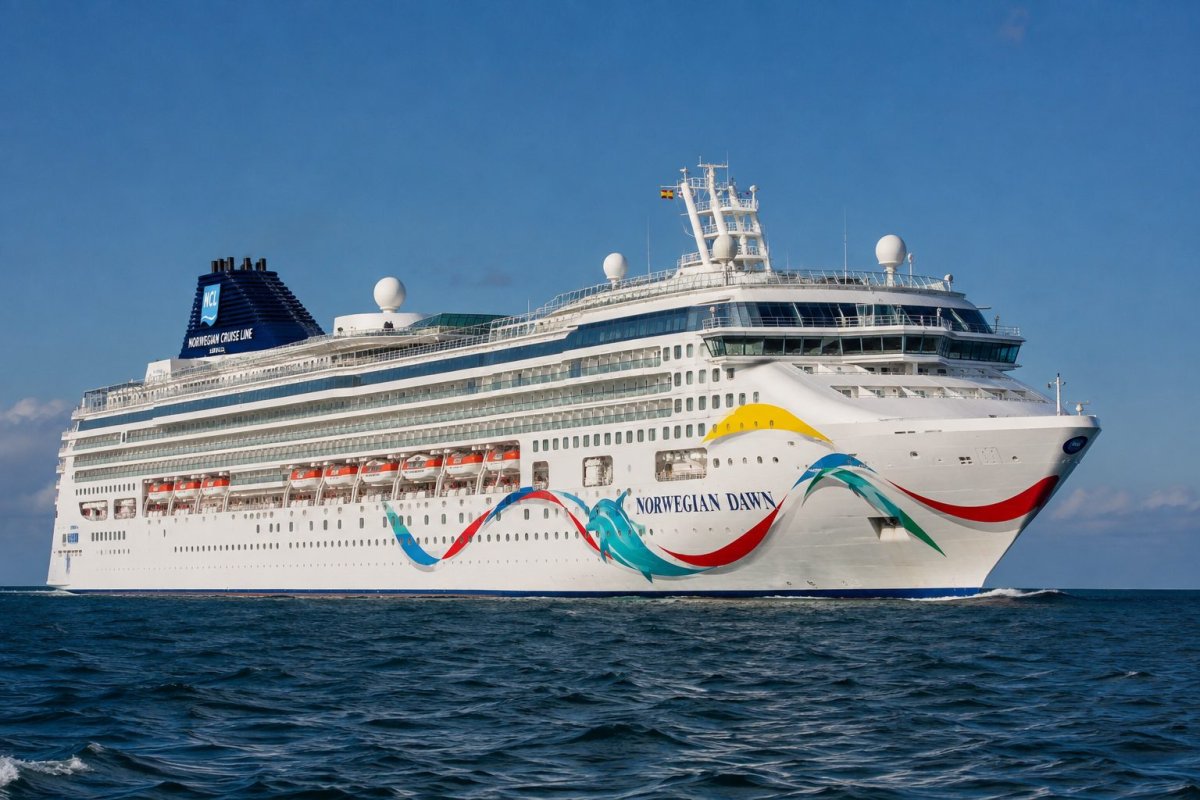
Norwegian Cruise Line Holdings Ltd. (NYSE: NCLH) experienced a turbulent week, with shares closing Friday at $17.24, a 9.3% decline from the prior Friday's close. The selloff was exacerbated by renewed media attention on a failed sanitation inspection of the Norwegian Dawn, a vessel that scored 84 out of 100 on a CDC inspection on March 29, 2026. The CDC considers any score of 85 or below as failing, and the Dawn is the only ship among 18 Norwegian-brand vessels to receive a failing grade.
The latest CDC listings show an average score of 96.4 across the Norwegian fleet, with 17 ships passing and nine achieving scores of 99 or 100. This suggests the issue is isolated to the Dawn rather than indicative of a systemic problem. Norwegian submitted a corrective action report following the inspection, and no CDC no-sail order or linked outbreak has been reported. However, the timing of the news, which resurfaced in reports starting August 18, coincided with a week of declines that saw the stock fall for five consecutive sessions before a modest 2.9% rebound on Friday.
While the sanitation headline grabbed attention, the underlying concerns are more fundamental. Norwegian's second-quarter results, released earlier in August, revealed a 4.9% increase in revenue to $2.6 billion, but adjusted EBITDA fell 4.1% to $666 million, and constant-currency net yield declined 2.6%. Management expects a steeper 8.9% yield drop in the third quarter, reflecting soft demand and company-specific execution pressures. The company's net leverage stood at 5.3 times, with $15.0 billion of total debt and $14.8 billion of net debt as of June 30.
Chief Executive John Chidsey acknowledged the challenges, stating that the company is "still in the early stages of our turnaround." Norwegian has identified an additional $100 million in annualized savings, though the benefits are expected to be limited this year. The distinction between a one-off ship issue and broader operational struggles is critical for investors. The Dawn represents just one of 35 ships across three brands, and a lasting booking slowdown would have far greater implications than a corrected inspection.
Wall Street's sentiment has turned cautious. The current analyst consensus includes 10 positive ratings, 17 holds, and no sell ratings, but the average price target of $20.68 implies just 20% upside from Friday's close. The range is wide, from $15 to $32, reflecting uncertainty about execution, pricing, and leverage. Recent rating changes include Mizuho downgrading the stock to hold with a target cut from $22 to $17, while UBS reiterated a hold with a target range of $17 to $20.
Investors will be watching for a reinspection of the Norwegian Dawn, though no date has been disclosed. A clean reinspection could help alleviate safety concerns, but the broader tests remain demand recovery and balance sheet discipline. The next known operational milestone is the September 4 opening of Great Tides Waterpark at Great Stirrup Cay, which could provide a boost to the company's private island experience.
Risks remain skewed to the downside if booking trends worsen or fuel costs rise. Conversely, a successful turnaround and firmer demand could narrow the discount at which the stock trades relative to its history. For now, the sanitation issue appears contained, but the financial metrics will continue to dictate the stock's trajectory.