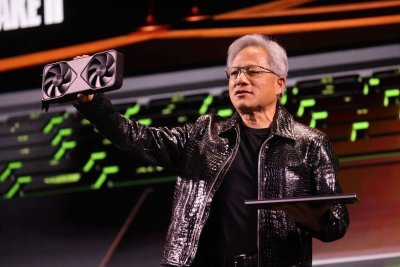
Amsterdam, May 2, 2026 — Nebius Group N.V. has announced a definitive agreement to acquire Eigen AI for approximately $643 million in a combination of cash and stock. The strategic move is aimed at strengthening the company's position in the rapidly evolving artificial intelligence inference market, where costs are escalating as demand for real-time AI applications surges.
Nebius shares rallied 11.8% to $154.49 in Wednesday trading following the news, reflecting investor optimism about the deal's potential to enhance the company's software capabilities and address what analysts describe as the next bottleneck in AI cloud infrastructure: inference efficiency.
Deal Details and Strategic Rationale
Under the terms of the agreement, Nebius will pay approximately $98 million in cash and issue roughly 3.8 million shares of Nebius common stock, valued based on the company's 30-day volume-weighted average price. The transaction is expected to close within the coming weeks, subject to customary closing conditions including antitrust review.
Eigen AI specializes in inference and post-training optimization software designed to reduce the cost and accelerate the deployment of AI models. Its technology will be integrated into Nebius Token Factory, the company's managed platform for launching and fine-tuning open-source AI models. This acquisition directly targets the inference segment of AI cloud computing, which handles real-time user queries and is becoming the primary cost driver in AI infrastructure.
According to Deloitte, inference is projected to account for approximately two-thirds of AI compute demand in 2026, up from nearly half in 2025. This shift underscores the growing importance of efficient inference solutions as enterprises scale their AI deployments.
Market Context and Competitive Landscape
The acquisition positions Nebius to compete more aggressively with AI-focused cloud providers such as CoreWeave, which offer clients access to graphics processing units (GPUs) for intensive AI workloads. In March, Reuters reported that U.S. technology companies have begun securing limited GPU and power resources from these so-called "neocloud" players, seeking alternatives to relying solely on their own data centers.
Nebius has secured significant commitments from major clients. In March, Meta Platforms signed a $12 billion agreement to purchase AI computing power from Nebius through 2027, with an option to add another $15 billion over the next five years. Additionally, Nvidia acquired an 8.3% stake in Nebius for $2 billion, according to Reuters. The company also maintains existing partnerships with Meta and Microsoft.
Financial Outlook and Investor Expectations
Nebius reported a net loss of $250 million on revenue of $228 million for the fourth quarter. The company has projected its annualized revenue run-rate could reach between $7 billion and $9 billion by the end of 2026. Investors will closely monitor the first-quarter earnings report, scheduled for release on May 13 before the market opens, followed by an investor call at 8:00 a.m. Eastern time. The report is expected to provide updates on demand trends, capital spending, and margin performance following a series of large AI infrastructure deals.
"We are operating in a capacity-scarcity world," said Roman Chernin, co-founder and chief business officer of Nebius, commenting on the market dynamics driving the acquisition. Ryan Hanrui Wang, co-founder and CEO of Eigen AI, added that the combined team plans to "push the boundaries of inference performance."
Integration and Talent Acquisition
Eigen AI's team, which includes researchers from MIT's HAN Lab, will bolster Nebius's engineering and research and development capabilities in the Bay Area. The acquisition also brings expertise in post-training optimization, which encompasses fine-tuning, accuracy improvements, speed enhancements, and cost reduction measures applied after a model's initial development.
Risks and Forward-Looking Statements
Nebius cautioned that forward-looking statements related to the Eigen AI acquisition depend on successful closing of the transaction, integration of the team, retention of existing clients, and access to sufficient growth capital. Potential risks include delays in antitrust approval or failure of Eigen's technology to deliver anticipated cost savings, which could affect projected upside.
With this acquisition, Nebius is shifting its narrative from pure capacity expansion to efficiency enhancement. The investment in software that can extract greater performance from each chip represents a strategic bet that investors will be watching closely in the quarters ahead.