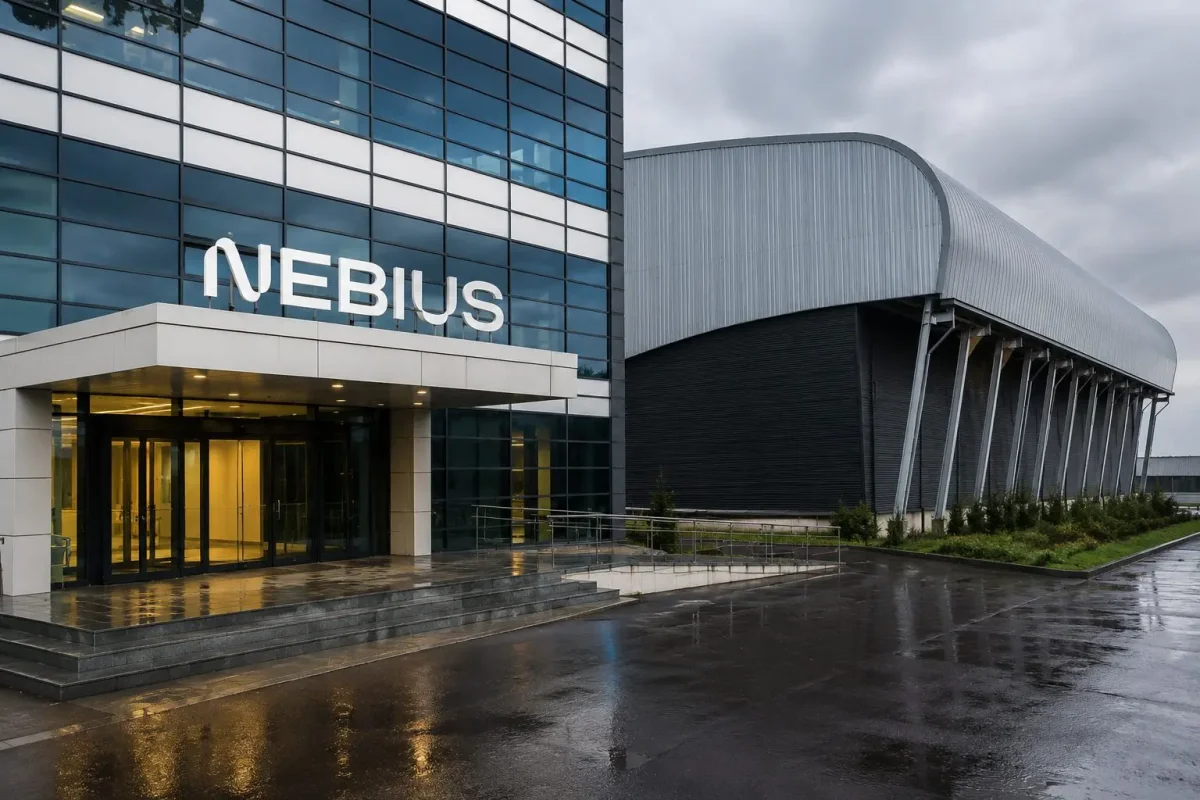
Nebius Group N.V. (NASDAQ:NBIS) faced a sharp selloff after reports emerged that Meta Platforms (NASDAQ:META) is planning to enter the cloud computing space, potentially competing with its own customers. The stock closed at $215.62 on July 2, down 5.92%, with after-hours trading at $215.89. Trading volume surged to 24.9 million shares on July 2 alone, representing 140% of the 65-day average.
The broader market also slipped, with the Nasdaq Composite falling 0.8% on July 2, though it remained up 2.1% for the week. The S&P 500 was unchanged on the day but added 1.8% for the week. Nebius shares have declined 10.27% over the past five sessions, erasing some of the year's substantial gains.
Volume Analysis Highlights Investor Concern
According to StockAnalysis data, Nebius saw 30.18 million shares traded on July 1 and 24.65 million on July 2, for a two-day total of 54.83 million shares. This represents approximately 24.9% of the company's 220.41 million Class A shares outstanding as of March 31. The heavy turnover underscores the market's reaction to the Meta news, though the data does not reveal the direction of trades.
The selloff was triggered by a Reuters report, citing Bloomberg News, that Meta is developing a cloud business to sell excess AI computing capacity. Reuters could not independently verify the report, and Meta declined to comment. CoreWeave (NASDAQ:CRWV) also fell 10.8% on the same day, reflecting broader sector anxiety.
Contract Structure Adds Complexity
Nebius's March agreement with Meta carries $12 billion in committed capacity over five years, starting in early 2027. However, an additional $15 billion of potential revenue is tied to "extra available capacity" that Nebius plans to sell to other AI-cloud clients first, with Meta taking only what remains. This structure introduces significant uncertainty, as it depends on both Nebius's ability to attract other customers and Meta's eventual demand.
"Those companies like CoreWeave and Nebius depend on Meta for growth, and Meta may just move on without them," said Gil Luria, managing director at D.A. Davidson, in comments to Reuters. Meta CEO Mark Zuckerberg acknowledged at the May shareholder meeting that cloud computing is "definitely on the table."
Microsoft Contract Provides Counterweight
Nebius also has a significant contract with Microsoft (NASDAQ:MSFT), valued at up to $19.4 billion over five years, with a base of $17.4 billion. Hamed Khorsand of BWS Financial told Reuters that the Microsoft deal brings "unprecedented clarity" to Nebius's long-term revenue outlook. Combined, the Meta and Microsoft contracts represent up to $46.4 billion in potential revenue, equivalent to 86% of Nebius's $54.26 billion market capitalization.
Despite the recent pullback, Nebius shares remain up 157.6% year-to-date and 329.1% over the past twelve months. The company's first-quarter revenue reached $399.0 million, up 684% year-over-year, with adjusted EBITDA of $129.5 million. Capital expenditures on property, equipment, and intangible assets totaled $2.47 billion. Nebius also secured up to 1.2 gigawatts of power and land for an AI factory in Pennsylvania.
Outlook and Key Levels
No investor events are currently scheduled, according to Nebius's website. Key price levels to watch include the July 2 low of $207.30, the previous close of $229.18, and the June 26 finish of $240.30. The stock's ability to hold above these levels will be critical as the market digests the implications of Meta's cloud ambitions.