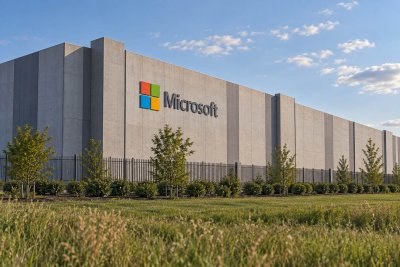
Nebius Group (NASDAQ:NBIS) unveiled its latest software release, Nebius AI Cloud 3.6, on Wednesday, adding an infrastructure-control agent, enhanced security features, and improved storage capabilities for production AI workloads. However, the Amsterdam-based company's product news was overshadowed by the persistent question that has captured investor attention: how quickly can Nebius convert its contracted power into operational AI capacity at its Vineland, New Jersey facility?
The Vineland site is central to Nebius's five-year, $17.4 billion AI infrastructure deal with Microsoft (NASDAQ:MSFT). The agreement is tied to capacity at this specific location, making the site's progress a critical factor for the company's valuation. A June 23 Seeking Alpha analysis highlighted that Nebius has shifted from a demand story to a delivery story, with the focus now on connected power rather than contracted power.
Market Performance and Valuation
Nebius closed Wednesday at $259.66, while CoreWeave (NASDAQ:CRWV) ended the session at $100.88. Over the past year, Nebius has dramatically outperformed its competitor, posting a 455.9% gain compared to CoreWeave's 35.5% decline. Both stocks carry a Zacks Rank #3 (Hold) rating. Nebius currently trades at 9.91 times book value, closely aligned with CoreWeave's 10.36 times book multiple.
Based on Wednesday's close and Nebius's first-quarter share count, the company's equity value stands at approximately $66 billion. With contracted capacity exceeding 3.5 GW and a target of over 4 GW by year-end, Nebius is valued at roughly $19 billion per contracted GW, or about $16.5 billion based on the year-end target.
CoreWeave, meanwhile, reported more than 3.5 GW of contracted power and over 1 GW active in the first quarter. At its most recent valuation of approximately $53.2 billion, CoreWeave trades at about $15 billion per contracted GW. CEO Michael Intrator described the first quarter as the "strongest bookings quarter" for the company and noted that CoreWeave had surpassed 1 GW of active power.
Financials and Capital Expenditure
Nebius reported first-quarter revenue of $399 million, a significant increase from $50.9 million in the same period last year. Spending on property, equipment, and intangibles surged to $2.47 billion. In May, Reuters reported that Nebius raised its 2026 capital expenditure outlook to between $20 billion and $25 billion. CEO Arkady Volozh commented that "several customers are competing for every GPU."
Power Infrastructure and Local Opposition
Power availability remains a key constraint for Nebius. In May, the company announced a partnership with Bloom Energy (NYSE:BE) to deploy Bloom fuel cells at its first U.S. site, replacing combustion-based technology. The plan calls for 328 MW of installed capacity to go live this year. "Power remains a key constraint," said Nebius infrastructure chief Andrey Korolenko.
Local opposition, however, continues to pose challenges. In March, WHYY reported that approximately 100 people gathered in Vineland to protest the AI data center, raising concerns about noise, emissions, power usage, and water consumption. Developer DataOne has promised that the center will create over 200 full-time jobs and become one of Vineland's top taxpayers.
Regulatory Risks
New Jersey policy adds another layer of risk to Nebius's valuation. One proposed bill would impose tariffs on data centers planning at least 100 MW of monthly demand, designed to protect other ratepayers. These customers would be required to backstop 85% of their service request for at least 10 years after service begins.
Demand Outlook
For investors, demand is not in doubt. Meta Platforms (NASDAQ:META) has committed to purchasing $12 billion in Nebius capacity by 2027, with an additional $15 billion available over five years if not sold elsewhere. The critical question remains the cost—in capital, permits, local approval, and power—to convert those contracts into actual revenue.