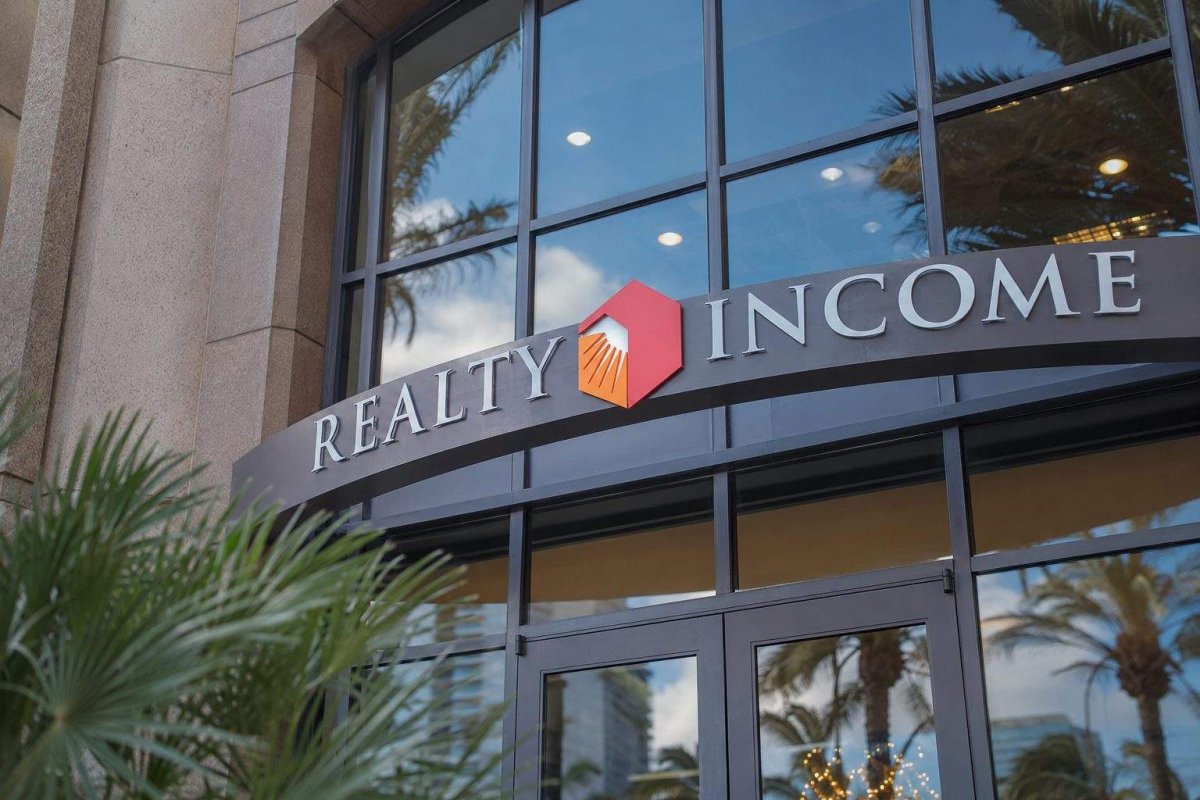
Realty Income (NYSE: O) saw its shares close at $62.51 on Friday, reflecting a 2.13% weekly decline even as the broader S&P 500 advanced 3.6%. The stock's performance underscores investor focus on deployment economics rather than just interest rate movements, as the company navigates a shifting capital landscape.
Funding Strategy Shift
The company's forward ATM shares, still unsettled, carry an initial average price of $60.34, implying an AFFO yield of 7.37%. This compares to a 6.4% yield on second-quarter property acquisitions, leaving a negative spread of 97 basis points. At Friday's closing price, the implied AFFO yield tightens to 7.11%, reducing the spread to 71 basis points. These figures highlight the cost-of-equity challenges Realty Income faces as it funds growth.
Private capital has become a dominant funding source. According to company slides, 73% of equity raised in 2026 through June came from private channels, with Realty Income's pro-rata share accounting for 72.7% of total property purchases. The remainder was funded by external capital. This pivot is a direct response to the negative acquisition spreads, which make traditional common equity issuance less attractive.
Portfolio and Earnings Highlights
In the second quarter, Realty Income deployed $2.568 billion in total volume, with real estate purchases of $1.804 billion (70.2% of total) yielding 6.4%, development projects of $135.4 million (5.3%) yielding 7.6%, and additional investments of $628.7 million (24.5%) yielding 9.2%. The blended initial cash yield reached 7.3%, boosted by higher-yielding credit and other investments.
CEO Sumit Roy emphasized the strength of the company's diversified platform. Q2 revenue rose 9.7% year-over-year to $1.548 billion, while AFFO per share increased 3.8% to $1.09. Occupancy improved to 98.8%, and rent recapture stood at 102.7%. Same-store rental revenue grew 1.2%, and net debt was 5.4 times annualized adjusted EBITDAre.
Guidance and Outlook
Realty Income raised its 2026 AFFO guidance to $4.44–$4.45 per share, up from the prior $4.41–$4.44, and increased investment volume guidance to $10.0 billion from $9.5 billion. However, net-income guidance was lowered to $1.59–$1.60 per share from $1.60–$1.63, reflecting higher depreciation and other adjustments.
The company's partnership with Apollo Global Management (NYSE: APO) aims for a 6.875% unlevered return, which Realty Income views as replicable. In July, the company issued euro notes with an effective yield of 3.716%, providing a cheaper funding source than common equity.
Analyst Reactions and Valuation
RBC Capital Markets reduced its price target on Friday to $70 from $71, maintaining an Outperform rating, implying 12.0% upside. Barclays (LON: BARC) holds an Equalweight rating with a $67 target, while Jefferies (NYSE: JEF) rates it Buy with a $71 target. Wells Fargo (NYSE: WFC) has an Equalweight rating and a $65 target. The consensus is Overweight, with a mean price target of $68.11, suggesting 9.0% upside.
Realty Income's dividend yield of 5.20% is close to NNN REIT's 5.29%, and its year-to-date gain of 10.89% lags NNN but surpasses Agree Realty and Essential Properties. The company's market cap of $59.15 billion is 6.3 times larger than Agree Realty's.
Market Context and Risks
Ten-year Treasury yields slipped to approximately 4.65% following an unexpected drop in payrolls, yet Realty Income's subdued reaction suggests investors are more focused on deployment economics. Upcoming inflation data, including July CPI on Wednesday and PPI on Thursday, will be closely watched for their impact on funding costs.
Risks include execution and counterparty risks from credit and development investments, higher inflation raising borrowing costs, tenant failures, currency volatility, and subpar joint-venture outcomes. These factors could dampen AFFO growth despite the company's strategic pivot toward private capital.