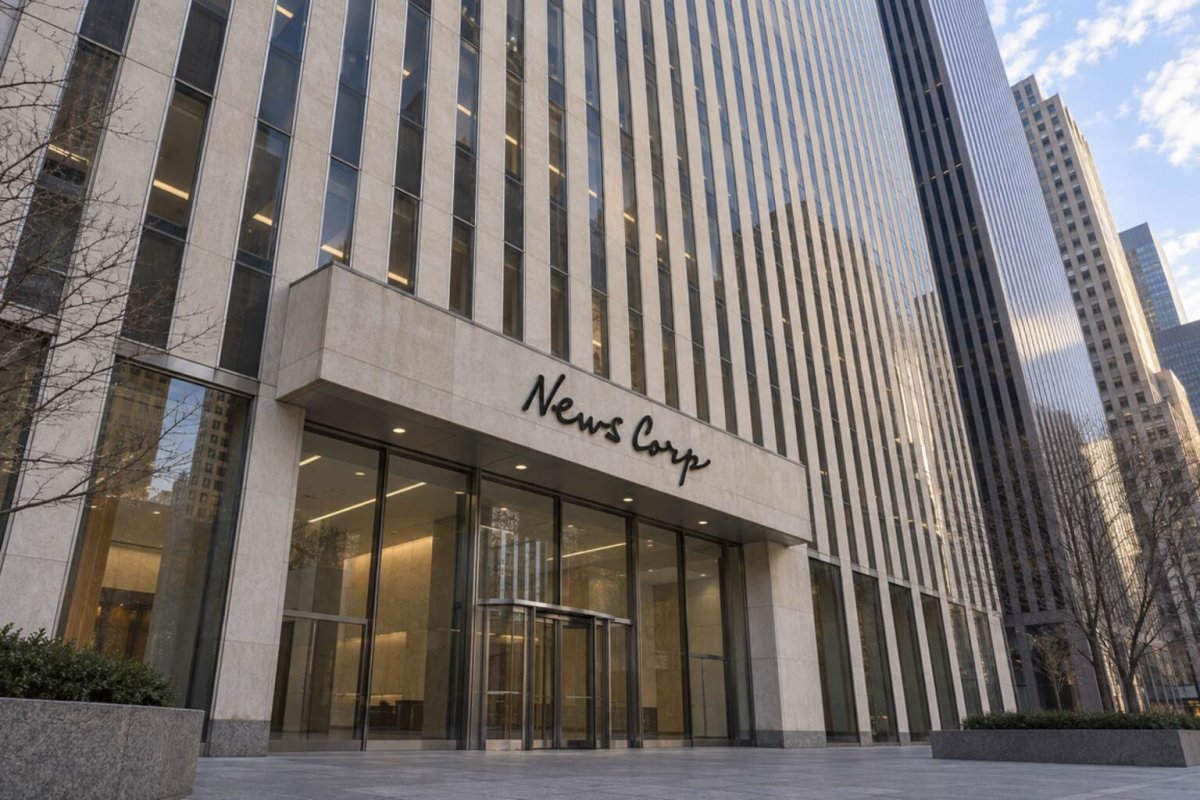
News Corp (NASDAQ: NWSA, NWS) has provided a detailed update on its capital return strategy, revealing that it has utilized approximately $471.0 million of its $1 billion share repurchase authorization for fiscal 2025. This leaves roughly $529.0 million still available for future buybacks, a significant amount that could influence shareholder value in the coming months.
The disclosure, filed on September 11, offers a granular look at the company's buyback activity. On September 10 alone, News Corp repurchased 58,482 Class A shares for $1.71 million and 25,457 Class B shares for $833,381. The daily transaction reports indicate that Class A shares were bought at prices ranging from $29.08 to $29.63, while Class B shares were acquired between $32.50 and $33.02.
One of the most notable aspects of the buyback program is that the cumulative average purchase price for both share classes remains below the market closing prices on September 11. According to calculations based on News Corp's ASX notifications, the implied average price paid for Class A shares is $26.01, compared to a closing price of $29.44, representing a 13.2% discount. For Class B shares, the average purchase price is $29.49 versus a closing price of $32.71, a 10.9% premium to the market. This suggests that management has been acquiring shares at levels that are accretive to existing shareholders.
The remaining authorization is substantial relative to the company's market capitalization. With approximately 501.3 million shares outstanding across both classes, News Corp's equity value is estimated at around $15.2 billion based on Friday's closing prices. The $529 million in remaining buyback capacity represents about 3.5% of that value, which is enough to have a meaningful impact on per-share metrics, though it is unlikely to eliminate the conglomerate discount that has historically weighed on the stock.
From a cash flow perspective, the unused buyback amount is equivalent to roughly 65% of News Corp's fiscal 2026 free cash flow, which totaled $811 million, a 42% increase year-over-year. The company has demonstrated its willingness to deploy capital aggressively, with total buybacks accelerating to $643 million during fiscal 2026. While the remaining authorization is an option rather than a commitment, the company's track record suggests it will continue to use the program as a tool to enhance shareholder value.
It is important to note that buying shares below the subsequent market price does not create a tradable gain for the company, as repurchased shares are retired rather than held as an asset. However, it does mean that News Corp has reduced its share count at a lower cost than the market currently values those shares. If earnings and cash flow remain stable, the reduced share count should increase each remaining holder's claim on future profits. Investors should monitor the fully diluted share count in upcoming earnings reports to gauge the impact of the buyback, as new issuance and compensation plans could offset some of the dilution reduction.
The primary criticism of buybacks is the opportunity cost. A repurchase is only beneficial if the shares are bought below intrinsic value and if the cash is not better deployed elsewhere. News Corp's fiscal 2026 performance was robust, with revenue rising 7% to $9.03 billion and segment EBITDA increasing 15% to $1.63 billion. However, the company's portfolio remains exposed to cyclical factors such as property listings, advertising spending, currency fluctuations, and publishing cycles. A downturn in any of these areas could make the current pace of buybacks more challenging to sustain.
There is also a governance consideration. News Corp's 2026 annual filing warns that the buyback program has increased, and could further increase, the percentage of Class B stock held by LGC Holdco, the entity controlled by the Murdoch family. While retiring shares may improve per-share economics, it does not alter the dual-class structure that some investors view as a discount factor.
Looking ahead, the key metrics to watch are the cumulative average purchase price, the diluted share count, and free cash flow generation. If News Corp continues to buy shares below market prices while maintaining its current cash flow levels, the buyback could provide meaningful support to per-share value. Conversely, if the stock price outpaces fundamentals or cash conversion weakens, the remaining $529 million should be viewed as financial flexibility rather than value already delivered.