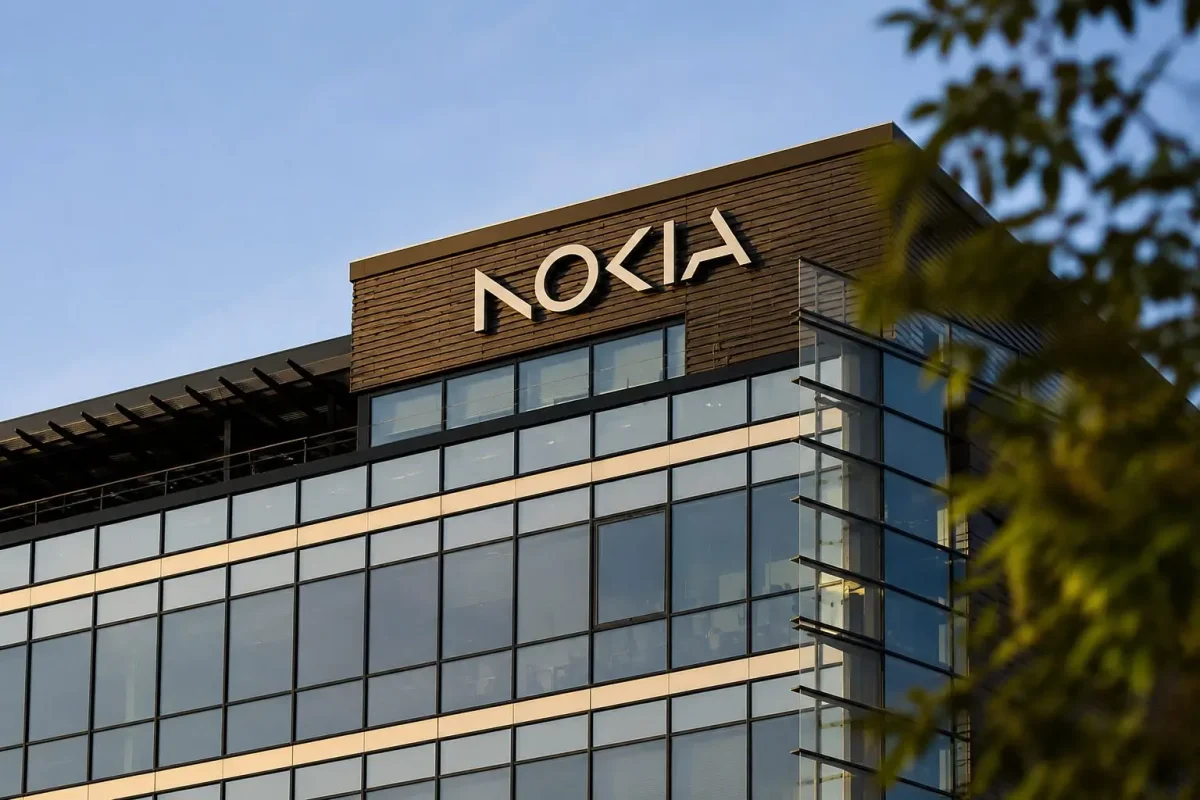
Nokia's stock experienced a significant uptick on Monday, with shares climbing 4.2% in Helsinki to 12.28 euros and its American depositary receipts gaining 7.0% to $14.43 in New York. The rally followed the announcement of an expanded artificial intelligence network-software partnership with Google Cloud, marking a strategic shift for the Finnish telecommunications company as it positions itself within the AI infrastructure ecosystem.
The collaboration aims to integrate Google's Gemini AI models into Nokia's Assurance Center, a platform used by telecom operators to monitor network issues and detect outages. By introducing AI agents capable of planning and executing complex tasks with minimal human input, the partnership seeks to enhance network automation and efficiency. These agents will address critical areas such as routing, event triage, metric selection, anomaly detection, and fault resolution.
Nokia's move comes at a time when investors are increasingly viewing the company beyond its traditional role as a telecom equipment provider. The partnership with Google Cloud underscores Nokia's ambition to become a key player in AI infrastructure, a sector that has seen surging demand. Vivek Jaiswal, Nokia's senior vice president for Autonomous Networks, emphasized that the AI era demands a 'programmable, AI-native' network, while Sridhar Gollapudi, head of Google Cloud's global telco market, noted that agentic AI is 'moving operators away from rigid templates.'
The rollout timeline for the new AI agents is staggered. Router and event-triage agents are currently operational, but the software-as-a-service (SaaS) launch on Google Cloud Marketplace is scheduled for September. Additional agents are expected to be released in late 2026 and into 2027. Live demonstrations are planned at the DTW Ignite event in Copenhagen from June 23 to June 25.
This announcement aligns with Nokia's broader financial performance. In April, the company reported a 49% year-over-year increase in net sales to AI and cloud customers for the first quarter, alongside 1 billion euros in AI and cloud orders. Comparable operating profit rose 54% to 281 million euros, surpassing analyst expectations. CEO Justin Hotard indicated that the company is 'tracking somewhat above the mid-point' of its full-year profit forecast of 2.0 billion to 2.5 billion euros. Nokia also revised its Network Infrastructure sales growth target for 2026 to 12%-14%, driven by demand for optical and IP networks.
Despite the positive momentum, the rally leaves little room for missteps. Analysts have expressed caution about the high expectations surrounding AI investments. Atte Riikola of Inderes noted that 'market expectations were higher' after previous share surges, while Paolo Pescatore of PP Foresight flagged 'significant concerns surrounding AI,' citing uncertain returns. Delays in Google Cloud's rollout, reduced carrier spending, or a slowdown in AI orders could expose Nokia's stock to downside risks.
Competition remains fierce, particularly from Ericsson, which recently announced a leadership change as CEO Borje Ekholm plans to step down in September. Per Narvinger, the incoming CEO, described the current period as a 'pivotal time' for the sector, with AI driving demand for faster connectivity. Nokia's long-term strategy includes a target of achieving annual comparable operating profit between 2.7 billion and 3.2 billion euros by 2028, a plan that gained momentum after Nvidia invested $1 billion for a 2.9% stake in the company last year.
Investors will be closely watching Nokia's second-quarter and first-half results, scheduled for release on July 23, to assess whether the Google Cloud partnership, Nvidia collaboration, and optical-network demand can translate into sustainable earnings growth beyond the current AI-driven stock price appreciation.