Nvidia Corp. heads into Monday's trading session with its valuation under intense scrutiny after a brutal selloff erased roughly $300 billion from its market capitalization on Friday. The chipmaker's stock hovered near $205.10 in pre-market indications, keeping its market value around $5 trillion, as investors weigh whether a flurry of new AI infrastructure agreements in South Korea can offset mounting macroeconomic headwinds and sector-wide volatility.
Market Context and Friday's Rout
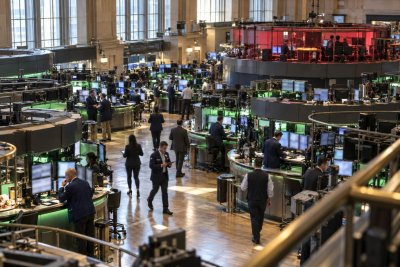
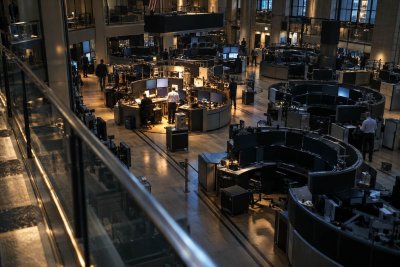
Friday's decline was part of a broader semiconductor bloodbath that wiped out approximately $1.3 trillion in U.S.-traded chip stock value. The Philadelphia semiconductor index suffered its steepest one-day drop since March 2020, plunging over 4% as stronger-than-expected U.S. jobs data reignited fears of further Federal Reserve rate hikes. The Nasdaq Composite fell 4.18%, while the S&P 500 lost 2.64%. Other major chip stocks including Micron, AMD, and Broadcom also slid sharply, signaling a sector-wide shift rather than company-specific trouble for Nvidia.
South Korean AI Partnerships
Despite the market turmoil, Nvidia announced a series of AI infrastructure agreements with major South Korean companies over the weekend. Partners include SK Hynix, SK Telecom, Naver, Doosan, LG Group, and Hyundai Motor, though no specific dollar figures were disclosed. SK Hynix and Nvidia signed a multi-year technology pact to collaborate on advanced memory solutions for AI data centers. Nvidia CEO Jensen Huang described SK Hynix as the company's “largest memory partner” and, commenting on the selloff, told reporters that “the future of AI is very bright.”
LG Group separately announced it will expand projects with Nvidia in what it calls “Physical AI,” covering AI infrastructure, robotics, vehicles, and industrial systems, after LG Chairman and CEO Kwang Mo Koo met with Huang in Seoul.
Asian Market Reaction
South Korea's KOSPI index fell 8.3% on Monday, triggering circuit breakers to halt selling. Samsung Electronics lost 10.2%, SK Hynix slid 7.7%, while Naver jumped 9.2% following its Nvidia deal. “Increased volatility is inevitable,” said Han Ji-young at Kiwoom Securities, though he maintained that semiconductor earnings momentum remains strong.
Analyst Perspectives
Some market participants view Friday's selloff as a necessary shakeout. Wells Fargo chief equity strategist Ohsung Kwon described semiconductors as “way overbought,” but emphasized he does not believe it is “the end of the semi bull market.” Meanwhile, Third Point CEO Dan Loeb pushed back on valuation concerns, calling Nvidia “absolutely” undervalued relative to its future earnings potential on the “All-In” podcast.
Fundamentals Remain Strong
Nvidia's financial performance continues to attract buyers. First-quarter fiscal 2027 revenue reached $81.6 billion, up 85% year-over-year, with Data Center sales alone contributing $75.2 billion. The company is guiding to approximately $91.0 billion in revenue for the second quarter, a forecast that assumes no Data Center compute revenue from China.
Risks Ahead
Despite the strong fundamentals, Nvidia faces significant risks. Rising bond yields, difficulty for customers in monetizing AI spending, and potential tightening of U.S. chip export rules to China could keep valuation under pressure. The U.S. Commerce Department last week moved to close a loophole regarding advanced AI chip shipments to Chinese firms’ overseas units. Eric Lynch at Suncoast Equity Management noted that Friday's Nasdaq drop also reflected discomfort that large AI costs are not “translating into returns.”
The Monday Test
Nvidia now faces a straightforward test: can its expanded supply agreements and recent customer wins provide stability after the AI trade was forced into a reset? Traders will get the first read once regular trading begins at 9:30 a.m. ET.