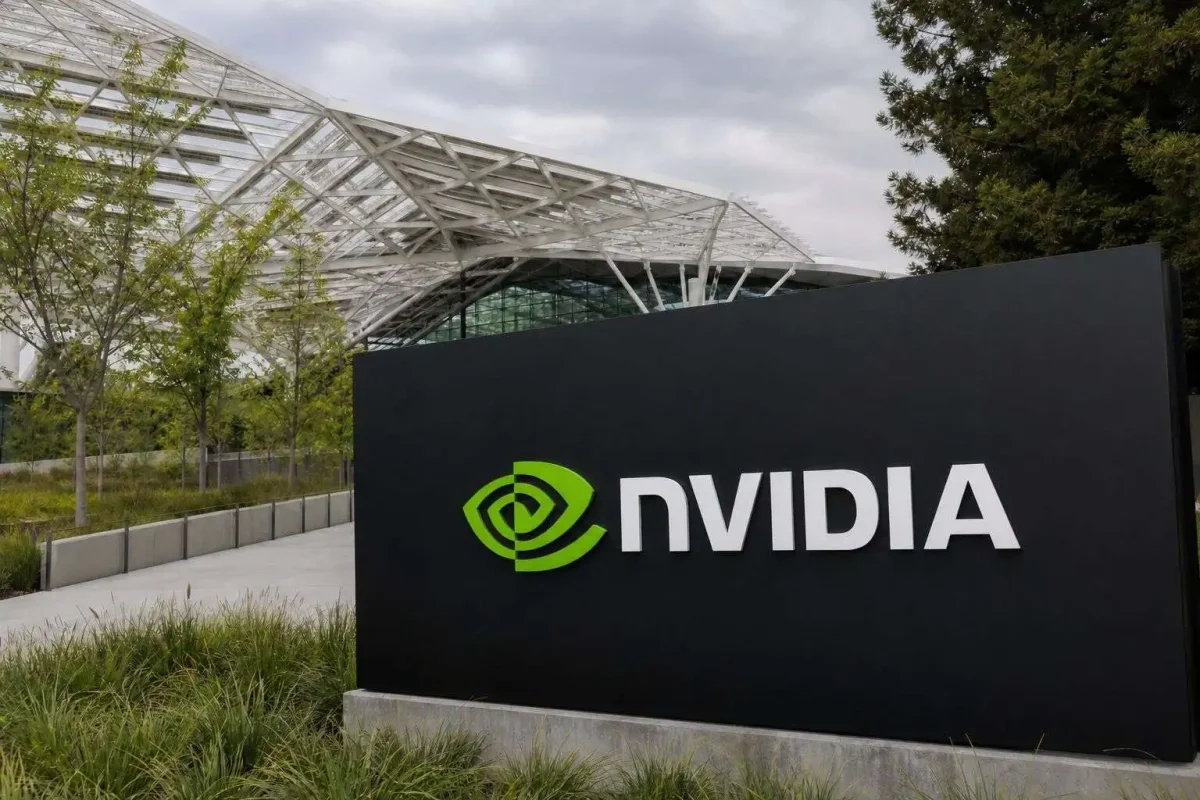
Nvidia Corporation (NASDAQ: NVDA) experienced a 1.3% decline in its stock price on Tuesday, September 1, 2026, with shares trading at $217.63 by 10:13 a.m. EDT. The drop erased approximately $69.2 billion in implied equity value, based on the company's 24.1 billion shares outstanding. This single-session loss exceeded Nvidia's latest quarterly net income by 16%, highlighting the immense scale of the company's market capitalization.
The decline was part of a broader sell-off in technology stocks, driven by rising bond yields. The 10-year Treasury yield reached 4.77%, its highest level in recent weeks, as oil-driven inflation concerns pushed yields higher. Higher discount rates reduce the present value of future earnings, making growth-oriented technology stocks less attractive to investors. The Nasdaq Composite fell 0.96%, while the S&P 500 lost 0.55%.
Nvidia's peers in the semiconductor sector also faced pressure. Advanced Micro Devices, Inc. (NASDAQ: AMD) dropped 3.30%, and Micron Technology, Inc. (NASDAQ: MU) declined 2.40%. Broadcom Inc. (NASDAQ: AVGO) slipped 1.50%. The sector-wide decline underscores the sensitivity of AI-chip stocks to interest rate movements, as these companies trade on expectations of robust future growth.
Despite the market turbulence, Nvidia's fundamentals remain strong. The company reported quarterly revenue of $96.2 billion, a 106% increase year-over-year, with data-center sales reaching $89.0 billion, or 92.5% of total revenue. GAAP gross margin held steady at 75.0%. Management guided for third-quarter revenue of $108 billion, plus or minus 2%, and expects a gross margin of 74.0%, plus or minus 50 basis points. The guidance assumes no revenue from China data-center compute sales, reflecting ongoing export controls.
CEO Jensen Huang emphasized the growing importance of compute in the AI era, stating, "Now, compute is revenue." The company's manufacturing and supply commitments surged to $279 billion from $119 billion in the previous quarter, indicating aggressive expansion to meet demand. However, analysts caution that rising memory costs could squeeze margins, and risks such as export controls, customer concentration, and power shortages could delay deployments.
The valuation hurdle for Nvidia is rising as revenue growth accelerates. With a market cap exceeding $5 trillion, even modest percentage moves translate into massive dollar swings. A one-point change in Nvidia's stock price equals approximately $24.1 billion in equity value, making the stock highly sensitive to macroeconomic shifts.
Investors are also watching upcoming events, including the record date for Nvidia's $0.25 quarterly dividend on September 10. More significantly, the market will test whether the company's next-generation Vera Rubin platform can support the ambitious $108 billion revenue guide. The company's ability to sustain growth in the face of higher interest rates will be a key determinant of its stock performance in the coming months.
While Nvidia fell less than its chip peers on Tuesday, the broader market remains on edge as yields continue to climb. The intersection of AI-driven demand and macroeconomic headwinds will likely define the trajectory of tech stocks in the near term.