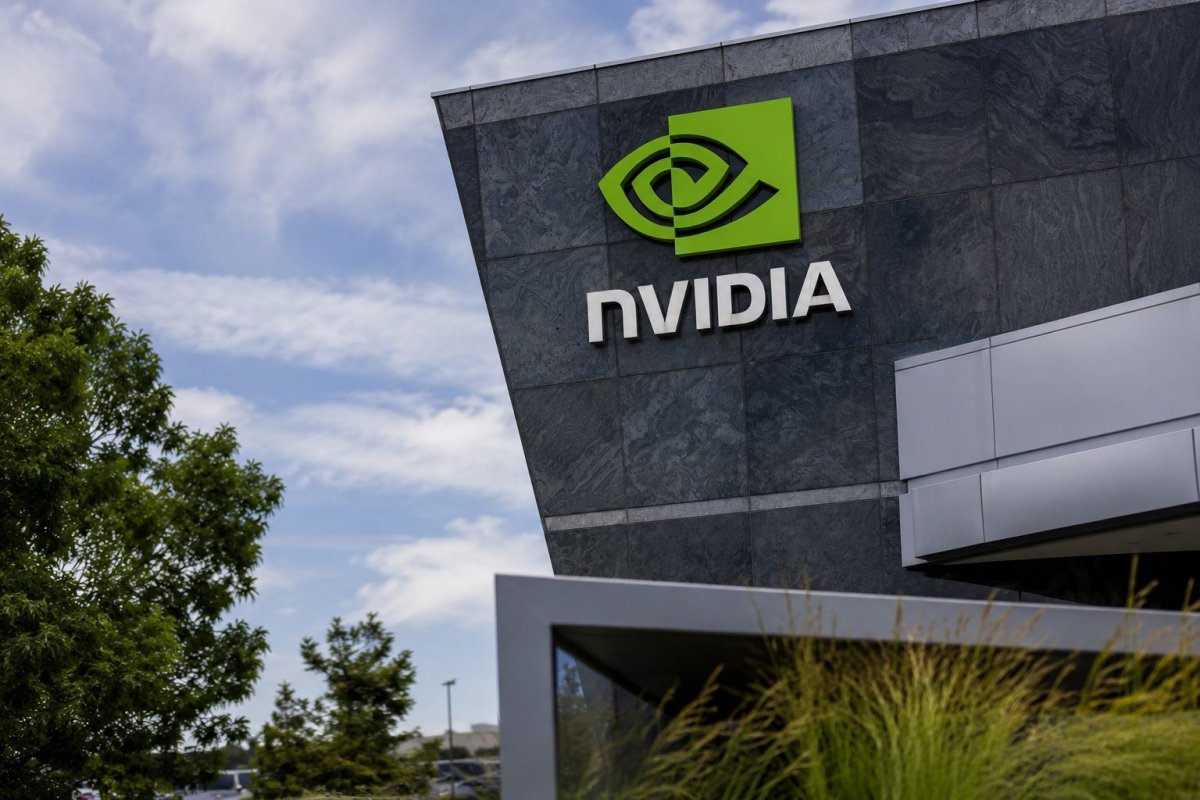
Nvidia's stock edged higher on Monday, with shares gaining 2% to $219.51, lifting the company's market capitalization to approximately $5.38 trillion. The uptick comes as investors turn their attention to the chipmaker's upcoming first-quarter earnings report, scheduled for release on May 20, while renewed speculation about a potential stock split circulates among market participants.
Talk of another stock split was reignited following a recent article that highlighted Nvidia's history of six stock splits since 2000, which would have turned a single pre-2000 share into 480 shares today. However, analysts caution that a new split is not imminent, noting that previous splits occurred when the stock traded at much higher levels—around $1,200 just before the 10-for-1 split earlier this year. A stock split does not alter a company's valuation; it simply increases the number of shares while proportionally reducing the price per share.
Beyond the split chatter, Nvidia continues to secure significant business deals. Last week, the company and IREN announced plans to develop up to 5 gigawatts of AI infrastructure tailored to Nvidia's technology. As part of the agreement, IREN granted Nvidia an option to purchase up to 30 million shares over five years at $70 each, potentially resulting in a $2.1 billion stake. "AI factories are becoming foundational infrastructure for the global economy," said Nvidia CEO Jensen Huang.
IREN also signed a five-year cloud services contract with Nvidia valued at approximately $3.4 billion. Under the deal, Nvidia gains access to IREN's managed GPU cloud services, which run on Blackwell platform systems at IREN's facility in Childress, Texas. "This contract demonstrates our ability to deliver fully managed cloud solutions," IREN co-CEO Daniel Roberts stated.
Investor enthusiasm for Nvidia remains strong, supported by robust financial performance. The company reported record revenue of $68.1 billion in the most recent quarter, a 73% year-over-year increase, with data-center sales hitting a record $62.3 billion. "Computing demand is growing exponentially," Huang emphasized.
Competition is intensifying, however. Reuters reported last week that Alphabet is narrowing the gap with Nvidia for the title of most valuable company, driven by gains in its cloud business and custom AI chips. Additionally, customers and competitors are developing their own silicon, adding pressure on Nvidia's valuation.
For Australian investors, accessing Nvidia requires looking beyond local exchanges. Nvidia trades on the Nasdaq under the ticker NVDA. Alternatives include international brokers, contracts for difference (CFDs), or ASX-listed ETFs such as the BetaShares FANG+ ETF and BetaShares NASDAQ 100 ETF, both of which hold Nvidia shares.
Analysts remain cautiously optimistic. Melius Research analyst Ben Reitzes maintains a Buy rating on Nvidia with a $380 price target, expecting a strong earnings beat. However, Barron's noted that Nvidia's 2026 gains have lagged behind those of Intel and AMD, while investor focus shifts from chips to power and CPU supply.
For now, the stock split conversation takes a back seat to the upcoming earnings report. Nvidia's board has not announced any new split plans. All eyes are on May 20 for insights into data-center demand, margins, supply constraints, and whether AI spending can sustain the current share price.