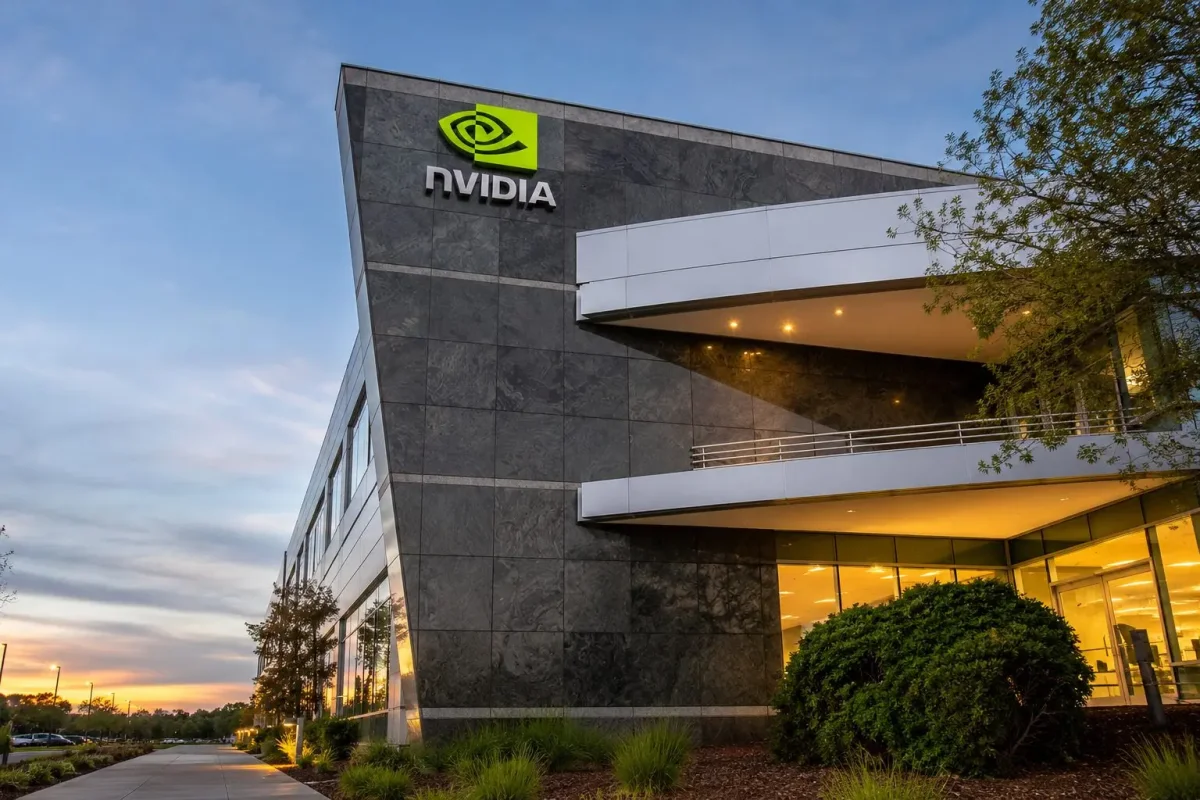
Nvidia Corporation shares experienced a sharp decline on Wednesday, falling $7.81 to close at $200.42, as a broad selloff in semiconductor stocks erased recent gains. The drop came despite continued signs of robust AI-chip demand from both Nvidia and its key manufacturing partner Taiwan Semiconductor Manufacturing Company (TSMC).
The Philadelphia semiconductor index tumbled 3.6%, with Nvidia and Broadcom among the top weights on the S&P 500. The S&P 500 tech sector officially entered correction territory, closing 11% below its June 2 peak. The Nasdaq fell 1.98%, the S&P 500 lost 1.62%, and the Dow declined 1.87% as chip stocks came under broad pressure.
Investors are now questioning whether the market can sustain premium valuations for AI leaders amid rising inflation, higher interest rates, and geopolitical uncertainties. The forward price-to-earnings ratio for Nvidia dropped to 19.7 after the pullback, below the S&P 500's 20.4, making the stock appear cheaper on a historical basis.
The selloff occurred even as TSMC reported strong May revenue of NT$416.98 billion, up 30.1% year-over-year, and cumulative January-May revenue of NT$1.96 trillion, a 30.0% increase. TSMC's monthly figures are closely watched as a barometer for chip demand across the industry.
Nvidia's latest earnings, reported on May 20, showed fiscal first-quarter revenue of $81.6 billion, an 85% jump from the same period last year. Data Center revenue surged 92% to $75.2 billion, driven by massive AI compute systems. For the fiscal second quarter, Nvidia projected revenue of approximately $91.0 billion, plus or minus 2%, excluding any Data Center revenue from China.
CEO Jensen Huang described the demand environment as "massive," stating that "the buildout of AI factories — the largest infrastructure expansion in human history — is accelerating at extraordinary speed." The company also returned roughly $20 billion to shareholders through buybacks and dividends in the first quarter, boosted its share repurchase authorization by $80 billion, and increased its quarterly dividend to 25 cents per share from 1 cent.
Despite strong fundamentals, macro pressures remain evident. U.S. consumer prices rose 4.2% year-over-year in May, keeping upward pressure on interest rates. Tom Hainlin, investment strategist at U.S. Bank Wealth Management, noted that investors are "pricing in maybe a higher interest rate" based on recent economic data and geopolitical concerns.
Nvidia's customer concentration also poses risks. In its latest quarterly filing, the company disclosed that three direct customers accounted for 21%, 17%, and 16% of total revenue for the fiscal first quarter. The company also flagged risks from geopolitical issues, reliance on outside manufacturing and testing, competition, product development, and potential legal or regulatory changes.
The selloff has shifted market focus from whether AI demand exists to whether investors believe Nvidia's $91 billion revenue forecast can withstand higher rates, export restrictions on China, and the broader pullback from crowded tech trades. As the AI trade faces its first major test, the coming weeks will be critical in determining whether the current valuation represents a buying opportunity or a warning signal.