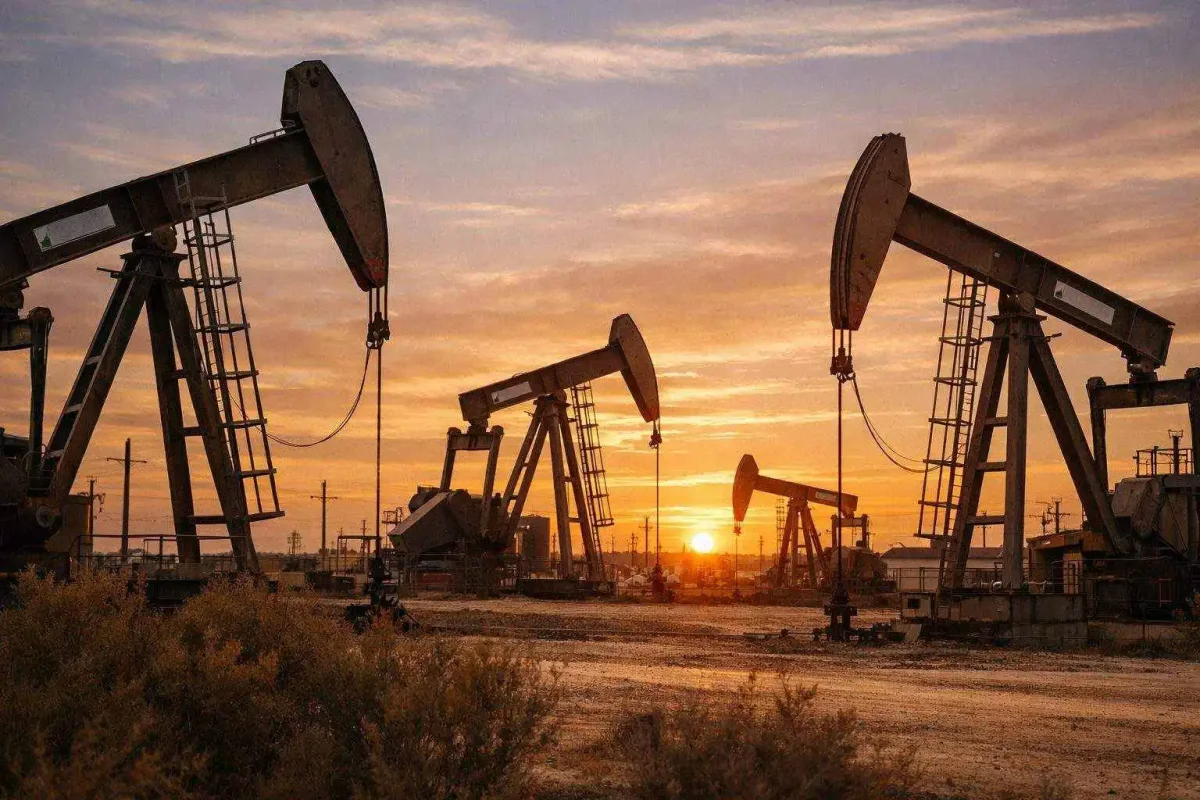
Global oil benchmarks staged a significant recovery during Wednesday's trading session, reversing a portion of the previous day's steep losses as geopolitical tensions in a critical shipping corridor continued to unsettle markets. Brent crude futures for April delivery advanced to $88.39 per barrel, while U.S. West Texas Intermediate crude rose to $84.43 per barrel as of 07:27 GMT. This rebound followed Tuesday's dramatic 11% decline, which itself came after prices had surged to levels not witnessed since 2022 earlier in the week.
Geopolitical Flashpoint Drives Volatility
The primary focus for energy traders remains the Strait of Hormuz, the narrow maritime passage between Iran and Oman through which approximately one-fifth of global oil supply transits. Renewed disruptions in this vital corridor have prompted the International Energy Agency and G7 energy ministers to consider tapping emergency petroleum reserves. However, market participants appear skeptical that such measures can adequately address the underlying supply threat.
According to shipping industry sources, the U.S. Navy has been declining nearly daily requests for convoy protection through the strait, citing unacceptable operational risks. This security vacuum has been exacerbated by specific incidents, including a drone attack that forced Abu Dhabi National Oil Company (ADNOC) to suspend operations at its Ruwais refinery. Saudi Aramco, the world's largest oil company, has issued a stark warning about "catastrophic consequences" should the supply disruptions persist.
Limited Impact from Strategic Reserves
Discussions among IEA member nations reportedly center on what could be the largest coordinated release of emergency stocks in history, potentially exceeding the 182-million-barrel drawdown executed in 2022. The agency confirms that member countries collectively hold over 1.2 billion barrels in public emergency inventories, with an additional 600 million barrels held by industry under government mandate.
Despite this substantial buffer, analysts question its efficacy. Goldman Sachs estimates that even a release on the scale being discussed would cover merely 12 days of the projected export shortfall from the Persian Gulf. Market sentiment reflects this skepticism, with prices rebounding despite the reserve release talks. Suvro Sarkar, who leads the energy sector team at DBS Bank, summarized the prevailing view, stating that stock releases are "not the solution to the crisis." Wells Fargo analyst Chidu Narayanan echoed this assessment, noting that such measures would likely provide only marginal relief as long as active conflict continues.
Divergence Between Commodity and Equity Markets
A notable market dynamic has emerged in the disparity between crude oil prices and the share performance of major oil producers. While Brent and WTI have recovered significantly, equities of leading international energy companies including Shell, BP, and Exxon Mobil have failed to match the commodity's rally. This divergence suggests equity investors are betting on a relatively swift resolution to the supply disruptions.
James West of Melius Research interprets this as a signal that stock market participants anticipate "a swift end" to the operational challenges. This optimism persists despite Exxon CEO Darren Woods describing regional operations as "scaled back" and noting that inventory management has become "very challenged." The U.S. Energy Information Administration projects that if disruptions persist, Brent could maintain a price above $95 per barrel for the next several months before retreating later in the year.
Structural Market Factors Provide Support
Beyond immediate geopolitical concerns, underlying supply and demand fundamentals continue to support prices. Market data indicates U.S. crude, gasoline, and distillate inventories all declined last week, pointing to resilient consumption. The EIA further notes that elevated prices could stimulate domestic production, potentially pushing U.S. oil output to 13.6 million barrels per day this year, with a climb to 13.8 million barrels per day projected by 2027.
Traders are currently monitoring three key variables: the potential timing and scale of an IEA stockpile release, the operational status of shipping through the Strait of Hormuz, and forthcoming inflation data that could influence central bank policy responses to persistent energy costs. This complex interplay of factors, rather than any single price level, is creating what analysts describe as a directionless trading environment for crude oil, with volatility likely to persist until the geopolitical picture clarifies.