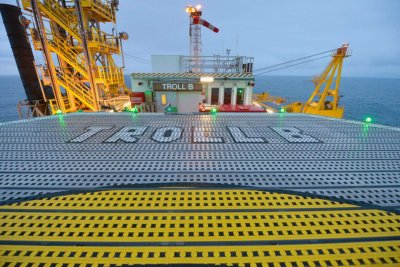
Shares of ARC Resources Ltd. surged more than 22% on the Toronto Stock Exchange Monday after Royal Dutch Shell Plc announced a definitive agreement to acquire the Calgary-based energy producer for approximately US$16.4 billion, including debt. The all-stock-and-cash transaction represents a 27% premium to ARC's closing price on April 24 and underscores Shell's strategic pivot toward long-life natural gas assets in Western Canada.
Deal Terms
Under the terms of the agreement, ARC shareholders will receive C$8.20 in cash and 0.40247 Shell shares for each ARC share held. The total consideration values ARC at C$32.80 per share. ARC's board of directors unanimously approved the transaction and has recommended shareholders vote in favor at a special meeting expected in July 2026.
Shell's offer comes at a critical juncture for the global energy major, which faces mounting pressure to replenish its resource base amid declining production from mature fields. The acquisition of ARC adds approximately 370,000 barrels of oil equivalent per day to Shell's portfolio, primarily from the Montney shale formation in British Columbia and Alberta. The deal is expected to boost Shell's production growth target to 4% annually through 2030.
Strategic Rationale
The Montney basin has emerged as a cornerstone of Shell's North American strategy. ARC's acreage sits adjacent to Shell's existing Groundbirch assets, which supply natural gas to the LNG Canada export facility in Kitimat, British Columbia—a project in which Shell holds a 40% stake. LNG Canada, once operational, will provide Shell with direct access to Asian markets, where demand for liquefied natural gas is expected to grow significantly over the next decade.
Shell CEO Wael Sawan described the deal as one that “strengthens our resource base for decades to come.” ARC CEO Terry Anderson noted the transaction allows shareholders to “realize value” while maintaining exposure to Shell's global operations through the stock component of the consideration.
Market Reaction
The market's response was sharply divided. While ARC shares soared in Toronto trading, Shell's London-listed shares fell 2.1% by Monday afternoon, reflecting investor concerns about execution risk and potential dilution from the increased share count. The divergence highlights the tension between ARC investors pocketing an immediate premium and Shell shareholders weighing the long-term integration challenges.
“The real story here is Montney,” said Tom Pavic, president of Sayer Energy Advisors in Calgary. “This deal confirms that the Montney is a world-class resource play.” Pavic suggested the transaction could trigger additional mergers and acquisitions in the basin, as other producers seek to consolidate positions.
Industry Context
The Shell-ARC deal is the latest in a string of Western Canadian shale transactions. In November 2025, Ovintiv Inc. acquired NuVista Energy Ltd. for C$3.8 billion, and in October, private-equity backed Cygnet Energy Ltd. purchased Kiwetinohk Energy Corp. for C$1.4 billion. The trend underscores growing interest from both major and mid-cap producers in the Montney's low-cost, long-life reserves.
Andrew Dittmar, principal analyst at Enverus Intelligence Research, said the deal provides “a firm confirmation” of the Montney's role in the global natural gas market. “Canada offers majors a choice of long-life resources, whether in the Montney or the oil sands,” Dittmar wrote in a research note.
Financial Outlook
Shell expects the acquisition to add approximately 2 billion barrels of proved and probable reserves to its books, along with roughly US$250 million in annual synergies after the first full year post-closing. The company maintained its projected capital spending range of US$20 billion to US$22 billion for 2027-2028, indicating the deal will be funded through existing cash flow and debt capacity.
The transaction remains subject to customary closing conditions, including approval by at least two-thirds of ARC shareholders voting, as well as regulatory clearances under Canada's Competition Act, the Investment Canada Act, and the U.S. Hart-Scott-Rodino Antitrust Improvements Act. The Court of King's Bench of Alberta must also sign off. If all approvals are obtained, the deal is expected to close in the second half of 2026.