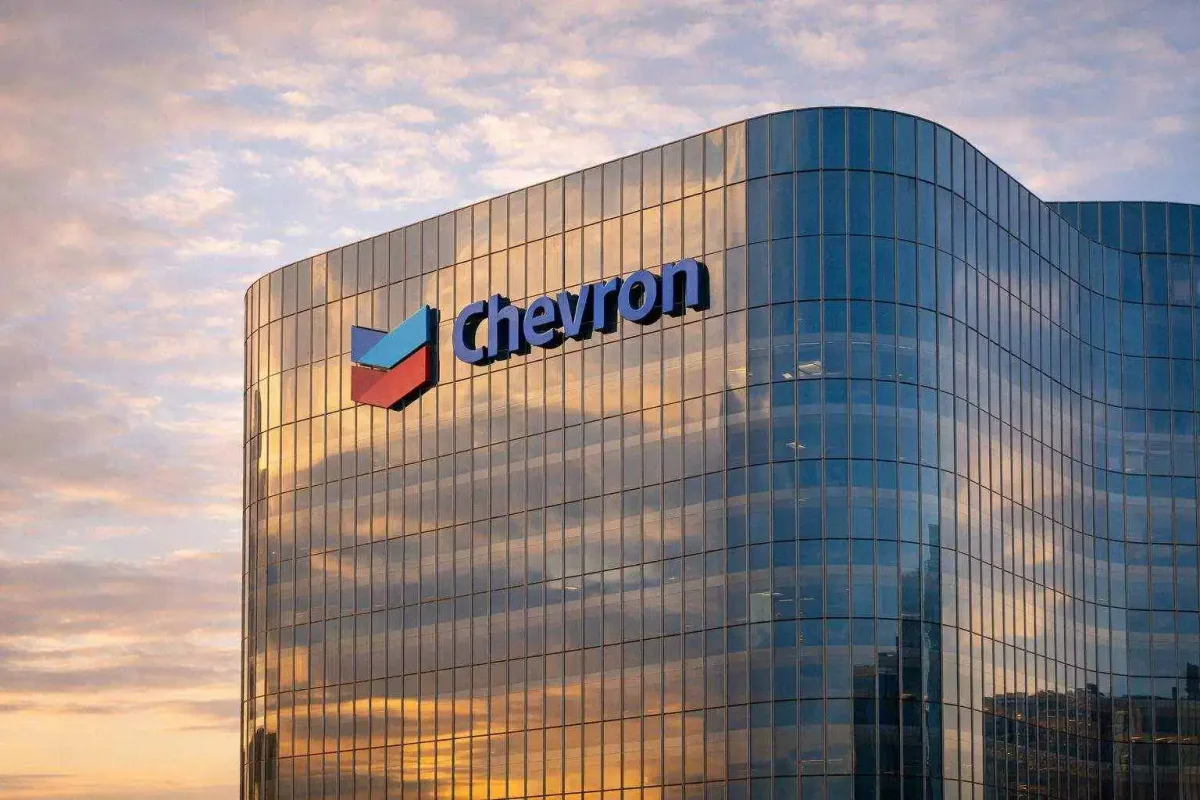
Shares of Chevron Corporation faced downward pressure on Friday, closing at $183.99, a decline of 2.2% from the previous session's close of $188.15. The sell-off was primarily driven by a significant retreat in global crude oil benchmarks, which erased a substantial portion of the geopolitical risk premium that had been supporting energy prices.
Oil Markets Experience Sharp Correction
The catalyst for the crude price drop was Iran's decision to temporarily allow commercial shipping to pass through the Strait of Hormuz, a critical chokepoint for approximately one-fifth of the world's seaborne oil. Brent crude futures, the international benchmark, plummeted $9.01, or 9.07%, to settle at $90.38 per barrel. U.S. West Texas Intermediate crude experienced an even steeper decline, falling $10.48, or 11.45%, to finish at $83.85. This represented the largest single-day loss for both contracts since April 8.
Trading activity in Chevron surged in response to the volatility, with volume more than doubling to 15.7 million shares, compared to 8.0 million shares the day prior. The stock reached an intraday low of $177.74 before paring some losses.
Geopolitical Whiplash Reverses Sentiment
The relief in oil markets proved short-lived. By Sunday, reports from Reuters indicated that shipping traffic through the strait had stalled once again following renewed tensions. At least two vessels reported coming under gunfire near the passage, and marine traffic data showed no movement through the waterway after Saturday. The reversal was attributed to Iran scrapping its reopening plan after the United States declined to lift its blockade on Iranian shipping.
This rapid shift in the security situation leaves energy investors in a precarious position as U.S. markets reopen. The initial price drop reflected a market pricing in reduced risk to crude supplies. The fresh disruptions, however, reintroduce the threat of shipping slowdowns, potential production stoppages in the Persian Gulf, and a resurgence of the war-risk premium that had previously buoyed prices.
Broader Market Context and Sector Performance
Friday's trading session presented a stark divergence between the energy sector and the broader market. While the S&P 500 and Nasdaq Composite indices reached new record closes and the Dow Jones Industrial Average advanced 1.79%, energy stocks were notable laggards. The S&P 500 Energy Sector index fell 2.9%. Within that group, Exxon Mobil declined 3.6% and Chevron dropped 2.2%, making them the second- and third-largest drags on the broader S&P 500 index for the day.
The drop in oil prices presents a mixed picture for the global economy. Sectors that are heavy consumers of fuel, such as airlines and cruise operators, typically benefit from lower input costs. For integrated oil majors like Chevron, however, the decline directly pressures upstream profitability—the segment involved in exploration and production—even if downstream refining and marketing operations provide some offset.
Analyst Perspectives and Strategic Implications
Market participants highlighted the fragile nature of the situation. Bob Doll, CEO of Crossmark Global Investments, noted that while a formal U.S.-Iran deal remained unsigned, the perceived direction was sufficient to move markets. Erik Bethel, general partner at Mare Liberum, pointed to the "astronomical war-risk insurance premiums" facing ship operators navigating conflict zones, a cost directly tied to the security environment.
The strategic posture of major oil companies also came into focus. Analysts observed that European peers BP and Shell often operate larger, more sophisticated trading desks capable of capitalizing on market volatility. In contrast, U.S. giants Chevron and Exxon Mobil primarily engage in trading to manage their own integrated supply chains—balancing production, refining, and retail needs. Chevron has also noted that its hedging activities could create a temporary drag on after-tax earnings, estimated between $2.7 billion and $3.7 billion, though these effects are expected to reverse over time.
Outlook for Energy Equities
The immediate future for Chevron and its peers hinges on the stability of the Strait of Hormuz. A prolonged closure would likely propel crude prices higher, boosting revenue for producers. Yet, it also carries the risk of operational disruptions and reigniting inflationary pressures. Conversely, a sustained reopening and successful negotiations would likely see oil shed more of its geopolitical risk premium, potentially keeping a lid on share prices for major producers.
As Monday's session begins, traders will be forced to weigh Friday's dramatic price action against the latest headlines from the Gulf. The market must assess whether the strait is functionally open, facing another closure, or trapped in an unpredictable cycle where energy stocks swing violently with each new development. The high trading volume and price sensitivity exhibited on Friday suggest the sector remains firmly in the grip of geopolitical uncertainty.