U.S. equities closed lower on Monday as Brent crude oil climbed back above the $90 per barrel threshold, rekindling inflationary pressures and raising questions about the Federal Reserve's next move. The S&P 500 declined 0.33% to settle at 7,686.14, while the Dow Jones Industrial Average dropped 374.09 points to finish at 53,185.90. The Nasdaq Composite eked out a marginal decline of 0.12%, closing at 26,370.89.
The primary catalyst for the selloff was the surge in oil prices. Brent crude rose 2.7% to $90.49 per barrel, its highest level in weeks, as geopolitical tensions in the Middle East continued to disrupt supply expectations. The spike in energy costs immediately fed into bond markets, with the yield on the 10-year Treasury climbing to 4.75%, its loftiest point in over a month. Higher yields typically pressure equity valuations, particularly for growth and rate-sensitive sectors.
Market participants are now pricing in a more hawkish Federal Reserve. Interest rate futures indicate a better than 65% probability of a quarter-point rate hike at the September meeting, a sharp reversal from earlier expectations of a pause. "The odds now favor a rate hike in September," noted Peter Tuz, president of Chase Investment Counsel, in comments to Reuters. The repricing of monetary policy expectations added downward pressure to stocks, with the losses broad but modest across the major indices.
The energy sector emerged as the clear standout, benefiting directly from the surge in crude prices. The Energy Select Sector SPDR Fund (XLE) gained 2.04%, while major oil producers Exxon Mobil (NYSE:XOM) and Chevron (NYSE:CVX) advanced 2.7% and 2.1%, respectively. In contrast, technology stocks showed resilience, with the Technology Select Sector SPDR Fund (XLK) adding 0.44%. However, consumer discretionary and utilities lagged, with the latter hit hard by a combination of rising rates and idiosyncratic pressures.
Utilities faced a distinct policy shock. Shares of Edison International (NYSE:EIX) plunged 23.1%, and PG&E (NYSE:PCG) tumbled 20.1% after California wildfire-liability legislation failed to meet investor expectations. The legislative outcome left utilities exposed to potential massive liabilities, prompting a sharp repricing of their risk profiles. The Utilities Select Sector SPDR Fund (XLU) fell 1.17%, making it the worst-performing major sector of the day.
Elsewhere, GameStop (NYSE:GME) rose 2.9% after the company announced it would use cash to cover approximately 27% of a proposed $1.4 billion debt exchange, a move that would reduce potential dilution for existing shareholders, according to Reuters.
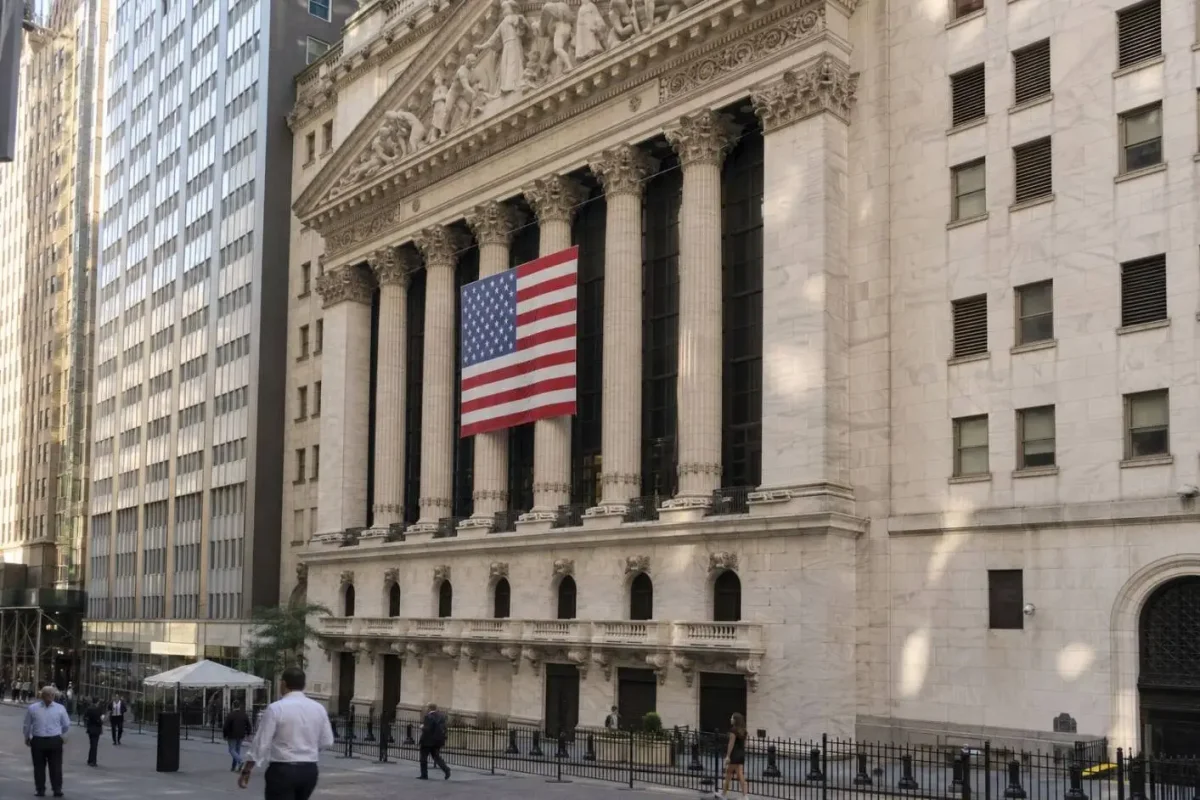
Market breadth confirmed the bearish tone. On the New York Stock Exchange, decliners outpaced advancers by a ratio of 1.95-to-1, while on the Nasdaq the ratio was 1.58-to-1. New lows on the NYSE outnumbered new highs, 234 to 112. Trading volume on U.S. exchanges totaled 15.65 billion shares, slightly above the 20-day average of 15.58 billion, indicating that the selloff was accompanied by average participation.
Looking ahead, investors will be closely watching Tuesday's release of the July Job Openings and Labor Turnover Survey (JOLTS) and the August manufacturing PMI, both scheduled for 10:00 EDT. The August jobs report is due Friday at 08:30 EDT and will be a key determinant for the Fed's decision. With oil prices elevated and Treasury yields at multi-month highs, market volatility is likely to persist, and any surprises in the data could trigger further repositioning.
The subdued final hour of trading, during which major index ETFs moved less than 0.06%, suggests that investors had largely absorbed the day's developments. However, the combination of weak breadth, rising yields, and geopolitical uncertainty leaves the market vulnerable to sharp moves in the near term.