Oklo Inc. (OKLO) shares experienced a sharp decline on Wednesday, dropping approximately 10% to $65.89 in afternoon trading, as a regulatory filing revealed a significant insider stock sale by the company's co-founder and CEO, Jacob DeWitte. The sell-off, which saw trading volume exceed 18 million shares, underscores the market's heightened sensitivity to insider transactions for development-stage companies.
The drop was triggered by a Form 4 filing with the U.S. Securities and Exchange Commission (SEC) on June 2, detailing the sale of 200,000 Class A shares on June 1. The transactions were executed under a Rule 10b5-1 trading plan, a pre-arranged schedule that allows insiders to sell shares at predetermined times to avoid accusations of trading on non-public information. The sales were priced at weighted averages ranging from $64.99 to $70.45 per share.
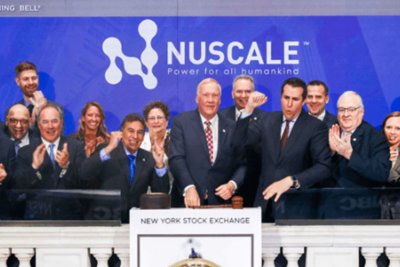
Following the sales, DeWitte still holds 571,533 shares directly, along with larger indirect stakes through family trusts. While the use of a 10b5-1 plan indicates the sales were not opportunistic, the market reaction was swift, with Oklo's decline outpacing its peers. NuScale Power fell about 10.7%, Nano Nuclear Energy dropped 12.3%, and Centrus Energy declined 7.8%.
Oklo's status as a development-stage nuclear company, rather than a utility with steady earnings, makes it particularly vulnerable to insider-sale headlines. The company's valuation hinges on successful reactor deployment, fuel access, and future power contracts, leaving little room for investor confidence wobbles.
The broader context for nuclear energy remains positive, with the U.S. government recently selecting five companies, including Oklo, for advanced talks on using Cold War-era surplus plutonium as reactor fuel. Oklo is partnering with European nuclear firm newcleo on this initiative, with DeWitte calling it a pathway to bring more reactors online sooner.
Additionally, Urenco announced on Tuesday a nearly 50% expansion of its U.S. uranium-enrichment capacity, a key development for domestic fuel supply. However, these tailwinds were not enough to offset the negative sentiment from the insider sale.
Oklo's financials reveal a company in its early stages, with March-quarter operating expenses of $51.2 million, a net loss of $33.1 million, and a per-share loss of $0.19. The company holds a substantial cash position of $1.59 billion and $614.5 million in marketable debt securities, but it faces significant risks related to reactor deployment, fuel fabrication, and securing binding power-purchase agreements.
Investors are now weighing two competing narratives: the ongoing policy support for nuclear energy and the market's demand for cleaner execution and tangible progress from Oklo. Until the company delivers on its ambitious pipeline, its stock may continue to trade more on sentiment than fundamentals.