NEW YORK, July 5, 2026 – Oracle Corporation (NYSE:ORCL) saw its shares decline sharply in the holiday-shortened week, closing at $140.27 on July 2, a drop of 5.6%. U.S. equity markets were closed on Friday for the Independence Day holiday, with trading resuming on July 6. The selloff comes as the company’s remaining performance obligations (RPO) of $638 billion now exceed its market capitalization of approximately $408.5 billion, a ratio of 0.64 times the backlog.
This unusual situation highlights a growing disconnect between Oracle’s massive cloud order book and the value the market assigns to the company. While RPO represents contracted future revenue, it is not cash, and investors are weighing the substantial capital expenditures required to convert those obligations into actual earnings. In fiscal 2026, Oracle reported capital expenditures of $55.7 billion, operating cash flow of $32.0 billion, and negative free cash flow of $23.7 billion.
The broader market fared better during the same period, with the S&P 500 rising 1.8%, the Dow Jones Industrial Average gaining 2.0%, and the Nasdaq Composite advancing 2.1%. Oracle’s underperformance stands out, especially given its upbeat earnings report. The company posted a 47% year-over-year increase in fourth-quarter cloud revenue to $9.9 billion, with cloud infrastructure sales surging 93% to $5.8 billion. Oracle maintained its fiscal 2027 revenue forecast of $90 billion and raised its non-GAAP EPS outlook to $8.05.
However, concerns about funding and margins have weighed on sentiment. Oracle projects capital spending of up to $95 billion for fiscal 2027, including $70 billion in direct spending and $20 billion to $25 billion expected to be reimbursed by customers. CFO Hilary Maxson warned that gross margins would “step down” as data center projects ramp up. eMarketer analyst Jacob Bourne noted that while demand is real, the combination of rising capital spending and negative free cash flow raises funding questions.
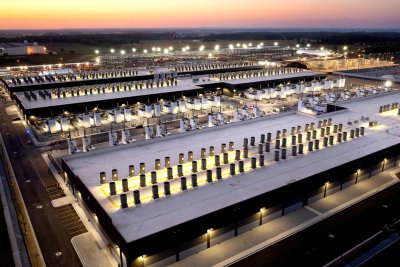
Oracle has attempted to address these concerns by highlighting that prepaid and customer-supplied hardware in large AI deals now totals $75 billion, reducing the need for external capital. The company still expects to raise around $40 billion in debt and equity financing in fiscal 2027, including a previously announced $20 billion at-the-market equity sale. CEO Clay Magouyrk stated that first-quarter delivery is “approaching one gigawatt,” nearly matching all deliveries from the prior four quarters.
The losing streak for Oracle stock has been notable. Barron’s reported that the shares were down 24% over a nine-session losing streak, the longest such run for the stock since 2021. Despite the decline, most analysts maintain a Buy rating. Investors have one scheduled item this week: the board’s quarterly dividend of $0.50 per share, with a record date of July 10 and payment on July 24.