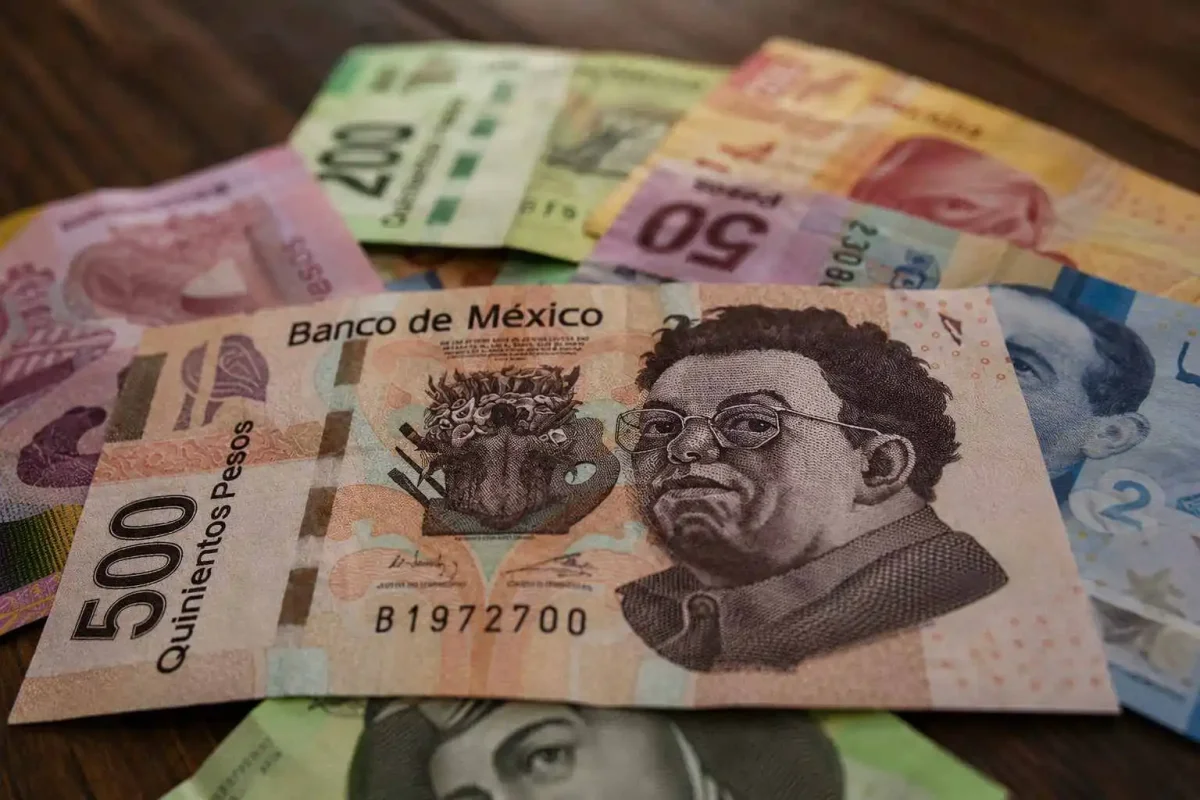
The Mexican peso posted its fourth consecutive daily gain on Tuesday, with Banxico's official closing rate settling at 17.2583 pesos per dollar. The currency advanced 1.04% over the four-session streak, representing an 18.1-centavo improvement, according to analyst Gabriela Siller Pagaza.
The peso's performance was notably stronger than the dollar's broader movement. While the peso gained approximately 0.38% against the greenback, the U.S. Dollar Index (DXY) slipped just 0.03%. This disparity suggests demand was centered on Mexico specifically, rather than being driven solely by general dollar softness.
Intraday trading data indicated a steady decline in USD/MXN throughout the session, rather than a sharp move at the open. The pair dropped below the 17.30 level in early trading and continued to trend lower, with spot updates from El Economista showing the peso strengthening by roughly 0.34% mid-session before reaching the official close.
Carry Trade Dynamics
The peso continues to benefit from a significant interest rate differential. Banxico's policy rate stands at 6.50%, which is 275 to 300 basis points above the Federal Reserve's target range of 3.50% to 3.75%. This nominal advantage supports carry trades, though the resilience of this edge will be tested by Banxico's monetary policy decision on Thursday.
Analysts widely expect the central bank to hold rates steady at 6.50%. The focus will be on forward guidance, as a prudent tone could help maintain the currency's carry appeal, while indications of a faster easing cycle would diminish that advantage.
Economic Data and Risk Sentiment
Janneth Quiroz Zamora, who oversees economic, currency and equity research at Monex, attributed the peso's strength to reduced risk aversion worldwide and the latest Mexican consumer-confidence data. The seasonally adjusted confidence index for July rose 1.1 points to 45.0, with all five components improving month-over-month. However, four of the five components remained below year-ago levels, suggesting the data supports the peso in the short term but does not signal a broad surge in consumption.
On the U.S. side, weaker labor data weighed on the dollar. June's JOLTS report showed job openings fell by 178,000 to 7.359 million, while hires and separations both increased. The mixed data suggests some softness in the labor market but does not clearly point to a recession, reducing the likelihood of a rapid policy shift from the Fed.
Geopolitical and Oil Factors
Renewed risk appetite provided further support for the peso. Speculation about potential U.S.-Iran negotiations helped ease concerns over Middle East tensions, contributing to a drop of over 3.5% in oil prices during the session. The geopolitical situation remains unstable, however, and unsuccessful diplomatic efforts could spur renewed demand for the dollar as a safe haven.
Upcoming Catalysts
The peso faces several key tests over the coming days. On Wednesday, U.S. private payrolls data will be released, which could influence Fed rate expectations. Thursday brings Banxico's rate announcement at 13:00 CST, followed by U.S. jobs data on Friday at 08:30 ET.
Monex identified support for USD/MXN at 17.24 and resistance at 17.35. A sustained break below 17.24 would bolster the case for Mexico-focused inflows, while a climb above 17.35 would test the current bullish outlook for the peso.
