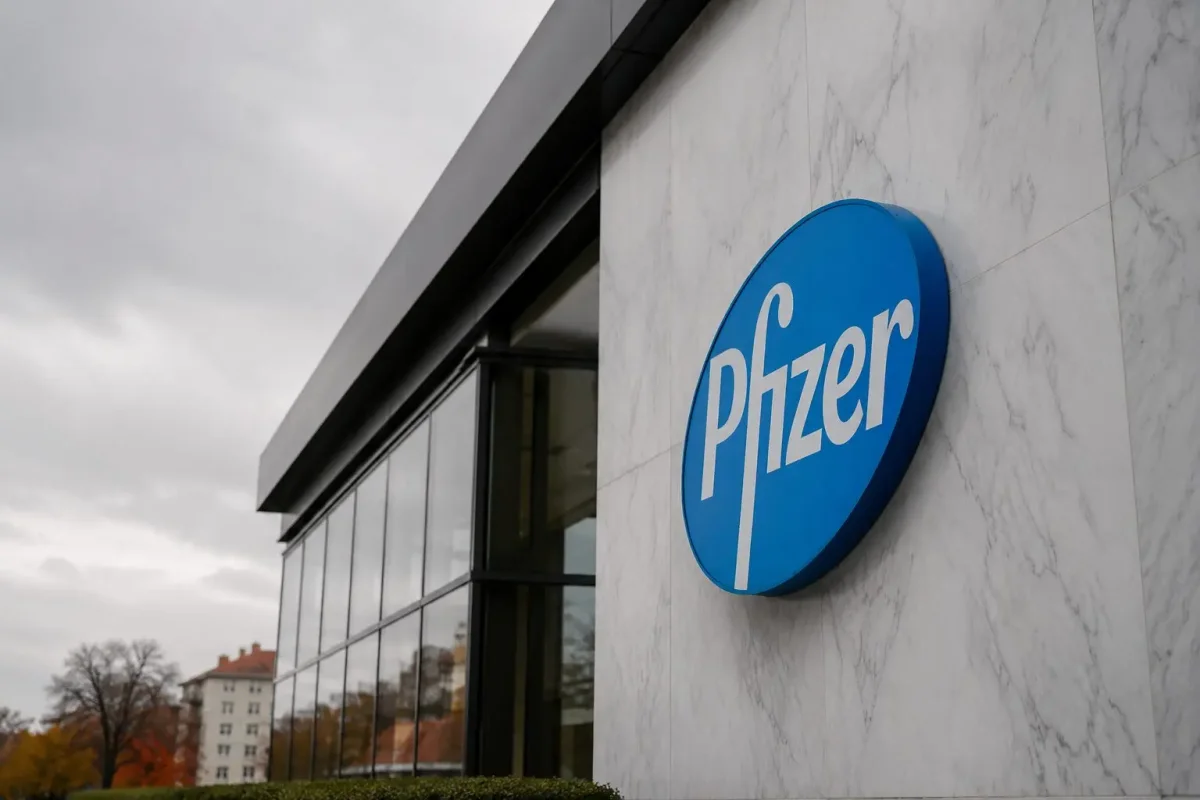
Pfizer Inc. (NYSE: PFE) saw its shares climb in premarket trading on Wednesday, August 5, 2026, after the pharmaceutical giant reported second-quarter results that beat Wall Street expectations. The stock was up 1.48% at $25.41, reflecting investor optimism as the company's non-COVID portfolio continues to gain momentum, compensating for the ongoing decline in pandemic-related product sales.
The company reported adjusted earnings per share of $0.77 for the second quarter, surpassing the consensus forecast of $0.68. Revenue came in at $15.034 billion, a 3% increase year-over-year and ahead of the $14.40 billion analysts had projected. On an operational basis, revenue grew 1%, but excluding COVID products, operational sales jumped 5%.
Product Bridge: Growth Brands Outperform
The key highlight of the quarter was the performance of four growth brands—Eliquis, Vyndaqel, Padcev, and Lorbrena—which collectively contributed an additional $797 million compared to the same period last year. This increase was 1.52 times greater than the combined decline of $526 million from Pfizer's two COVID products, Comirnaty and Paxlovid.
Eliquis led the charge with a 21% revenue increase to $2.425 billion, while Vyndaqel family grew 9% to $1.762 billion. Padcev surged 23% to $667 million, and Lorbrena saw a remarkable 41% jump to $354 million. Together, these four brands accounted for 34.6% of total quarterly revenue, a stark contrast to the 1.9% contribution from COVID products.
Guidance Raised on Non-COVID Strength
Management raised the 2026 revenue midpoint by $500 million, now expecting $60.5–$62.5 billion. The revised outlook reflects a $1.5 billion increase from stronger non-COVID demand, partially offset by a $1.0 billion reduction in COVID projections. Adjusted diluted EPS guidance remains steady at $2.80–$3.00, as the company offsets a $0.10 licensing charge with $0.10 in operating performance improvements.
Chief Executive Albert Bourla emphasized the company's focus on efficiency and reinvestment in research and development. Adjusted R&D expenses rose 12%, while selling, information, and administrative spending declined 3%. The adjusted operating margin stood at 35%, and Pfizer anticipates achieving an additional $2.5 billion in net savings from 2027 to 2029, targeting total program savings of $9.7 billion by 2029.
GAAP Loss and Impairments
On a GAAP basis, Pfizer reported a net loss of $248 million, driven by $4.3 billion in non-cash impairment charges. Of these, $3.8 billion were related to sigvotatug vedotin, and $525 million stemmed from Oxbryta. These charges weighed on reported EPS, which came in at a loss of $0.04 per share.
Analyst Sentiment and Market Position
Analyst opinions remain divided. Jefferies' Akash Tewari maintains a Buy rating with a $34 target, implying a 33.8% upside. Berenberg's Kerry Holford is neutral with a $25 target, while JPMorgan's Chris Schott also holds neutral with a $28 target. The mean price target stands at $28.38, suggesting a potential gain of 11.7%. Current ratings include 18 Holds and 9 Buys or Overweights.
Pfizer's market value of $144.8 billion places it just above Bristol Myers Squibb ($134.6 billion) but well below Merck's $316.1 billion and Eli Lilly's $999.5 billion. Royal Bank of Canada analyst Trung Huynh noted the beat was broad-based but emphasized that Pfizer needs to achieve significant milestones in 2026 to restore its growth status, with investors focusing on mevrometostat and the amylin obesity initiative from Metsera.
Risks persist, including upcoming loss of exclusivity for Eliquis and other established medicines, as well as a low rate of COVID product adoption. However, the quarter's results signal that Pfizer's post-pandemic transition is gaining traction, with a diversified portfolio increasingly driving growth.