NEW YORK, May 16, 2026 – Prediction markets have dramatically shifted against the narrative of Federal Reserve rate cuts that had been supporting U.S. equities. Polymarket now assigns a 69.2% probability to zero rate cuts in 2026, while Kalshi, a regulated U.S. event-contract exchange, shows roughly 68% odds for no cuts this year. This repricing is not merely a side bet; it reflects a fundamental reassessment of monetary policy that is already shaking stock markets.
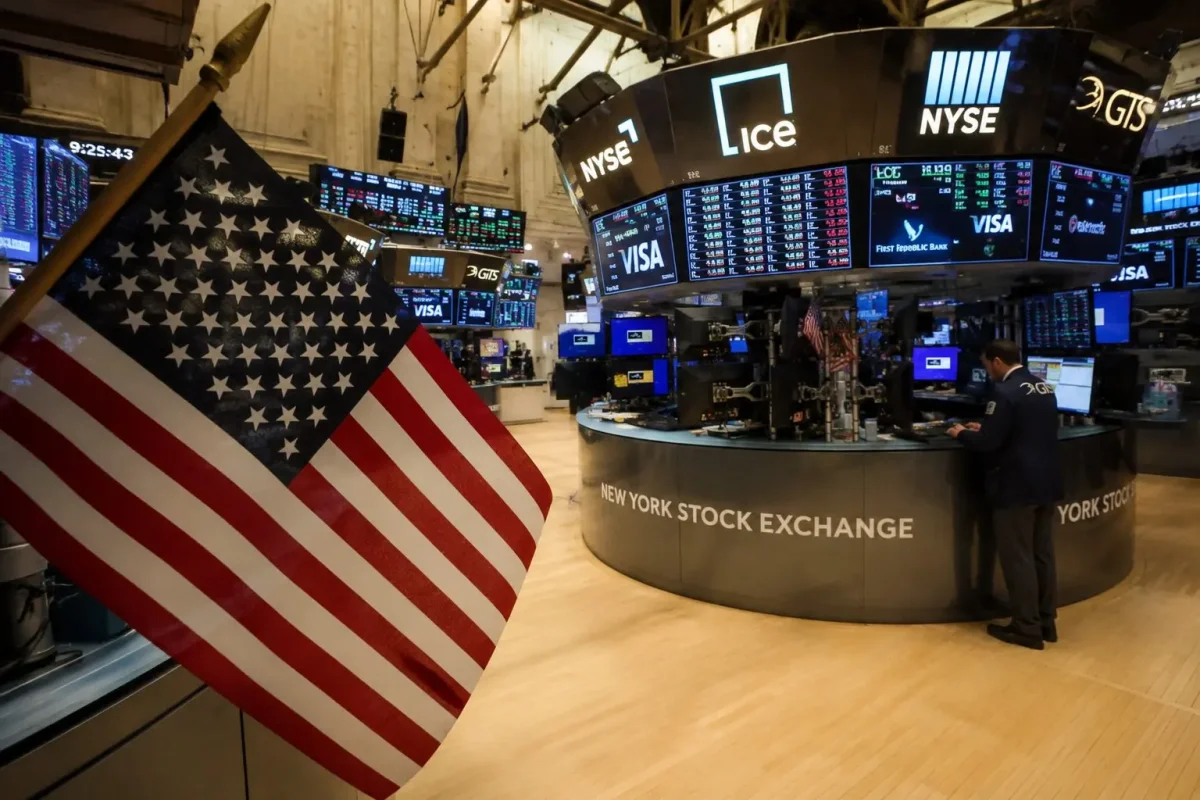
Friday’s selloff was more than profit-taking after record highs. The Dow Jones Industrial Average, S&P 500, and Nasdaq Composite each fell over 1% as oil prices and Treasury yields climbed, hitting the rate-sensitive technology sector that had driven much of the year’s rally. Kenny Polcari, chief market strategist at Slatestone Wealth, noted that the market had gotten “way ahead of itself” in the AI trade, leaving it vulnerable to a shift in rate expectations.
The timing is critical. Nvidia (NVDA) is set to report earnings next week, alongside retail giants Walmart (WMT), Home Depot (HD), Target (TGT), and TJX Companies (TJX). These reports will provide a dual check on the forces pulling equities: artificial-intelligence spending and household demand under higher energy costs. Patrick Ryan, chief investment strategist at Madison Investments, warned that the rally is being driven by a shrinking set of names, calling it “not necessarily a healthy market.”
Prediction markets operate by trading contracts tied to real-world outcomes; a contract priced at 69 cents implies a 69% probability. Polymarket’s 2026 Fed-cut market also indicates a 16% chance of a single 25-basis-point cut, with $26.7 million in volume. Kalshi’s “exactly zero cuts” outcome sits near 68%, closely aligning the two platforms despite their different trader bases and market structures.
Traditional rate markets mirror this shift. CME FedWatch data shows about a 60% probability that the Fed’s benchmark rate will be 25 basis points higher by January, while a December rate hike is roughly a coin toss. Bank of America analysts wrote that the narrative has moved “from stagflation to reflation” after firmer spending and hotter inflation data.
Near-term traders do not expect a surprise at the June 16-17 Fed meeting. Polymarket and Kalshi both show the no-change outcome above 96% for that meeting, suggesting the repricing is focused on the remainder of 2026 rather than the immediate decision.
Equity-linked prediction contracts paint a mixed picture. A Kalshi-coded S&P 500 “finish positive” contract shows “Yes” at 72 cents for the index ending 2026 above 6,845.50. Polymarket’s S&P 500 market has $459,000 in volume for a May SPY contract, with a 70% probability around a $730 downside threshold. SPY, the ETF tracking the S&P 500, is a common proxy for the broader index.
This is not a clean bearish signal. Rather, it suggests the cushion is thinner: the S&P 500 can still finish the year higher, but the Fed may no longer be available to cut rates if oil and inflation remain firm. The risk is that prediction markets can move quickly and be distorted by liquidity, access, and fees. Polymarket itself warns that odds are not a guarantee, and Kalshi cautions that trading event contracts carries risk of loss.
For Wall Street, the next test is straightforward but uncomfortable. If Nvidia sustains the AI trade and retailers show consumers can absorb higher fuel costs, the rally may steady. If not, the no-cut trade now visible on Kalshi and Polymarket could shift from a side market to the main narrative.