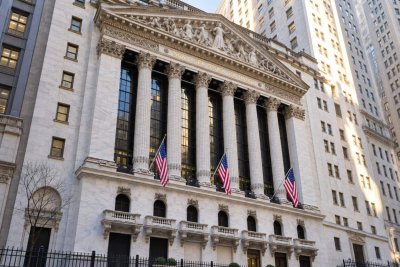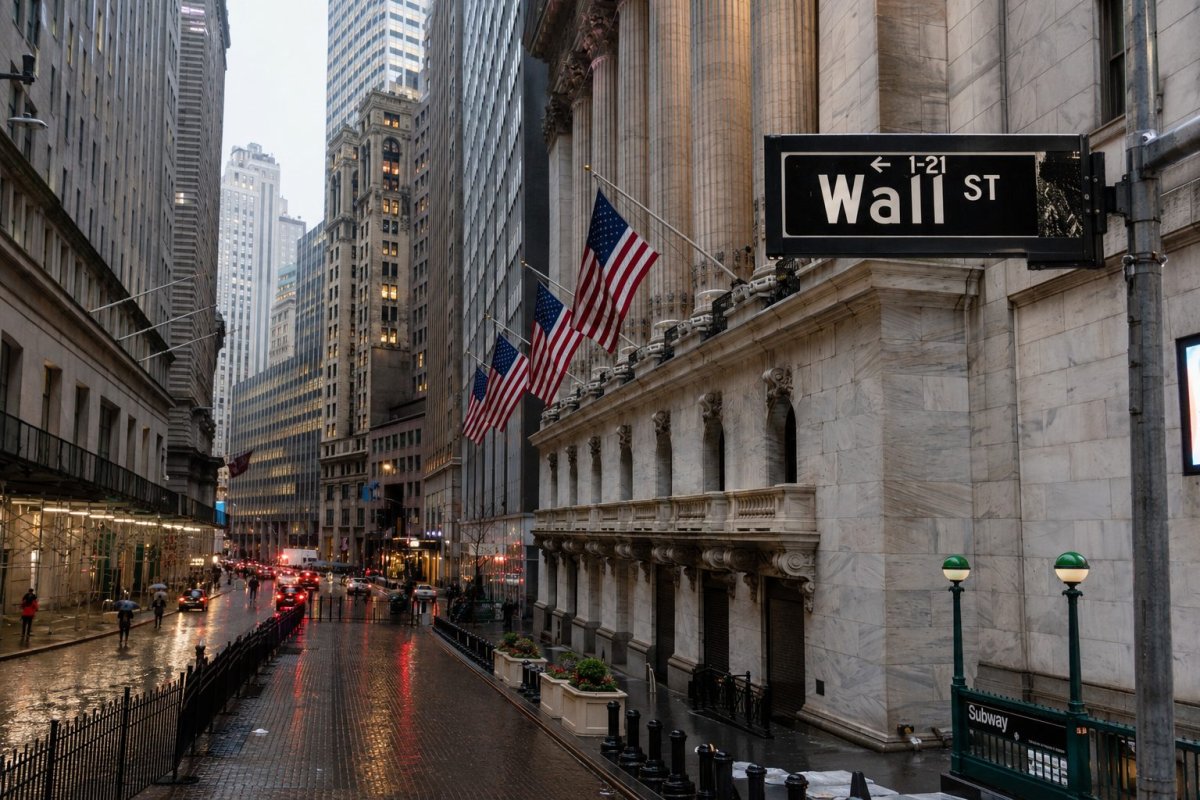
U.S. equities pulled back from record levels on Friday, as a surge in oil prices and a climb in Treasury yields interrupted Wall Street's artificial intelligence-driven advance. The S&P 500 declined 1.24% to close at 7,408.50, while the Dow Jones Industrial Average shed 1.07% to finish at 49,526.17. The Nasdaq Composite fell 1.54% to 26,225.15.
Despite the day's losses, the S&P 500 managed a marginal weekly gain of 0.1%, extending its winning streak to seven consecutive weeks. The Dow slipped 0.2% for the week, and the Nasdaq edged down 0.1%. However, the Russell 2000 index of small-cap stocks tumbled 2.4%, signaling broader weakness beyond mega-cap technology names.
Energy and Yields Pressure Markets
The 10-year Treasury yield rose to its highest level since May 2025, weighing on growth stocks. Meanwhile, oil prices climbed as uncertainty surrounding the U.S.-Iran ceasefire persisted, and the Trump-Xi meeting yielded no immediate breakthroughs. Energy was the lone S&P 500 sector to finish higher, gaining 2.3%.
"There's a realization that the market had gotten way ahead of itself," said Kenny Polcari, chief market strategist at Slatestone Wealth, describing the recent rally as a "momentum AI trade." The same mega-cap names that propelled indexes to records earlier in the week were among the hardest hit on Friday.
Chip Stocks Under Pressure
The Philadelphia SE Semiconductor Index tumbled 4%, with Nvidia (NVDA) falling 4.4%, Advanced Micro Devices (AMD) dropping 5.7%, and Intel (INTC) sliding 6.2%. Nvidia is set to report fiscal first-quarter results on Wednesday, May 20, with investors closely watching for guidance amid the shifting macro backdrop.
Inflation Data Heats Up
The Labor Department reported that consumer prices rose 0.6% in April, marking a 3.8% year-over-year increase — the largest annual gain since May 2023. Producer prices also accelerated, climbing 1.4% month-over-month, the sharpest rise since March 2022. Retail sales increased 0.5% in April, in line with expectations, but analysts noted that much of the gain was driven by higher prices rather than increased volume.
"The stock rally is helping wealthier shoppers, but people with lower incomes still face pressure from fuel, transport, and food bills," said Sal Guatieri, senior economist at BMO Capital Markets.
Rate Hike Odds Rise
Investors are increasingly pricing in the possibility of a Federal Reserve rate hike. According to Reuters, markets now see a 60% probability of a 25-basis-point increase in the Fed's main rate by January. Prediction markets also reflect a shift: Polymarket indicated a 32% chance of a Fed hike in 2026 and a 69% likelihood of no rate cuts this year.
"AI and rising energy prices are almost parallel tracks," noted Allen Bond, portfolio manager at Jensen Investment Management. "Either one could really drive the market on any given day." Patrick Ryan, chief investment strategist at Madison Investments, cautioned that "a smaller set of names is leading index returns again," calling it "not necessarily a healthy market."
Retail Earnings in Focus
Next week, major retailers including Walmart (WMT), Home Depot (HD), Target (TGT), and TJX Companies (TJX) will report earnings. Investors will be scrutinizing these results for signs that rising energy costs are affecting consumer spending. "How resilient is the consumer?" is the central question, said Yung-Yu Ma, chief investment strategist at PNC Financial Services Group.
While the market is not facing a single large shock, a combination of sustained high oil prices, elevated yields, and consumer weakness could lead to further rate hike expectations and renewed pressure on AI-related stocks.