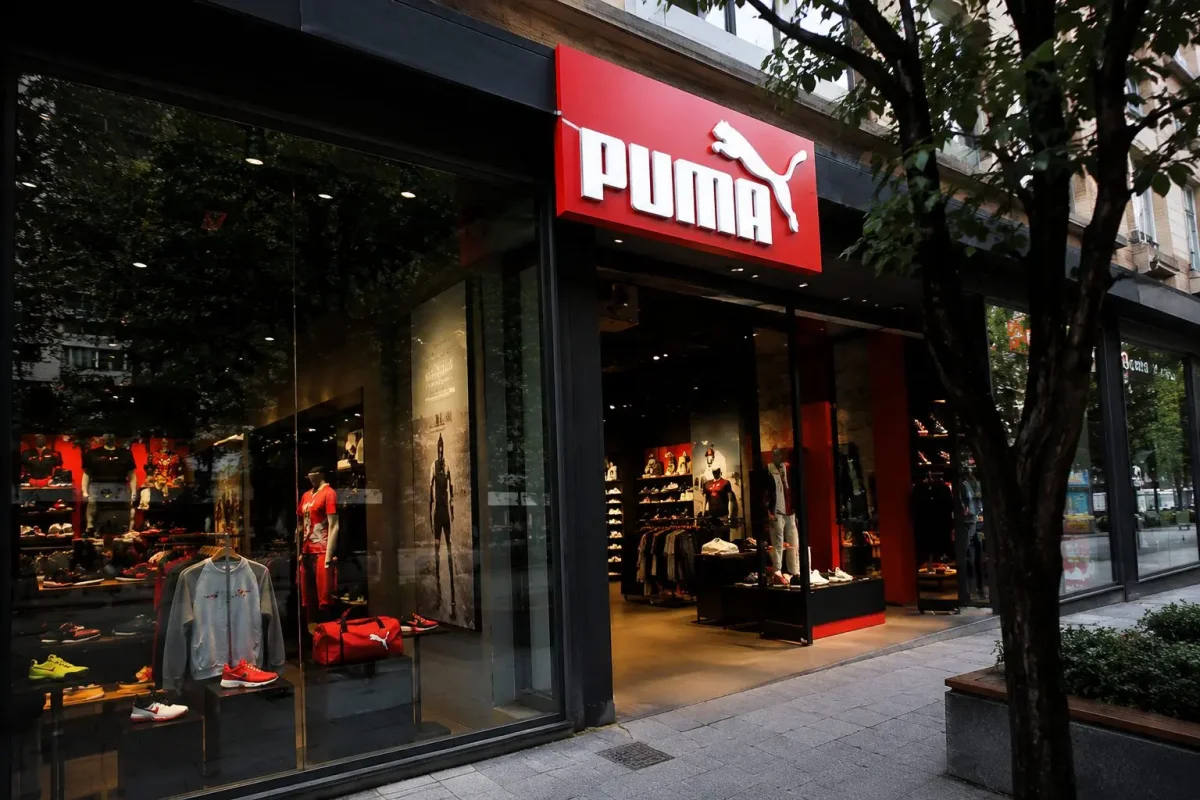
Puma SE (ETR:PUM) reported second-quarter results that surpassed analyst expectations, driven by reduced one-time charges and improved cash generation, even as revenue continued to decline. The German sportswear maker posted a reported EBIT loss of €53.1 million, a significant improvement from the €109.1 million loss in the same period last year and better than the €68.7 million loss anticipated by analysts. However, currency-adjusted sales fell 9.4% to €1.69 billion, slightly worse than the 9.1% decline expected.
Shares closed Friday at €27.50, down 2.48%, after initially dropping as much as 7% during the session. Over the past five sessions, the stock has declined 1.75%. Despite the quarterly miss on sales, Puma's year-to-date performance remains strong, with shares up 23.3% in 2026.
Earnings breakdown
The better-than-expected bottom line was largely due to a sharp reduction in one-time charges, which fell by €73.4 million year-over-year to €11.2 million. This more than offset the €17.4 million decline in adjusted EBIT, which came in at a loss of €41.9 million. Gross margin improved to 48.0%, surpassing consensus by 100 basis points, with tariffs contributing 60 basis points to the 180 basis point improvement.
Cost discipline played a key role, as adjusted operating expenses dropped 4.0% while reported sales fell 9.7%. The cost ratio rose to 51.6% from 48.6%, reflecting the ongoing pressure from lower volumes. Wholesale revenue declined 14.0% on a constant currency basis, while direct-to-consumer (DTC) sales edged up 0.4%, increasing DTC's share to 35.2%.
Regional performance
Geographically, Asia-Pacific was the only region to post growth, with sales up 8.6%. Both EMEA and the Americas recorded double-digit declines, with North America down 16.7% and EMEA down 12.9%. The weakness in these key markets underscores the broader demand challenges facing the industry.
Cash flow and balance sheet
Free cash flow surged to €328.8 million, up from €94.9 million a year earlier, driven by lower inventory and capital expenditure. Inventories were down 15.3% year-over-year to €1.82 billion, while capital expenditure fell to €15.8 million from €53.1 million. Net debt stood at €1.10 billion at the end of June.
Guidance and outlook
Chief Executive Arthur Hoeld reiterated that sales are expected to "improve sequentially in the second half of 2026." The company maintained its full-year guidance, forecasting a low-to-mid-single-digit decline in sales and an EBIT loss of between €50 million and €150 million. The unchanged outlook, despite the earnings beat, may have disappointed investors hoping for an upgrade.
The contrast with rival Adidas (ETR:ADS) was stark. Adidas reported its highest-ever quarterly revenue a day earlier, with constant-currency sales up 14.0% and a gross margin of 52.5%. Adidas also raised its sales forecast, though its shares fell 11.52% after missing profit expectations. Puma's stock decline was more modest, reflecting its earnings beat but also its failure to lift guidance.
Analysts noted that the market is focused on earnings quality and future projections. Felix Dennl of Metzler said he would "not rule out some profit taking" given the recent run-up in Puma's shares. The next major catalyst will be the third-quarter results, due on October 30.
Risks remain centered on subdued demand in Europe and North America, ongoing disruptions in the Middle East, and the pace of inventory management. Additional tariff refunds are still subject to legal resolution, adding to the uncertainty.