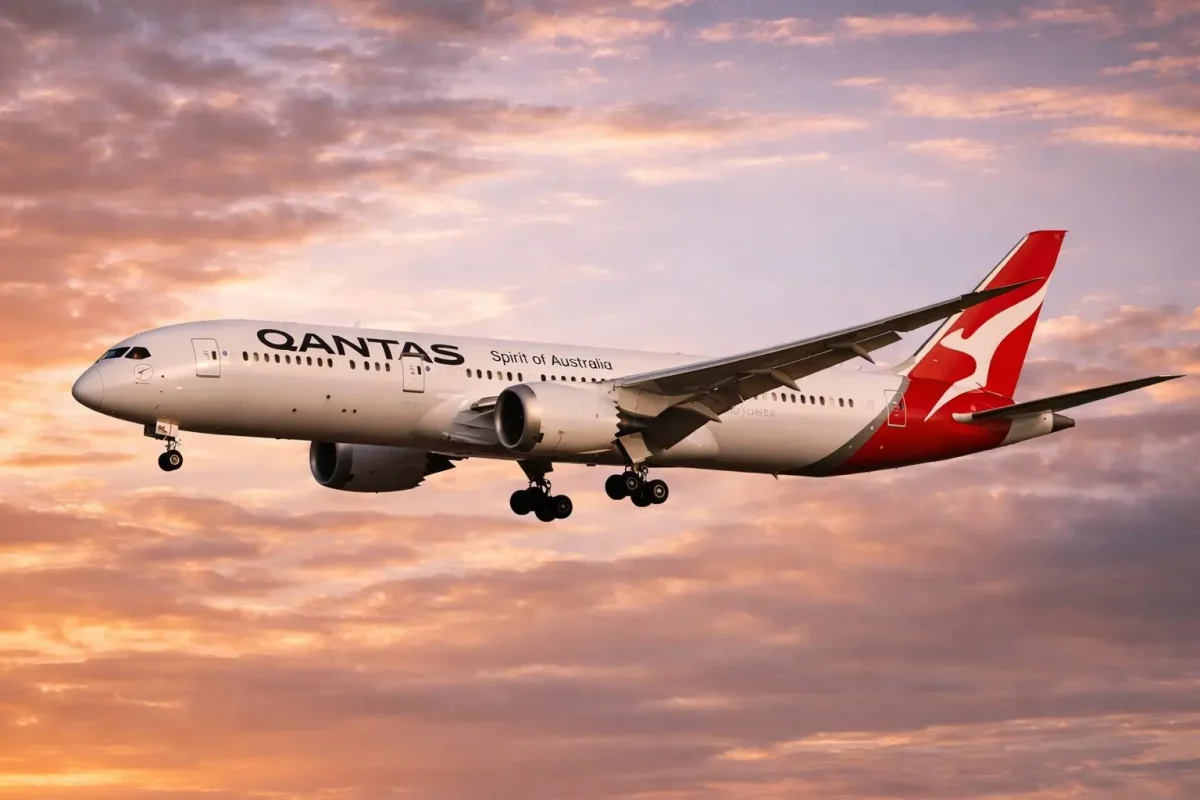
Qantas Airways has implemented significant operational changes to its European services as ongoing conflict in the Middle East continues to disrupt traditional flight paths between Australia and Europe. The carrier announced it will reroute its Perth-London QF9 service through Singapore for refueling while simultaneously adding an additional Sydney-London A380 flight to accommodate displaced passengers.
The adjustments come as major Gulf carriers—Emirates, Qatar Airways, and Etihad Airways—have substantially reduced their schedules, with Doha's airport remaining closed to commercial traffic. According to Cirium data, these three airlines typically handle more than half of all passenger traffic between Europe and Australia, New Zealand, and Pacific island nations. The current disruption represents what aviation consultant Paul Charles of PC Agency described as "the biggest shutdown we've seen certainly since the COVID pandemic."
Qantas confirmed in a Friday travel advisory that only the Perth-London route requires modification, with all other services, including existing Singapore-London flights, operating normally. The airline acknowledged increased call center wait times and has implemented flexible options for customers holding bookings on partner airlines involving the United Arab Emirates, Qatar, Israel, Jordan, or Oman, offering fee-free changes, travel credits, or refunds.
To manage immediate demand, Qantas deployed an additional A380 aircraft on the Sydney-London route on Saturday, March 7, 2026, providing capacity for approximately 485 Europe-bound passengers. The Singapore layover on the Perth-London service creates space for about 60 additional travelers. Rico Merkert, Chair of Transport and Supply Chain Management at the University of Sydney, observed that passenger traffic is already shifting away from Gulf hubs toward alternative transit points like Singapore and Hong Kong.
The market pressure is evident across the industry. Emirates announced late Thursday it has reduced operations to 82 destinations, including London, Sydney, and Singapore. Etihad Airways plans to maintain a limited schedule through March 19, while Qatar Airways' Doha hub remains inoperative. These disruptions create both operational challenges and financial pressures for airlines globally.
Fuel costs present an additional concern despite hedging strategies. Qantas CEO Vanessa Hudson acknowledged this week that while the airline's fuel hedging is "pretty good"—with 81% of second-half fuel requirements already locked in—rising oil prices remain a significant challenge for the industry. The carrier recently reported a record underlying profit before tax of A$1.46 billion for the first half, though earnings from its international division declined 6%.
Aviation experts warn that even with a swift resolution to the conflict, operational normalization could take considerable time. Guido Carim Junior, an aviation specialist at Griffith University, told media outlets that a single day of airport shutdown can require weeks to unravel, with months of operational fallout possible. Airlines must reposition aircraft, reassign crews, and rebuild schedules—complex processes that cannot be executed immediately.
The financial markets reflected these concerns, with Qantas shares closing at A$8.92 on Friday, down 1.8%. The decline tracked broader weakness in airline stocks as investors weighed the implications of higher fuel costs and additional rerouting expenses. The situation underscores the aviation industry's vulnerability to geopolitical disruptions, particularly along critical Europe-Asia corridors where alternative routing options are limited and often more expensive to operate.