Shares of Qualcomm (QCOM) surged 10.3% in premarket trading on Thursday, as investors focused on CEO Cristiano Amon's optimistic remarks about a smartphone rebound and the company's growing ambitions in AI data-center chips, overshadowing a disappointing outlook for the current quarter.
"We can now call the bottom," Amon told Reuters, indicating that the handset market has reached its low point. This is a critical development for Qualcomm, which still generates the bulk of its revenue from smartphone chips. The segment has been under pressure this year due to higher memory chip costs, which have raised handset prices and dampened orders.
For its fiscal second quarter, Qualcomm reported revenue of $10.6 billion, down 3% year-over-year. Adjusted earnings came in at $2.65 per share, while GAAP earnings were boosted to $6.88 per share by a $5.7 billion tax benefit. Handset revenue fell 13% to $6.02 billion, but automotive revenue jumped 38% to $1.33 billion, and Internet of Things revenue rose 9% to $1.73 billion.
The company's fiscal third-quarter revenue forecast of $9.2 billion to $10.0 billion fell short of Wall Street's estimate of $10.27 billion, according to LSEG data. Adjusted earnings are expected between $2.10 and $2.30 per share, versus the consensus of $2.45.
Qualcomm expects chip sales to Chinese handset makers to bottom out in the third quarter and return to sequential growth thereafter, factoring in memory supply constraints and related pricing impacts.
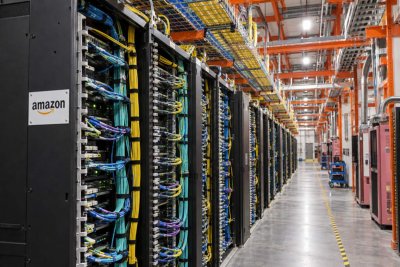
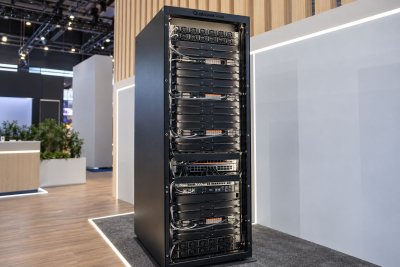
The stock's rally was also fueled by Qualcomm's data-center ambitions. The company disclosed a custom silicon project with a major hyperscaler cloud operator, with first shipments still slated for later this year. This marks Qualcomm's entry into a segment where AI-driven demand is boosting spending on inference chips.
Amon said Qualcomm is developing a lineup of CPUs, inference accelerators, and ASICs, positioning it closer to competitors like Broadcom and Marvell, as cloud companies increasingly design their own chips. "Qualcomm is building from a small base," said Bob O'Donnell, president of TECHnalysis Research, but he noted the growing focus on data-center offerings signals a more mature strategy.
However, risks remain. J.P. Morgan analysts warned the smartphone market is "hardly out of the woods," while Morgan Stanley pushed back on the idea that memory shortages will ease in calendar 2027, which could lead phone makers to cut orders further.
Qualcomm also highlighted its capital return program, with $5.4 billion in buybacks in the first half of fiscal 2026 and a new $20 billion repurchase plan, providing near-term support for the stock. The key question remains whether management can translate a bottom in phone chips and data-center hopes into tangible revenue growth in coming quarters.