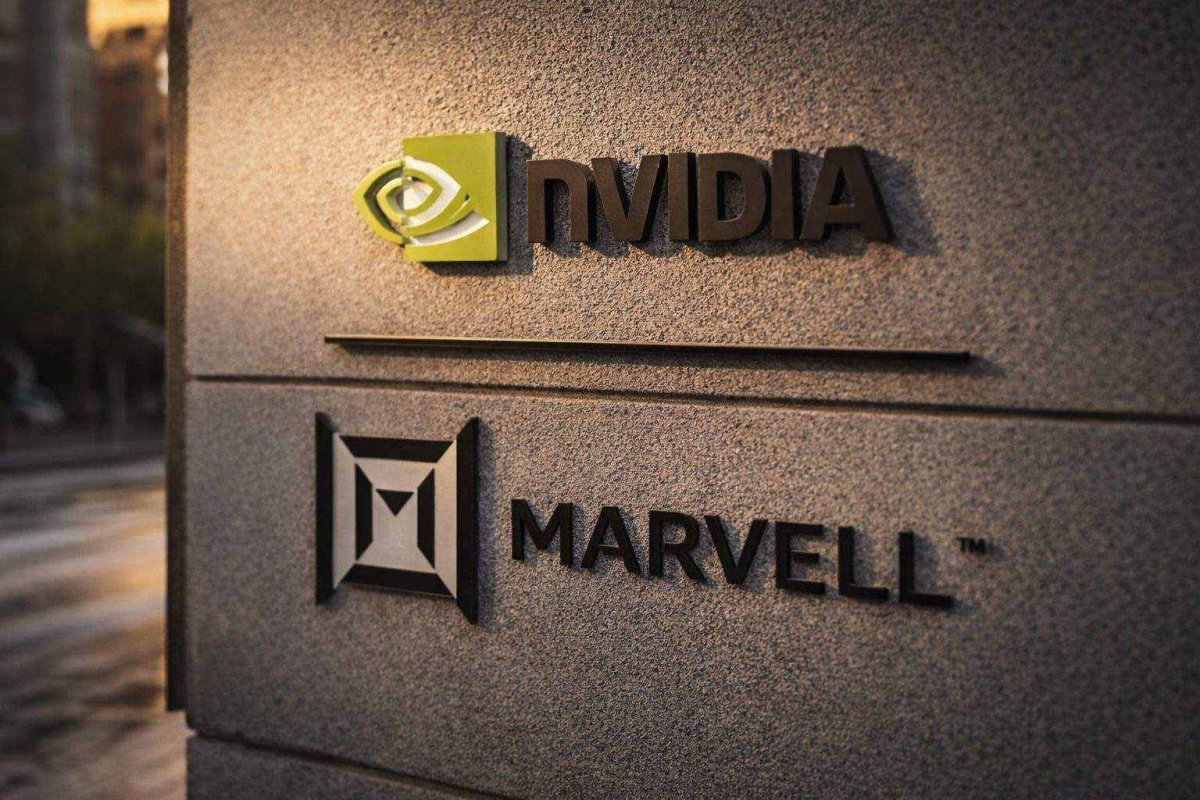
Marvell Technology (MRVL), a company more closely tied to data-center infrastructure than the flashy world of artificial intelligence chips, saw its shares climb approximately 3% on Thursday. This uptick came as major technology firms signaled a collective surge in AI-related capital expenditures, with combined spending now projected to surpass $700 billion this year, up from roughly $600 billion, according to Reuters.
Big Tech's AI Budgets Fuel Broader Chip Demand
Alphabet (GOOGL), Microsoft (MSFT), Amazon (AMZN), and Meta (META) all indicated this week that their AI investment plans are not cooling off. This wave of spending is not solely directed at Nvidia's (NVDA) graphics processing units (GPUs). Networking hardware, optical connections, and custom chips are also seeing increased demand. Marvell is well-positioned to benefit from this trend, particularly through its application-specific integrated circuits (ASICs), which are designed for specialized tasks. Reuters noted that this segment of the chip market plays to the strengths of both Broadcom (AVGO) and Marvell.
Nvidia-Marvell Partnership and Strategic Investment
While Nvidia's dominance remains unchallenged, the company recently made a strategic $2 billion investment in Marvell on March 31, accompanied by a partnership focused on NVLink Fusion, a rack-scale platform for semi-custom AI infrastructure. Under this deal, Marvell will develop custom XPU and NVLink-ready networking components, while Nvidia contributes its CPUs, networking silicon, and interconnects. Nvidia CEO Jensen Huang described the collaboration as a response to the "inference inflection," while Marvell CEO Matt Murphy emphasized the growing importance of high-speed connectivity and optical interconnect in AI systems. This partnership positions Marvell as a key supplier within Nvidia's ecosystem rather than a direct competitor.
Record Revenue and Analyst Optimism
Marvell reported record fiscal 2026 revenue of $8.195 billion, a 42% increase year-over-year, with data-center sales accounting for 74% of total revenue in the January quarter. In contrast, Nvidia posted full-year revenue of $215.9 billion, with its data-center business alone reaching a record $62.3 billion in the fiscal fourth quarter. Analysts have responded positively to Marvell's prospects. Oppenheimer's Rick Schafer called the Nvidia-Marvell deal a "vote of confidence," while Stifel's Tore Svanberg raised his price target for Marvell to $140 from $120, reiterating a Buy rating. Bank of America's Vivek Arya upgraded the stock to Buy, citing traction in AI optical connectivity and clearer prospects for custom-chip projects with Microsoft and Amazon.
Competitive Landscape and Risks
The custom silicon market is becoming increasingly competitive. Broadcom remains a heavyweight, while Qualcomm (QCOM) is targeting the data-center ASIC market. AMD (AMD) continues to be Nvidia's most visible challenger in AI accelerators. Marvell's connection to Nvidia is somewhat unique, as it collaborates with the AI chip leader while also benefiting from cloud providers' push for custom silicon. However, Marvell faces risks, including a heavy reliance on a few key customers, the possibility that those customers may design their own chips, and potential pressure on gross margins from ASIC deals.
Outlook
The question for investors is not whether Nvidia's moment has passed, but whether the growing wave of AI investment will create more opportunities for companies like Marvell that focus on the hardware, switches, and custom chips powering AI data centers. Wall Street appears more receptive to this possibility than it was just a few months ago, as evidenced by the recent analyst upgrades and the strategic partnership with Nvidia.