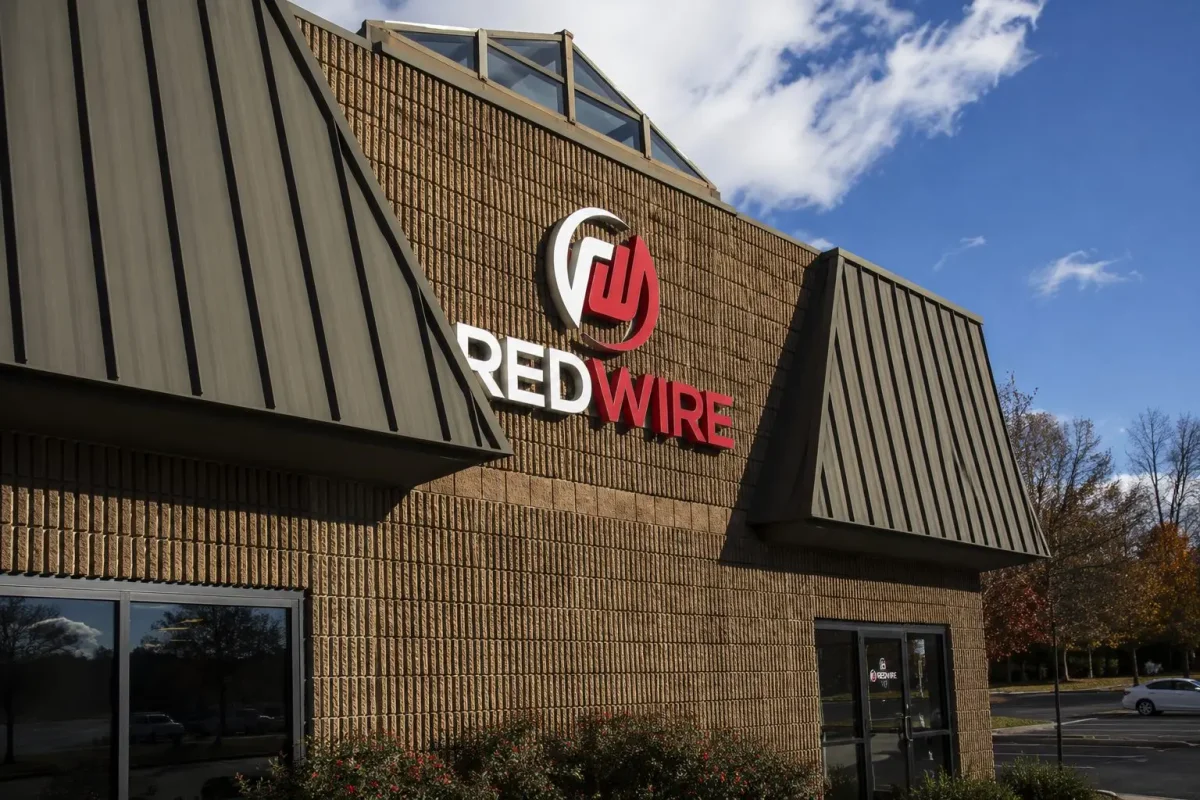
Redwire Corporation (RDW) experienced a sharp decline on Friday, with shares closing at $15.12, down approximately 11.6% for the session. The stock traded in a wide range between $14.75 and $18.45 on heavy volume exceeding 64 million shares. The company's market capitalization settled near $2.93 billion following the sell-off.
ATM Equity Program Triggers Dilution Concerns
The primary catalyst for Friday's drop was Redwire's disclosure of a new at-the-market (ATM) equity program, announced in a June 9 SEC filing. The program authorizes the company to sell up to $500 million in common stock incrementally over time. While this structure provides flexibility in raising capital, it raises the specter of shareholder dilution if significant shares are issued. Redwire stated that proceeds could be used for working capital, debt repayment or refinancing, acquisitions, investments, and research and development.
Space Sector Under Pressure
Redwire's decline occurred amid a broader pullback in space-related equities. The stock fell 17.8% over the week, significantly underperforming the S&P 500 and Nasdaq Composite, which each gained 0.7% during the same period. The sector's weakness was compounded by the blockbuster IPO of SpaceX, which listed on the Nasdaq and saw shares surge 19% following a record $75 billion offering, pushing its market value above $2 trillion. While a major new entrant can validate the space industry, it also intensifies competition for investor attention and capital, particularly for smaller suppliers like Redwire.
Financial Performance and Backlog
Despite the near-term headwinds, Redwire's underlying business showed strong growth in the first quarter. Revenue reached $97.0 million, a 57.9% increase year-over-year, with a gross margin of 26.6%. The company's backlog stood at a record $498.1 million, representing work that has been ordered but not yet recognized as revenue. CEO Peter Cannito noted, "We continue to see very strong demand for our differentiated products." Redwire maintained its full-year 2026 revenue guidance of $450 million to $500 million.
However, the company remains unprofitable, posting a net loss of $76.5 million and negative adjusted EBITDA of $9.2 million in the first quarter. This underscores the execution risk as Redwire seeks to convert its backlog into cash flow without further diluting shareholders.
Analyst Downgrade and Valuation
Jefferies recently downgraded Redwire from Buy to Hold, while raising its price target from $13 to $24. The analyst cited the stock's sharp gains and elevated valuation, along with execution risk related to backlog conversion and still-negative EBITDA. Redwire shares remain up approximately 99% year-to-date even after the weekly decline, reflecting the high-growth, high-risk profile.
Looking Ahead
Investors will closely monitor Redwire's quarterly disclosures under the ATM program, which will detail shares sold, net proceeds, and agent fees. Heavy issuance could further pressure the stock. The next major catalyst is likely the company's next earnings report, where progress on revenue, margins, and cash flow will be scrutinized.
At current levels, Redwire presents a high-risk, high-reward proposition. Its exposure to defense and space markets, coupled with a substantial backlog, offer upside potential, but the company must demonstrate it can generate sustainable cash flow without excessive reliance on equity issuance.


