Rigetti Computing (NASDAQ: RGTI) is set to release its second-quarter earnings after the market close on Thursday, with investors closely watching revenue quality and the company's substantial cash position. The quantum computing firm ended Friday's trading session at $14.95, reflecting a 5.7% gain for the week, as market sentiment showed signs of recovery.
Analysts project revenue in the range of $5.1 million to $5.3 million for the quarter, which would represent a sequential increase of approximately 16% from the first quarter's $4.4 million. The company's market capitalization stands at $5.01 billion, a figure that looms large relative to its current revenue base, placing a sharp focus on the quality and growth trajectory of its top line.
Revenue Mix Under the Microscope
In the first quarter, Rigetti's revenue was heavily weighted toward hardware and components, which accounted for 69.2% of sales, or $3.046 million. Research and professional services contributed 29.5%, or $1.299 million, while quantum system access—a key indicator of recurring usage—represented just 1.3%, or $55,000. Thursday's results will reveal whether this nascent access stream is gaining traction, a critical factor for long-term recurring revenue.
The company ended the first quarter with $569 million in cash and investments and no outstanding debt. Operating cash consumption during Q1 was $16.2 million, implying a runway of roughly 35 quarters at the current burn rate, though this does not account for capital expenditures or potential increases in spending. This financial cushion provides management with ample time to build a consistent revenue base, but investors are seeking evidence that hardware sales and system access are scaling.
Recent Developments and Market Context
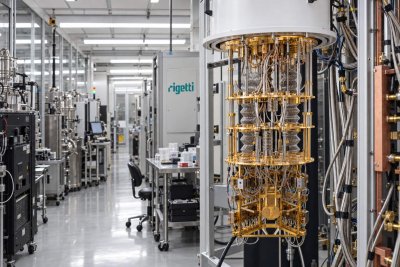
Last week, Rigetti announced a significant milestone: the delivery of a 9-qubit Novera processor to a testbed in Pittsburgh, with Hewlett Packard Enterprise (NYSE: HPE) assisting in building the hybrid platform. The project is supported by a $5 million National Science Foundation grant, though Rigetti has not disclosed the value of its own contract. CEO Subodh Kulkarni expressed enthusiasm about the installation, which serves to validate the technology but is not expected to generate substantial revenue at this stage.
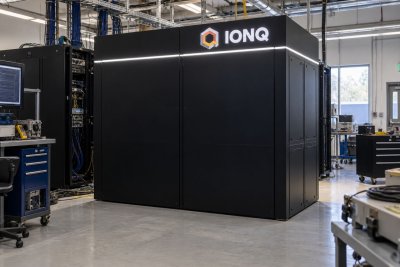
Rigetti's stock has been volatile, with daily moves of at least 7% over four consecutive sessions. Over the week, the company lagged its quantum computing peers: IonQ (NYSE: IONQ) gained 11.0%, D-Wave Quantum (NASDAQ: QBTS) rose 11.5%, and Quantum Computing Inc. (NASDAQ: QUBT) advanced 9.0%. IonQ received a boost from regulatory approval of its $1.8 billion chip-foundry acquisition, a catalyst not shared by Rigetti.
Valuation Comparisons and Key Metrics
On a price-to-sales basis, Rigetti trades at 285 times annualized Q1 revenue, lower than D-Wave's 573 times but significantly higher than IonQ's 52 times and Quantum Computing's 123 times. However, Quantum Computing's revenue includes contributions from recent acquisitions, making direct comparisons less straightforward. Gross liquidity as a percentage of market cap stands at 11% for Rigetti, compared with 23% for IonQ, 9% for D-Wave, and 77% for Quantum Computing.
Key metrics to watch in Thursday's report include product revenue, access revenue, and operating cash usage. As of March 31, remaining performance obligations were $2.8 million, and the company anticipates deploying an $8.4 million system for C-DAC in the second half of the year.
Risks and Outlook
Rigetti's progress depends on achieving technical milestones and securing public-sector funding. Slower-than-expected development, order cancellations, or technical underperformance could push revenue further out. Increased spending would also shorten the cash runway, reducing the perceived safety margin.
While a slight earnings beat might provide short-term relief, the fundamental debate centers on whether the company can deliver consistent hardware revenue and expand its access stream. The cash buffer offers a safety net, but the current valuation demands evidence of sustainable growth. Investors will be looking for tangible signs that the quantum computing pioneer is moving beyond early-stage revenue toward commercial viability.