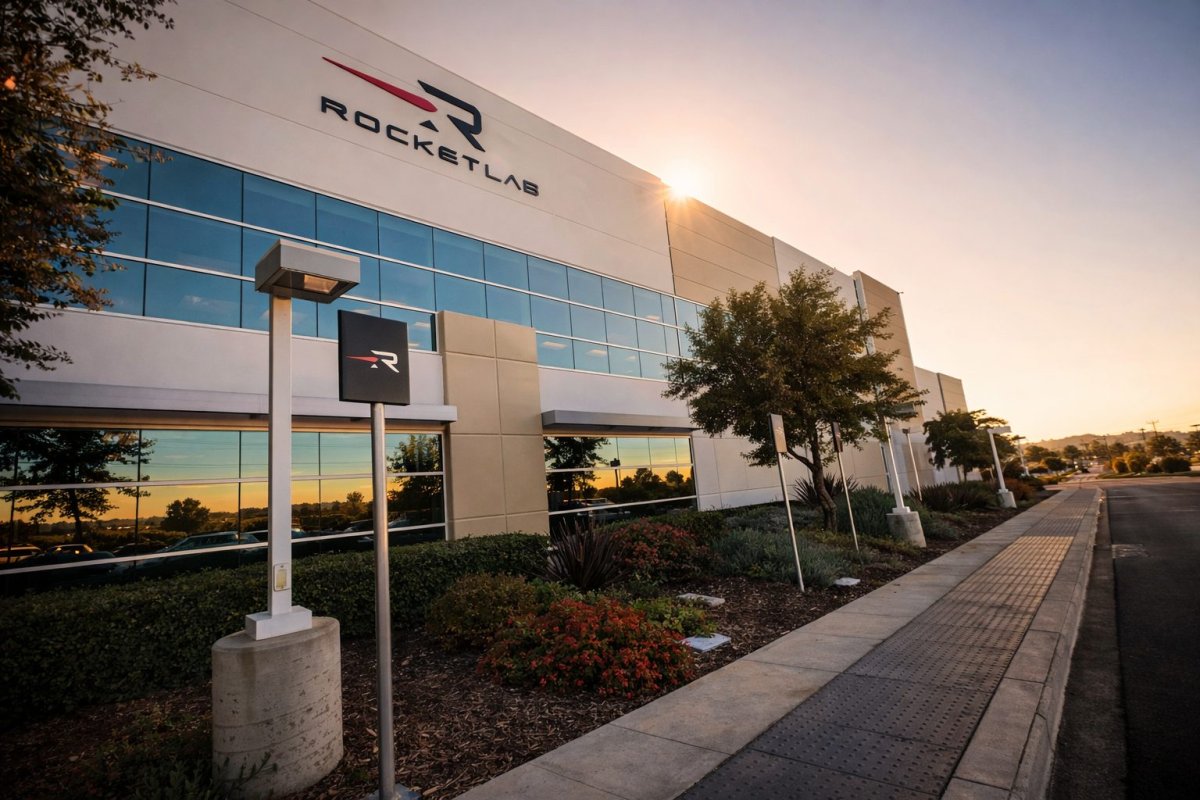
Rocket Lab has obtained the final regulatory approval from German authorities required to proceed with its acquisition of laser-communications specialist Mynaric. The company confirmed the transaction is on schedule to be finalized in April 2026. This clearance removes the last significant hurdle for the deal, which was first proposed in March 2025.
Market Reaction and Deal Structure
Investors responded positively to the news, with Rocket Lab's stock climbing approximately 6.7% to $61.21 during early trading on Tuesday. The acquisition is structured with an upfront payment of $75 million, which can be made in cash or Rocket Lab stock. An additional $75 million in potential milestone payments is contingent upon Mynaric achieving specific future revenue targets.
Strategic Implications for Rocket Lab
The purchase represents a significant strategic expansion for the U.S.-based launch and space systems company. By bringing Mynaric in-house, Rocket Lab gains direct control over a critical supplier of optical laser terminals. This technology enables high-speed, secure data transfers between satellites, a vital capability for the large satellite constellations Rocket Lab is targeting. The deal also secures a component linked to a $1.3 billion contract with the U.S. Space Development Agency.
Furthermore, the acquisition marks Rocket Lab's formal entry into the European market. Mynaric will maintain its headquarters in Munich, providing Rocket Lab with a operational foothold in Germany to pursue contracts with European defense and institutional clients. "Receiving regulatory approval is an important milestone," stated Rocket Lab CEO Peter Beck, emphasizing the company's goal to deliver optical terminals at the required scale and speed.
European Market Context
The timing of the approval is notable within the broader European space landscape. Just three days prior to the announcement, Rocket Lab completed its first dedicated launch for the European Space Agency. Concurrently, Germany is reportedly evaluating plans to develop a sovereign military satellite network in partnership with companies like Rheinmetall, OHB, and Airbus, highlighting the strategic and politically sensitive nature of space infrastructure in the region.
Analysts view the regulatory green light as a positive step for Rocket Lab's regional ambitions. Erik Rasmussen of Stifel noted the approval brings the company "one step closer" to expanding its role in Germany and Europe's space sector. Rocket Lab has argued that the integration will streamline its supply chain and strengthen its value proposition to European customers.
Background and Integration Challenge
Mynaric's path to this deal involved financial restructuring. The company entered 2025 reliant on bridge financing, received a delisting notice from Nasdaq in February of that year, and subsequently completed a restructuring process under German StaRUG laws. Rocket Lab initially presented a non-binding term sheet in March 2025 as part of this process, leading to a definitive agreement by September.
Following the deal's closure, Rocket Lab faces the complex task of integrating Mynaric and scaling up production of its CONDOR Mk3 optical terminals, which are currently supplied for Rocket Lab's projects involving 36 satellites. The company has previously identified supply chain issues as a challenge, making a smooth integration a priority.
Forward Outlook
With the regulatory barrier now cleared, focus shifts to the completion of the acquisition next month and the subsequent operational merger. The deal positions Rocket Lab more vertically integrated in a key technology area and provides a strategic beachhead in Europe, potentially opening doors to significant new government and commercial contracts in a rapidly evolving market for secure satellite communications.