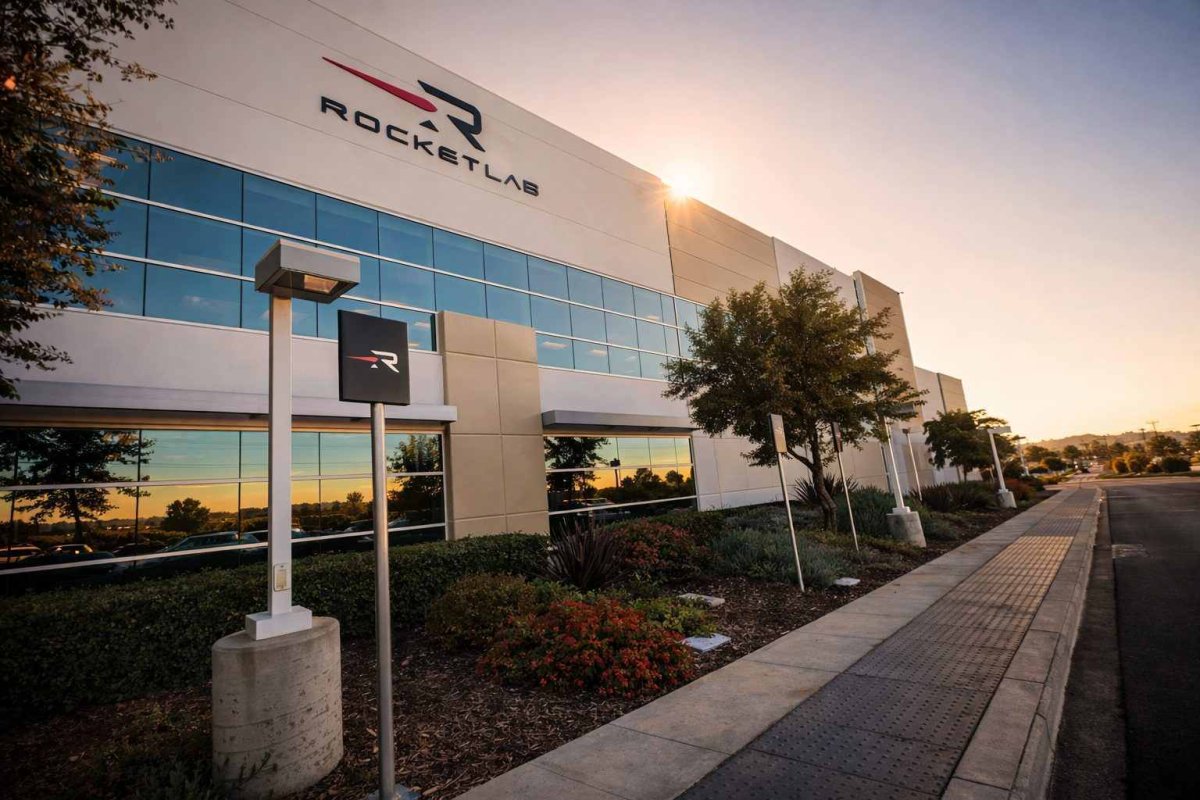
Rocket Lab (RKLB) reported a stellar first quarter on Thursday, posting record revenue of $200.3 million—a 63.5% increase from the $122.6 million recorded in the same period last year. The space launch company also narrowed its net loss to $45.0 million, or 7 cents per share, compared to a loss of $60.6 million, or 12 cents per share, a year earlier. The results exceeded analyst expectations, which had forecast a loss of 8 cents per share on revenue of approximately $189.7 million.
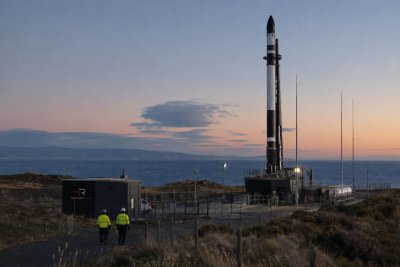
The company's backlog surged to $2.2 billion, up 20.2% from the previous quarter, driven by what Rocket Lab described as its largest launch contract to date. The deal, with an undisclosed customer, covers five flights of the upcoming Neutron rocket and three launches of the workhorse Electron vehicle, scheduled between 2026 and 2029. This brings Rocket Lab's total launch manifest to over 70 missions, a record for the company.
CEO Peter Beck hailed the contract as evidence that the industry urgently needs more launch capacity, noting that operators are racing to establish orbital infrastructure. The Neutron rocket, a medium-lift, reusable vehicle designed for heavier payloads than Electron, will be critical to the company's growth. However, development delays have pushed back its inaugural flight, a key milestone that investors are closely watching.
Rocket Lab's shares experienced volatile trading ahead of the earnings release. The stock closed the regular session at $78.55, down 7.2%, as traders appeared to take profits following a significant run-up in space-related equities. However, in after-hours trading, shares rebounded to $80.62, reflecting optimism over the earnings beat and the record backlog.
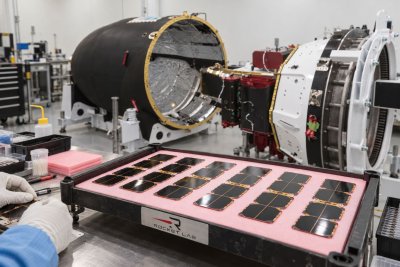
The company's space systems division also showed strong momentum. Beck highlighted the completion of the Mynaric acquisition, the impending addition of Motiv Space Systems, and the rollout of the new Gauss electric satellite thruster. Additionally, Rocket Lab secured a project linked to a U.S. missile-defense program in collaboration with Raytheon.
Looking ahead, Rocket Lab provided second-quarter revenue guidance in the range of $225 million to $240 million, but cautioned that it expects an adjusted EBITDA loss of $20 million to $26 million. Adjusted EBITDA excludes interest, taxes, depreciation, amortization, and certain other items, and is not equivalent to net profit. The company noted that potential delays in Neutron's development, slower order conversion, or costs tied to integrating new acquisitions could weigh on the outlook.
The broader space sector remains highly competitive, with private SpaceX setting the benchmark. Publicly traded peers BlackSky and Redwire also reported results in the same 24-hour period, underscoring the growing investor interest in space-related equities.
Rocket Lab's balance sheet remains robust, with liquidity exceeding $2 billion after completing an at-the-market share sale program. This financial flexibility positions the company to fund its ambitious development plans and weather any near-term headwinds.