Royal Caribbean Cruises Ltd. (RCL) is rolling out a limited-time bourbon tasting experience across 17 of its vessels this September, a move that signals the cruise operator's continued focus on monetizing the guest experience beyond ticket sales. While the program is too small to move the needle on 2026 earnings guidance, it underscores the growing importance of onboard spending, which has become a key driver of the company's revenue growth.
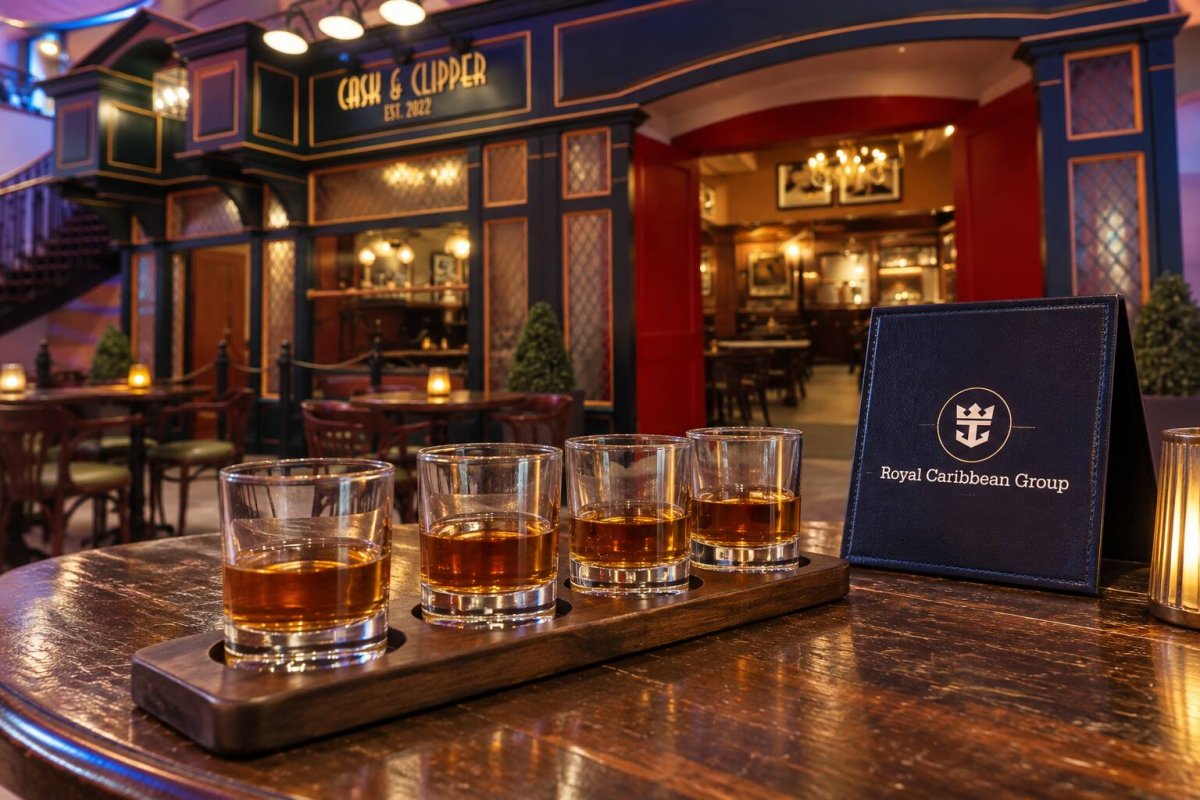
The 45-minute tasting, developed in partnership with Suntory Global Spirits, will feature a selection of four bourbons: Maker's Mark, Jim Beam Original, Knob Creek Single Barrel Reserve 9 Year, and Basil Hayden Original. According to Cruise Critic, the experience will be available on 17 of Royal Caribbean International's 31 ships, including the flagship Icon of the Seas, Star of the Seas, and all six Oasis-class vessels. The company has not disclosed the price per session, the number of sessions per sailing, or expected participation rates, making this announcement more of a strategic signal than a concrete addition to earnings models.
Onboard Revenue: The Growth Engine
The move comes as Royal Caribbean's onboard and other revenue continues to outpace ticket sales. In the second quarter, onboard and other revenue reached $1.488 billion, an 11% increase from $1.339 billion in the same period last year. This category now accounts for 30.8% of total quarterly revenue, according to the company's latest Form 10-Q. In contrast, passenger-ticket revenue grew by just 4.5% year-over-year.
The six-month picture is even more telling. Onboard and other revenue rose by $324 million, or 12.5%, to $2.919 billion in the first half of the year. Royal Caribbean attributed roughly $170 million of that increase to added capacity and $155 million to higher pricing on new and existing ships. This indicates the company is not just adding more berths; it is extracting more value from each vacation experience.
A guided bourbon tasting fits neatly into this playbook. It transforms four drinks, a host, and a narrative into a bookable experience that can be sold at a premium. Deploying it across 17 ships allows Royal Caribbean to test consumer appetite across different vessel classes without committing the entire fleet. The one-month window also gives management a clean read on demand before deciding whether to repeat or expand the format.
What Investors Still Don't Know
The economic viability of the program hinges on details that have not been made public: the ticket price, the revenue-sharing arrangement with Suntory, the capacity of each session, and whether participants would have otherwise purchased premium drinks at the bar. A sold-out tasting could still be mostly substitution rather than incremental spending, particularly if guests with beverage packages are included without an additional charge.
There is also a scale challenge. Royal Caribbean has stated that a 1% change in full-year net yields equates to approximately $156 million. The company expects 2026 net yields to rise between 2.35% and 2.85% as reported, while third-quarter net yields are projected to be roughly flat year-over-year. A seasonal tasting program is unlikely to bridge a meaningful yield gap unless it becomes a repeatable model across ships, brands, and other premium experiences.
The positive read-through is that management continues to find new ways to monetize guests after booking. The counterargument is that branded beverage events may generate more marketing value for the spirits supplier than incremental profit for the cruise line. Royal Caribbean reports onboard revenue for the entire group, so shareholders will not receive a separate return figure for this specific program.
Market Reaction and Valuation
RCL shares were indicated at $256.90 in premarket trading on Thursday, down 1.1% from Wednesday's close of $259.76. The beverage announcement should not be viewed as the catalyst for that move. At that price, the stock trades at approximately 14.4 times the midpoint of management's full-year adjusted EPS guidance of $17.73 to $17.87.
That valuation makes the investor question straightforward. The bourbon tasting is useful if it is one more low-capital tool that keeps onboard revenue growing faster than capacity and protects net yield. It is irrelevant if it merely rearranges spending that would have occurred elsewhere on the ship. The next earnings report's commentary on onboard demand and net yield will provide far more insight into RCL's value than the number of bourbons in the flight.