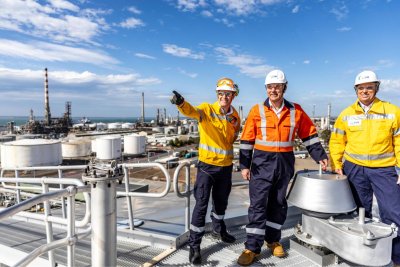
Saudi Aramco is exploring the expansion of its global oil storage network following the disruption of shipping routes through the Strait of Hormuz due to the conflict with Iran. Chairman Yasir Al-Rumayyan emphasized that supply security now requires more than just spare production capacity, signaling a strategic shift for the world's largest oil exporter.
Strategic Storage Expansion
Speaking at the FII PRIORITY Europe summit in Rome, Al-Rumayyan revealed that Aramco already maintains storage facilities in Asia, including South Korea and Japan, and is now "thinking seriously" about building larger storage sites worldwide. The move comes after the Iran war interrupted the flow of approximately 20 million barrels per day through the Strait of Hormuz in 2025, according to the International Energy Agency (IEA).
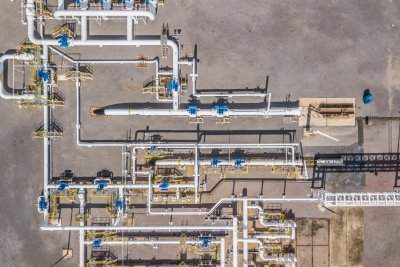
While storage cannot replace production capacity, it could help Aramco maintain crude deliveries to customers if tanker movements, port operations, or insurance markets become disrupted. Alternative routes bypassing Hormuz, such as those through Saudi Arabia and the UAE, have limited additional capacity.
Market Implications and Risks
The market situation remains complex. Kpler analyst Muyu Xu noted that reopening the Strait of Hormuz could release approximately 93 million barrels of non-Iranian oil currently stranded in the Gulf. However, weaker refinery demand in Asia could make buyers cautious. Additional storage might help Aramco stabilize supply, but a sudden influx of released barrels risks depressing crude prices in the region.
Aramco's shares closed at 26.52 riyals, down 0.3%, as investors weigh the costs of storage expansion against the risks of renewed disruptions and regulatory hurdles in Europe.
Regulatory Challenges in Europe
Al-Rumayyan also used the Rome forum to criticize European Union regulators. He stated that the Public Investment Fund (PIF) invested 98 billion euros in Europe and Britain from 2017 through 2025, while Aramco invested about 80 billion euros with suppliers in Europe. "Regulatory challenges are really hurting investors," he told the forum, citing Aramco, SABIC, and PIF as examples.
The remarks highlight growing concern about the EU's Foreign Subsidies Regulation, which allows Brussels to investigate whether government-backed support from outside the bloc distorts competition in deals, tenders, or other business activities. The European Commission has already used this tool to launch a deep review of ADNOC's takeover of Covestro, which was ultimately cleared. Gulf investors are closely monitoring that case as a signal of how Europe will scrutinize state-backed investments.
PIF's Strategic Shift
The PIF board approved its 2026-2030 strategy in April, moving away from rapid growth toward value creation and investment efficiency. The fund now categorizes its investments into three buckets: vision projects, strategic assets, and financial investments. Al-Rumayyan confirmed that PIF is not planning to stop investing abroad, but overseas investments may represent a smaller share of the portfolio as the fund grows. The dollar amount invested outside Saudi Arabia will still increase.
The storage expansion plan carries risks. If Hormuz traffic normalizes and crude begins to accumulate, the new storage could become just an additional insurance expense rather than a competitive advantage. On the investment front, European regulation, deal scrutiny, geopolitical threats, and the capital demands of Saudi Arabia's Vision 2030 projects all constrain available funds.
Saudi Arabia is making clear that spare capacity alone is no longer sufficient. Aramco is integrating pipelines, storage, and customer access into a unified system for supply security. At the same time, PIF is signaling to Europe that Saudi capital remains available, but not at any cost regulators may demand.