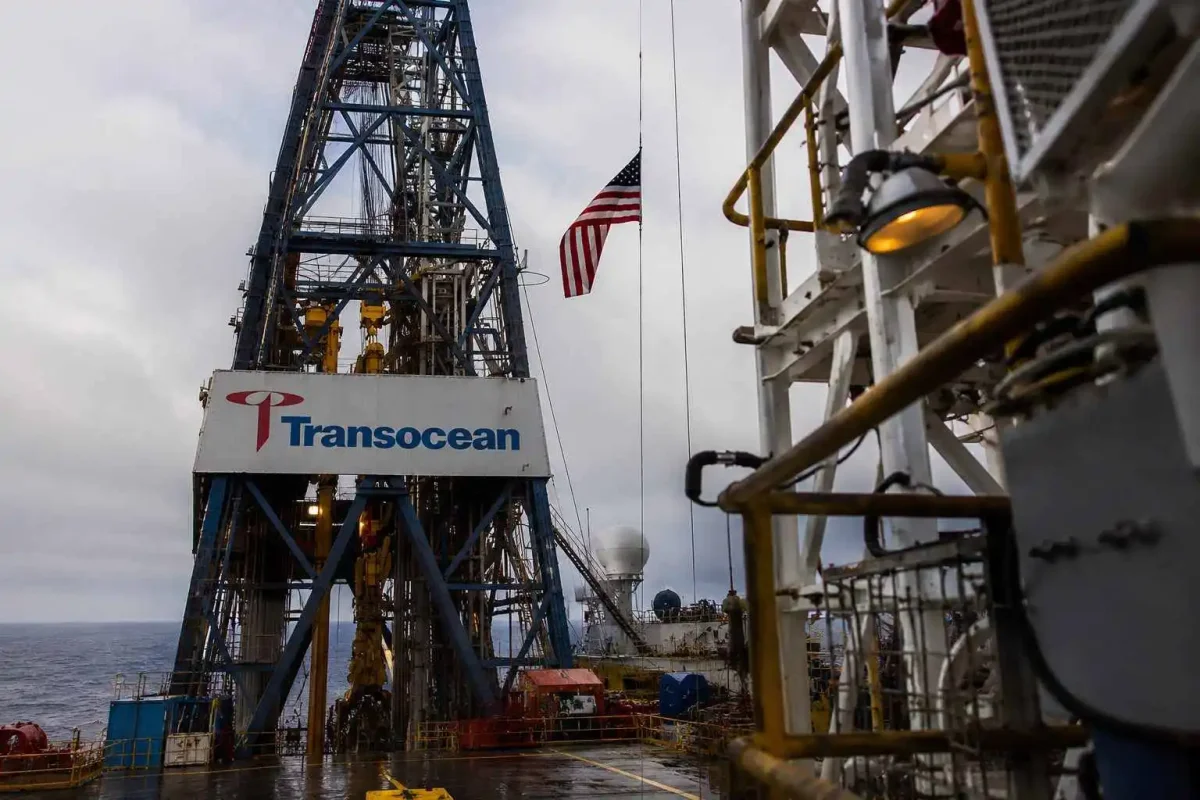
Transocean Ltd. (NYSE: RIG) saw its shares climb 4.7% on Friday, recovering most of the losses from earlier in the week, as investors positioned ahead of the company's second-quarter earnings report scheduled for Wednesday. The stock closed at $5.32, though it still finished the week 0.6% lower. The rebound helped narrow the merger spread with Valaris Ltd. (NYSE: VAL) to 2.35% as of Friday's close, a slight improvement from the 2.49% spread recorded on July 24.
The all-stock merger, which involves a fixed exchange ratio of 15.235 Transocean shares for each Valaris share, implied a value of $81.05 per Valaris share at Friday's close. Valaris shares finished the session at $79.19, leaving a gross spread of $1.86 per share. This spread does not account for trading costs or the time value of money. The sensitivity is significant: a 10-cent move in Transocean's stock changes the implied value by approximately $1.52, meaning a drop of just 12.2 cents in Transocean would eliminate the current spread entirely, assuming all other factors remain constant.
The offshore drilling sector saw broad gains on Friday, with Noble Corporation plc (NYSE: NE) rising 2.3% and Seadrill Limited (NYSE: SDRL) up 3.7%. However, all four drillers listed in the accompanying table finished the week in negative territory, with Transocean down 0.6%, Valaris down 0.4%, Noble down 2.0%, and Seadrill down 0.2% over the week. Trading volume for Transocean was robust, with 62.8 million shares changing hands, 1.69 times its 65-day average volume.
The merger, announced earlier this year, has cleared the Committee on Foreign Investment in the United States (CFIUS) review as of June 29. However, the U.S. Department of Justice's second request and shareholder approvals from both companies remain outstanding. The companies have agreed not to certify compliance with the DOJ until after July 31, and unless regulators expedite the process, the deal cannot close until 60 days after mutual certification. Management has reiterated a target of closing in the second half of 2026.
Rising oil prices provided a tailwind for the sector on Friday. Brent crude settled at $90.12 per barrel, while West Texas Intermediate (WTI) closed at $84.67. Both benchmarks posted strong gains in July, with Brent up 24% and WTI advancing 21% for the month. The rally in oil prices has improved sentiment for offshore drillers, though the merger spread remains a key focus for investors.
Looking ahead to Wednesday's earnings release, Transocean is expected to report contract drilling revenue of approximately $957 million, according to preliminary analyst estimates. The company's guidance for the second quarter calls for revenue in the range of $930 million to $970 million, which would represent a decline of about 12% from the first quarter's $1.081 billion. Operating and maintenance expenses are projected to be between $630 million and $660 million, up roughly 6% from the first quarter's $606 million. Adjusted earnings per share are forecast to be between break-even and $0.01, compared to a loss of $0.03 in the first quarter.
Revenue efficiency, a key metric for offshore drillers, is expected to come in at 96.5% for the second quarter, down from 97.3% in the first quarter. The narrower margin between revenue and expenses leaves less room for operational setbacks, such as rig downtime or lower dayrates. Investors will be watching Wednesday's fleet update closely for any signs of deterioration.
Balance sheet improvement remains a central theme. In the first quarter, Transocean reduced its debt by $549 million to $5.14 billion, generated free cash flow of $136 million, and reported a backlog of $7.1 billion. Since then, the company has secured $185 million in new awards and reached a conditional agreement with Equinor ASA (NYSE: EQNR) valued at over $1 billion. The backlog will be updated in Wednesday's release to reflect the depletion of contract revenue.
Chief Executive Keelan Adamson has been vocal about the importance of deleveraging, stating in February, "We know that our debt level negatively impacts our equity value." The upcoming cash flow results will provide a key test of whether the company is on track to meet its deleveraging goals. Analysts will also be listening for any updates on the merger timeline during the conference call scheduled for Thursday at 9:00 a.m. EDT.
Risks remain, however. A muted market response to earnings could quickly widen the merger spread. Potential DOJ remedies, delays in closing, rig downtime, or reduced dayrates could put downward pressure on both stocks. Since the consideration is all-stock, Valaris shareholders remain exposed to Transocean's share price until the deal is completed.
The week ahead is packed with catalysts: markets reopen on Monday, earnings and fleet data are due Wednesday, and the management call follows on Thursday. Investors will be scrutinizing both the financial results and any commentary on the merger's progress.