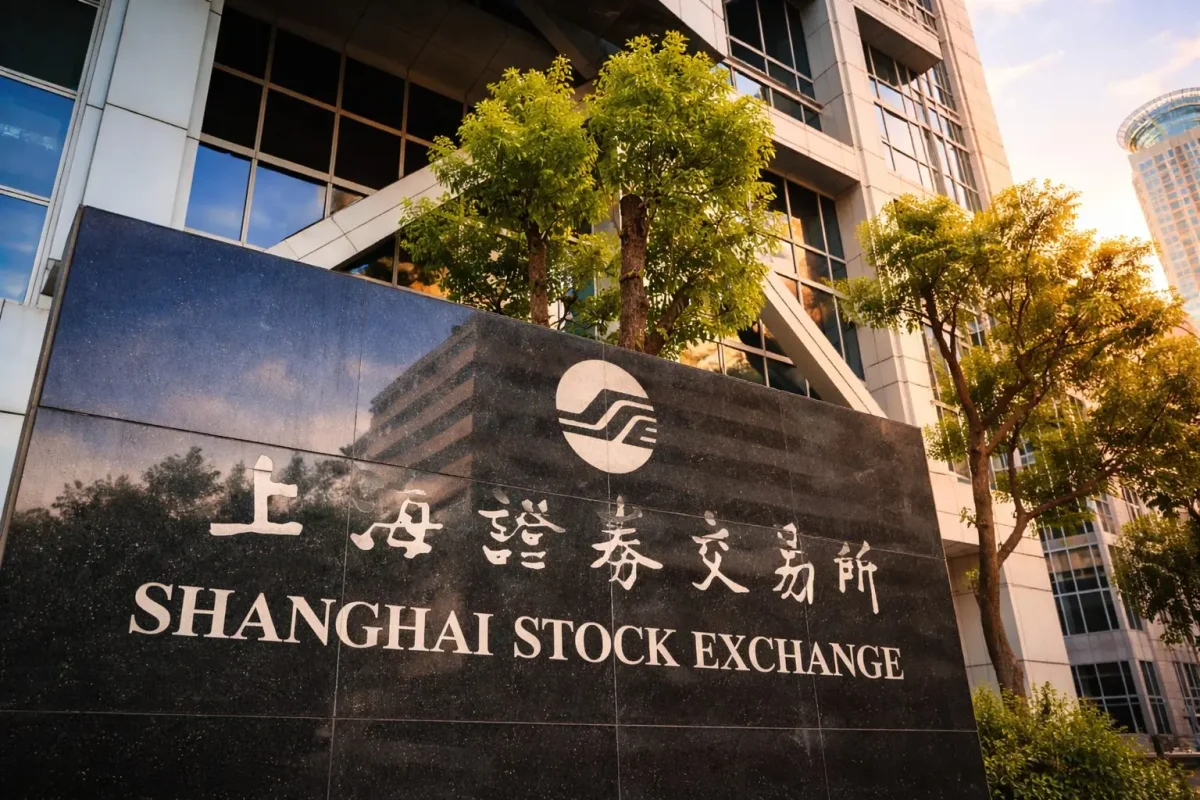
The Shanghai stock market concluded the trading week with a modest advance on Friday, March 1, 2026, setting the stage for a pivotal week ahead dominated by major political gatherings and key economic indicators. The benchmark Shanghai Composite Index closed at 4,162.88, marking a gain of 0.39%. In contrast, the broader CSI 300 Index, which tracks the largest listed companies in Shanghai and Shenzhen, retreated 0.34% to finish at 4,710.65, highlighting a divergence in performance between major benchmarks and the broader market.
Policy Signals in Focus
Investor attention is now firmly fixed on the annual "Two Sessions" meetings, which commence on Monday, March 4. This high-level political event, where national lawmakers and top political advisors convene, is expected to outline critical policy directions, including the official economic growth target and budget details for the year. The Politburo has recently called for more proactive and effective fiscal measures, signaling a potential tilt toward supportive policies. Analysts from institutions like MUFG anticipate the government may maintain a growth target around previous levels but could see the budget deficit ratio edge up to approximately 4.0% of GDP.
Economists are parsing potential shifts in the official stance. Ho Woei Chen, an economist at UOB, projects the National People's Congress may set a "more moderate" real GDP growth goal in the range of 4.5% to 5.0% for 2026. This comes against a backdrop where 17 of China's 31 provincial-level regions have already moderated their own 2026 growth ambitions, citing challenges from sluggish domestic demand, persistent property sector issues, and local government debt.
Immediate Data Catalyst: February PMI
Adding to the week's significance, China's National Bureau of Statistics is scheduled to release the February Purchasing Managers' Index (PMI) on March 4, coinciding with the start of the Two Sessions. This key gauge of factory activity, delayed due to the Lunar New Year holiday, will be closely watched. A reading above 50 indicates expansion in the manufacturing sector, while a figure below 50 signals contraction. The data will provide the first major snapshot of economic activity for 2026 and could significantly influence market sentiment, particularly for cyclical stocks.
Sector and Index Performance
Friday's session revealed a mixed picture across different market segments. The Shenzhen Component Index dipped slightly by 0.06% to close at 14,495.09. On the technology-focused STAR Market in Shanghai, the STAR Composite Index advanced 0.36% to 1,849.77, while the STAR 50 Index saw a more modest gain of 0.15%, ending at 1,488.02.
The technology sector provided a bright spot heading into the weekend, driven by strong corporate earnings. AI chip designer Cambricon reported a substantial net profit of 2.06 billion yuan for 2025, accompanied by a staggering 450% surge in revenue to 6.5 billion yuan. Its shares closed up 0.8% at 1,178 yuan. Other tech firms, including Moore Threads and MetaX, also reported robust revenue growth for 2025, with year-on-year increases of 243% and 121%, respectively.
Market Context and External Risks
The trading week begins on Monday, March 2, with investors navigating a complex landscape. Shanghai stocks have historically exhibited sensitivity to policy details from the Two Sessions, with sectors like banking, industrials, and state-owned enterprises typically most affected by the announced targets. A disappointing PMI reading or perceived lack of aggressive stimulus could pressure cyclical stocks. Furthermore, external factors remain in play, including volatility in global energy markets. Some analysts have pointed to geopolitical tensions, such as the conflict involving Iran, as a potential source of oil price shocks that could impact transport and consumer-related equities listed in Shanghai.
Broader Economic Backdrop
The policy discussions occur following the release of official figures showing the Chinese economy expanded by 5.0% in 2025. The current political agenda is also focused on drafting documents for the next five-year plan alongside the annual government work report, which is expected on March 5. The confluence of these events makes the upcoming week a critical period for setting the investment narrative for the coming quarters. Market participants will scrutinize the growth target, the fiscal deficit number, and any new measures announced to bolster domestic consumption and address structural economic challenges.
As markets reopen, the immediate catalysts are clear: the PMI data on March 4 followed by the government work report on March 5. The outcomes will likely determine whether the recent resilience in the Shanghai Composite can be sustained or if the caution reflected in the CSI 300's decline will prevail. All eyes are on Beijing for signals that will shape monetary, fiscal, and regulatory approaches in the world's second-largest economy.