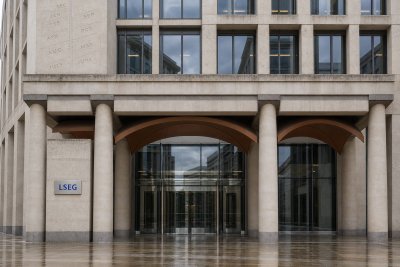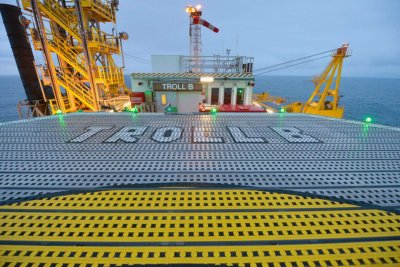
Shares of Shell Plc experienced a modest decline in early trading on the London Stock Exchange on Tuesday, February 10, 2026, following the company's latest announcement regarding its ongoing share repurchase program. The stock edged down 0.2% to 2,818 pence by 0815 GMT. This movement came after the energy giant disclosed the purchase of 1,382,252 of its own shares for cancellation on February 9, executed across both the London and Amsterdam markets. The volume-weighted average price paid was approximately £27.93 per share in London and €32.15 in Amsterdam.
Contrasting Performances and Strategic Focus
The slight dip in London stands in contrast to the performance of Shell's U.S.-listed shares, which closed the previous trading session on Monday up 3.3% at $77.80. This divergence highlights the varying investor sentiment across markets. In the current environment, with crude oil prices exhibiting volatility, European oil majors like Shell are increasingly emphasizing capital return programs to maintain investor appeal and address concerns over the sustainability of shareholder payouts. This strategic focus is underscored by the contrasting approach of peer BP Plc, which announced on the same Tuesday that it would be pausing its own share buyback initiatives, thereby placing Shell's continued commitment to its program in sharper relief.
Underlying Reserve Concerns Linger
Beyond the immediate capital allocation news, a more fundamental concern continues to weigh on Shell's long-term outlook. According to a recent Reuters report, the company's proven reserves life has fallen below eight years at current production rates. This metric, which aggregates both oil and gas by energy content, suggests a potential future production shortfall ranging from 350,000 to 800,000 barrels of oil equivalent per day by the year 2035 as existing fields naturally decline. Analysts note that without strategic mergers and acquisitions in the near term, these apprehensions regarding production longevity are likely to persist. Biraj Borkhataria, an analyst at RBC, commented, "Absent M&A in the near term, we expect these concerns over [production] longevity to linger."
Market Context and Execution Details
The broader oil market provided a muted backdrop for the trading session. Brent crude futures saw a minor retreat, slipping 16 cents to $68.88 a barrel by 0800 GMT. Market participants continue to monitor geopolitical tensions, particularly simmering friction between the U.S. and Iran near the critical Strait of Hormuz, which has maintained a modest risk premium in the price. IG analyst Tony Sycamore noted, "Lingering uncertainty ... has kept a modest risk premium intact." For Shell, the buyback program is being managed by Morgan Stanley & Co. International, which will continue to act independently in executing trades through May 1, 2026.
Balancing Act for Investors and Management
Shell's trading activity often reflects a complex interplay of company-specific news, broader sector trends, and commodity price swings. While the immediate share price reaction to the buyback update was subdued, the underlying narrative for investors involves a delicate balance. On one hand, the company is actively returning capital to shareholders through a substantial $3.5 billion repurchase plan slated to run for roughly three months, potentially concluding just before the release of its first-quarter results. On the other hand, the declining reserve life presents a strategic challenge that cannot be addressed by financial engineering alone.
The efficacy of buybacks in supporting the share price could be tested if oil markets experience a steeper downturn. Furthermore, any significant upward movement in the stock price could swiftly redirect investor attention back to the reserve replacement issue, raising fresh questions about potential acquisition targets and the associated costs. The company's ability to navigate this dual mandate—delivering immediate shareholder returns while securing its long-term production profile—will be closely watched by the market in the coming quarters.