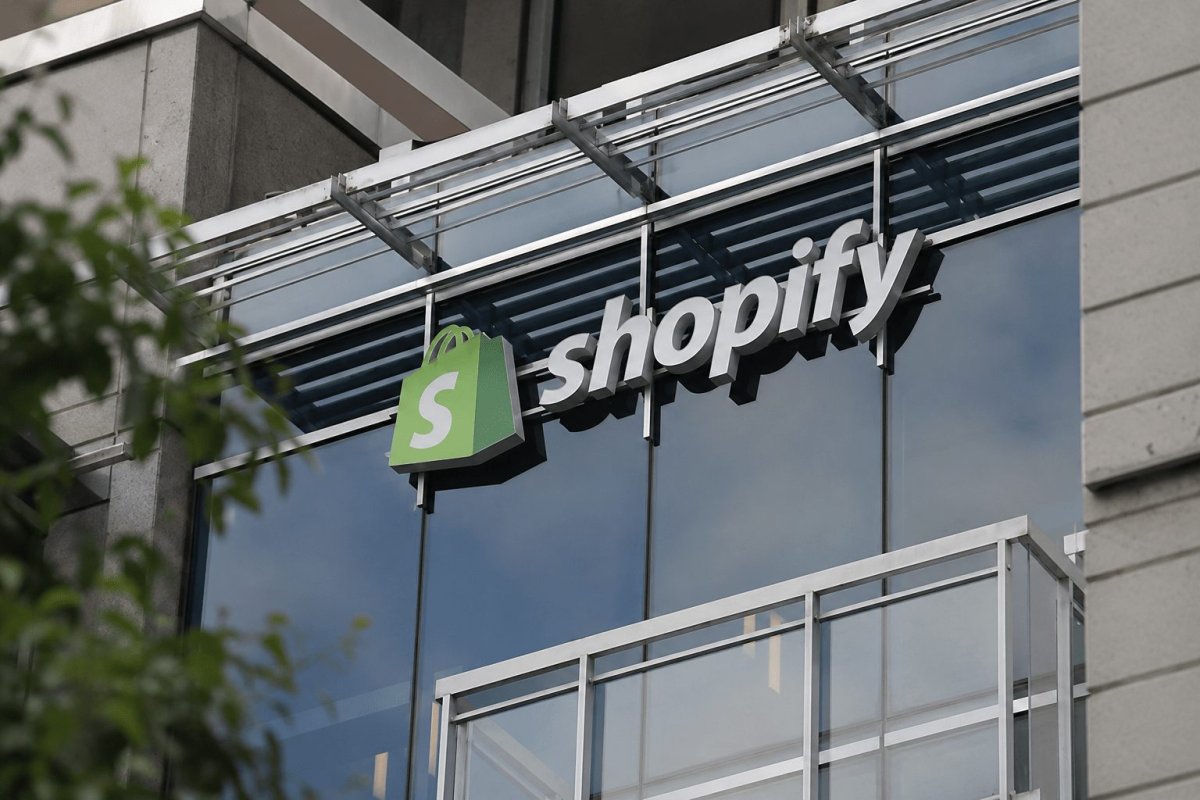
Shopify Inc. experienced a notable decline on Monday, with shares falling 7.13% to close at $102.54, extending the post-earnings weakness observed last week. The stock edged up slightly to $102.69 in after-hours trading. The drop comes as the company released its annual meeting materials, which include a shareholder proposal on AI governance scheduled for a vote on June 16.
AI Governance Takes Center Stage
The shareholder proposal, submitted by SHARE, representing the Pension Plan of the United Church of Canada, calls on Shopify to adopt a responsible-use AI policy aligned with human rights and international standards. The board has recommended voting against the proposal, labeling it a "solution in search of a problem." In its response, Shopify emphasized that its existing AI governance framework—covering employee conduct policies, board briefings, audit committee oversight, vendor scrutiny, product testing, and ongoing monitoring—is already robust.
The company has rolled out generative AI features in products like Shopify Magic and Sidekick, and is expanding into "agentic commerce," where AI agents manage shopping tasks and facilitate sales within AI-driven conversations.
Financial Performance and Cost Concerns
In the first quarter, Shopify reported revenue of $3.17 billion, a 34% increase year-over-year. Gross merchandise volume rose 35% to $100.74 billion, while operating income reached $382 million. Free cash flow, after capital expenditures, totaled $476 million. Despite these strong top-line figures, investors remain focused on rising expenses and the company's ability to maintain margins.
For the second quarter, Shopify expects revenue growth in the high-20% range, with gross profit dollars projected in the mid-20% zone. Operating expenses are forecast to be between 35% and 36% of revenue. Stock-based compensation is estimated at $145 million, and the company targets a free cash flow margin in the mid-teens.
Market Context and Competitive Landscape
President Harley Finkelstein described the current period as Shopify's entry into the "AI era," while CFO Jeff Hoffmeister highlighted "broad-based growth" across regions, merchant sizes, and sales channels in Q1. However, these optimistic statements are tempered by investor scrutiny over whether costs will remain under control.
Competition in the AI space is intensifying. On Sunday, Reuters reported that Alibaba plans to embed its Qwen AI into Taobao, enabling shoppers to use a chat-based agent for browsing, comparing, and purchasing. Amazon remains cautious about granting full AI autonomy on its marketplace, while Shopify has opted to leverage third-party AI agents rather than developing a proprietary consumer-facing AI system.
If AI-driven traffic fails to convert into paying customers or if merchant demand weakens while spending remains high, Shopify may find investors focusing less on its 30%-plus growth and more on its ability to protect margins. The shareholder vote adds another layer of complexity, as AI now touches every aspect of the business—from product development to expense management and boardroom debates.