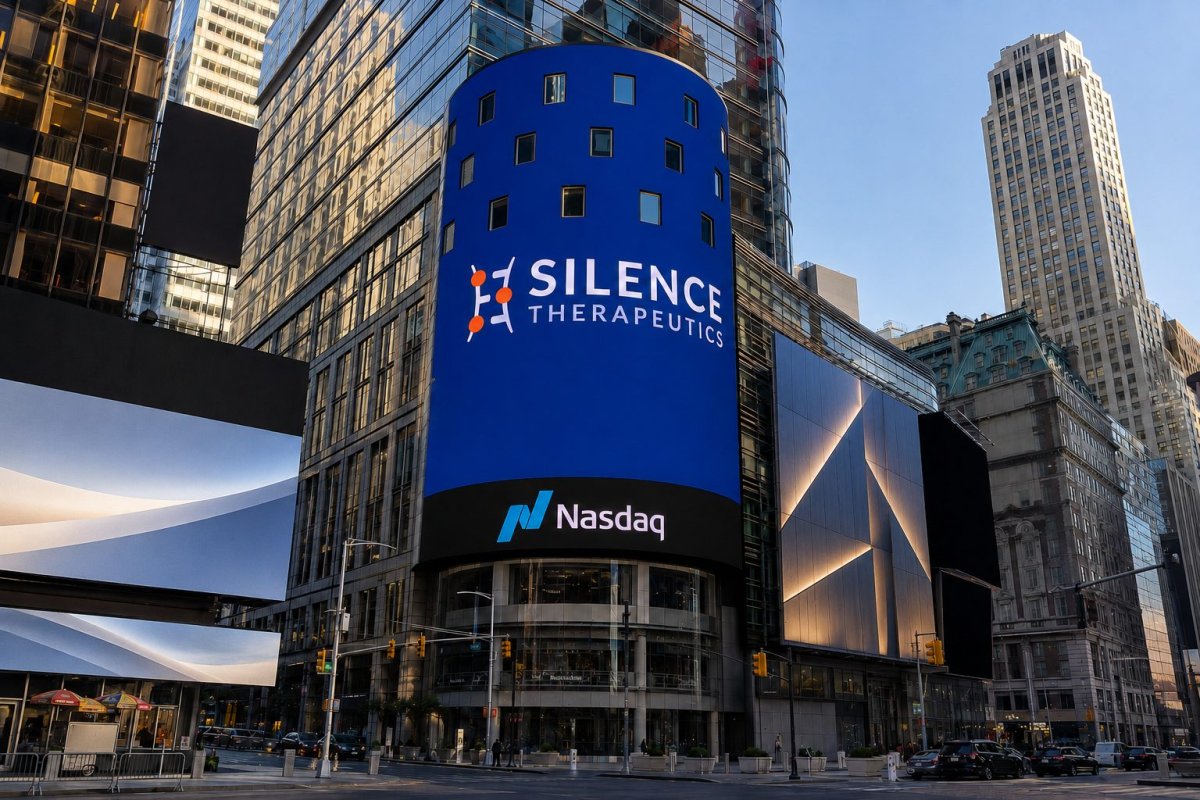
Silence Therapeutics plc (NASDAQ:SLN) experienced a significant surge in late trading on Monday, with shares climbing over 25% following the release of promising Phase 2 clinical trial results for its investigational RNA-interference therapy, divesiran. The data, from the SANRECO study, demonstrated that the drug achieved all primary and secondary endpoints in patients with polycythemia vera, a chronic blood cancer characterized by an overproduction of red blood cells.
The most notable finding, which caught investors' attention, was the sustained efficacy of divesiran when administered every 12 weeks. This quarterly dosing schedule not only simplifies treatment but also sets the program apart from potential competitors, offering a significant convenience advantage for patients who often require frequent phlebotomy to manage their condition.
Phase 2 SANRECO Trial Results
The randomized, placebo-controlled Phase 2 trial enrolled 48 patients whose hematocrit levels were inadequately controlled despite standard therapies such as hydroxyurea, interferon, or ruxolitinib. Participants received subcutaneous divesiran at either 6 mg/kg every six weeks or every 12 weeks, or a placebo. The primary endpoint was the proportion of patients achieving hematocrit control (under 45%) and not requiring phlebotomy from week 18 to week 36.
Results showed an overall response rate of 88% for all patients receiving divesiran, compared to just 19% for the placebo group (p<0.0001). Specifically, the six-week dosing regimen yielded a 93.8% response rate, while the 12-week regimen achieved an 81.3% response rate. These results robustly support the decision to advance the 12-week dosing schedule into Phase 3 trials.
Secondary Endpoints and Safety
Secondary endpoints reinforced the primary findings. Patients treated with divesiran required a mean of only 0.2 phlebotomies through week 36, versus 2.1 for those on placebo (p<0.0001). The therapy was generally well-tolerated, with no new safety signals reported. Injection-site reactions were rare and self-resolving, and two patients experienced grade 1 anemia, which was manageable.
Dr. Curtis Rambaran, Chief Medical Officer of Silence Therapeutics, described the outcome as the "best-case outcome" for the trial, though such statements are promotional. The key differentiator remains the quarterly dosing, which maintained most of the efficacy seen with the more frequent six-week regimen while halving the number of injections.
Mechanism of Action and Market Context
Divesiran utilizes small interfering RNA (siRNA) technology to target TMPRSS6, a liver-derived regulator of hepcidin. By increasing hepcidin levels, the drug limits iron availability for red blood cell production, addressing the underlying erythrocytosis rather than merely removing excess blood post-production. This mechanism is particularly appealing as there are currently no approved therapies that directly target red blood cell production and hematocrit levels.
The company plans to initiate a placebo-controlled Phase 3 trial in the first half of 2027. However, it faces competition from Protagonist Therapeutics (NASDAQ:PTGX) and Takeda (NYSE:TAK), whose rival therapy rusfertide is already under FDA Priority Review with a target decision in Q3 2026. Rusfertide, a hepcidin mimetic administered weekly, showed a 76.9% clinical response rate in its Phase 3 VERIFY study versus 32.9% for placebo.
Competitive Landscape and Financial Position
While direct comparison between divesiran and rusfertide is not possible due to differing trial designs and patient populations, the convenience of quarterly dosing for divesiran is a clear advantage. If rusfertide receives approval, it could gain market traction and reimbursement before divesiran's Phase 3 data is available, but Silence's drug offers a less frequent dosing schedule and a unique mechanism of action.
As of the end of June, Silence Therapeutics held $72.1 million in cash and cash equivalents, which will be crucial for funding the upcoming Phase 3 program. The company's stock surged to over $15 in late trading, up from Friday's close of $11.95, with volume exceeding 15 million American depositary shares—approximately 35 times the recent daily average, bringing the stock near a new 52-week high.
Investors will be watching closely as Silence moves forward with its Phase 3 plans, balancing the promise of divesiran against the financial requirements of a large-scale trial and the competitive pressures from rusfertide.