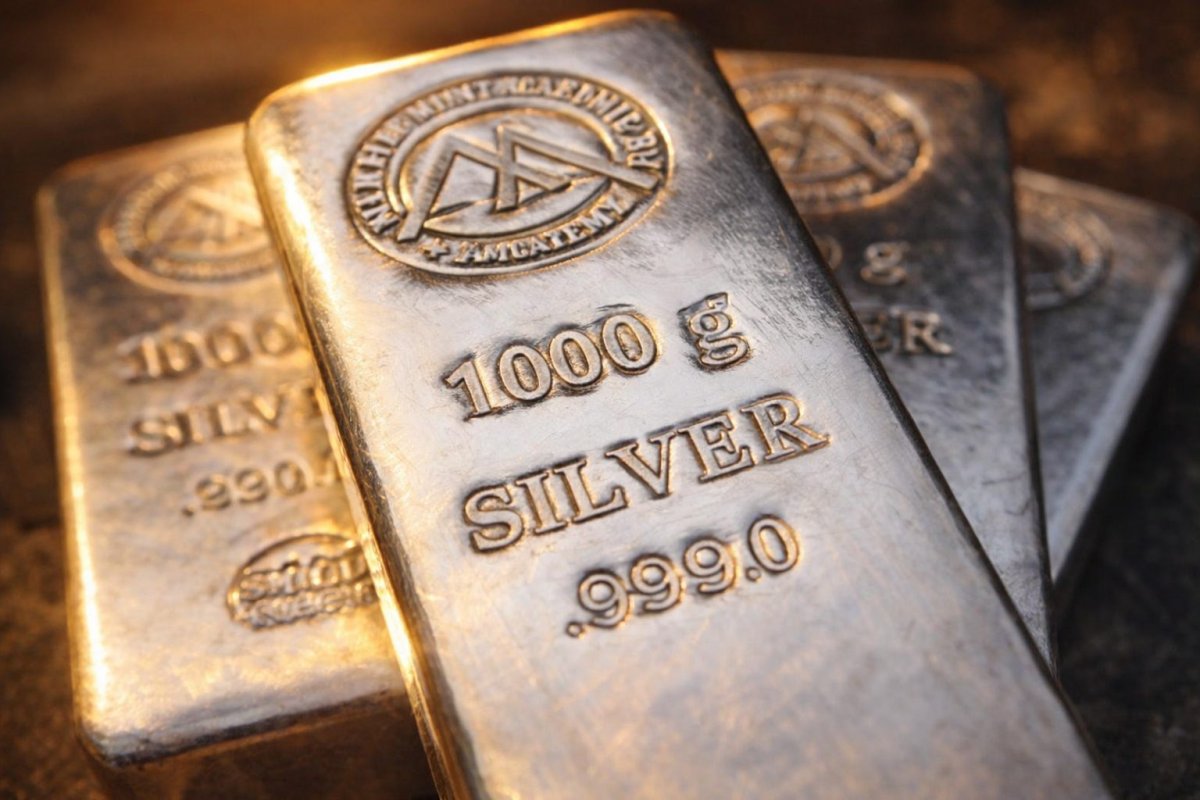
Spot silver prices advanced on Monday, rising approximately 1% to settle at $70.27 per ounce. The move pushed the precious metal back above the psychologically significant $70 threshold as investors continued to seek refuge in hard assets amid persistent geopolitical instability in the Middle East. This follows a notable 2.2% rally on Friday, though silver remains substantially below its record peak of $121.6 reached on January 29, 2026.
Industrial and Physical Market Pressures
The volatility in silver markets is manifesting beyond trading desks, impacting physical markets as well. Germany's finance ministry revealed plans to substantially reduce the silver content in two of its euro-denominated collector coins. The 35-euro coin will see its silver content slashed by 46%, a direct response to the metal's price swings and elevated costs. This development underscores how price fluctuations are affecting tangible applications and government minting programs. Underlying industrial demand from sectors including jewelry manufacturing, electronics, and solar panel production continues to provide a fundamental base for the metal, keeping its dual role as both a monetary and industrial commodity in focus.
Broad Precious Metals Strength
The bid for safety extended across the precious metals complex. Gold prices climbed 0.6% to $4,518.57 per ounce. Platinum gained 1.6%, while palladium posted a more substantial advance of 2.9%. This collective strength indicates a broader investor move into the sector, rather than a isolated squeeze specific to silver.
Jim Wyckoff, senior analyst at Kitco Metals, noted the ongoing conflict remains "running hot," with market participants closely monitoring crude oil, bond yields, and the U.S. dollar. This combination sits at the core of silver's current market dilemma: geopolitical strife can spur safe-haven inflows, but it also fans inflationary pressures through elevated energy costs, which in turn can push interest rates higher and diminish the appeal of non-yielding assets.
Interest Rate Dynamics and Federal Reserve Policy
Monetary policy expectations are applying significant influence. Earlier this month, the Federal Reserve maintained its benchmark interest rate in the 3.50%-3.75% range. Chair Jerome Powell indicated the central bank could adopt a wait-and-see approach, assessing how the conflict impacts both economic growth and inflation. In response, money markets have largely abandoned expectations for interest rate cuts this year. Prior to the escalation in the Middle East, traders had been pricing in as many as two reductions. Since precious metals do not offer yield, their attractiveness tends to wane as interest rates rise.
Upcoming Economic Data Calendar
Traders now face a heavy schedule of U.S. economic releases this week, including job openings, retail sales, the ADP employment report, and the pivotal nonfarm payrolls data. Any signals pointing toward softer inflation or an economic slowdown could abruptly shift rate expectations. Historically, silver has been quick to react to such macroeconomic catalysts.
Friday's rebound demonstrated the fragile state of market sentiment. Spot silver jumped 2.2% to $69.54 as buyers stepped in following a sharp selloff, even as oil prices held above $110 per barrel and geopolitical tensions intensified further.
Analyst Caution and Market Outlook
Some analysts express skepticism regarding the sustainability of the recent bounce. Fawad Razaqzada, market analyst at City Index and FOREX.com, suggested gold's upward move could "fade" unless it breaches key resistance levels. While silver is distinct from gold, it is being buffeted by the same trio of forces: oil prices, bond yields, and dollar strength. Elevated energy costs and evaporating hopes for near-term rate cuts could leave silver struggling for direction, even if periodic bouts of crisis-driven buying emerge. Furthermore, any de-escalation in geopolitical tensions could see safe-haven demand dissipate rapidly.
Market conditions have stabilized somewhat compared to the heightened volatility of last week, but a clear sense of direction remains elusive. Silver currently hovers near $70, a far cry from its January zenith. After soaring 147% in 2025 and undergoing a sharp correction this year, the metal appears caught in a consolidation phase without a decisive trend. Germany's adjustment to its coin composition serves as a tangible reminder that the period of turbulence for silver is not yet over.