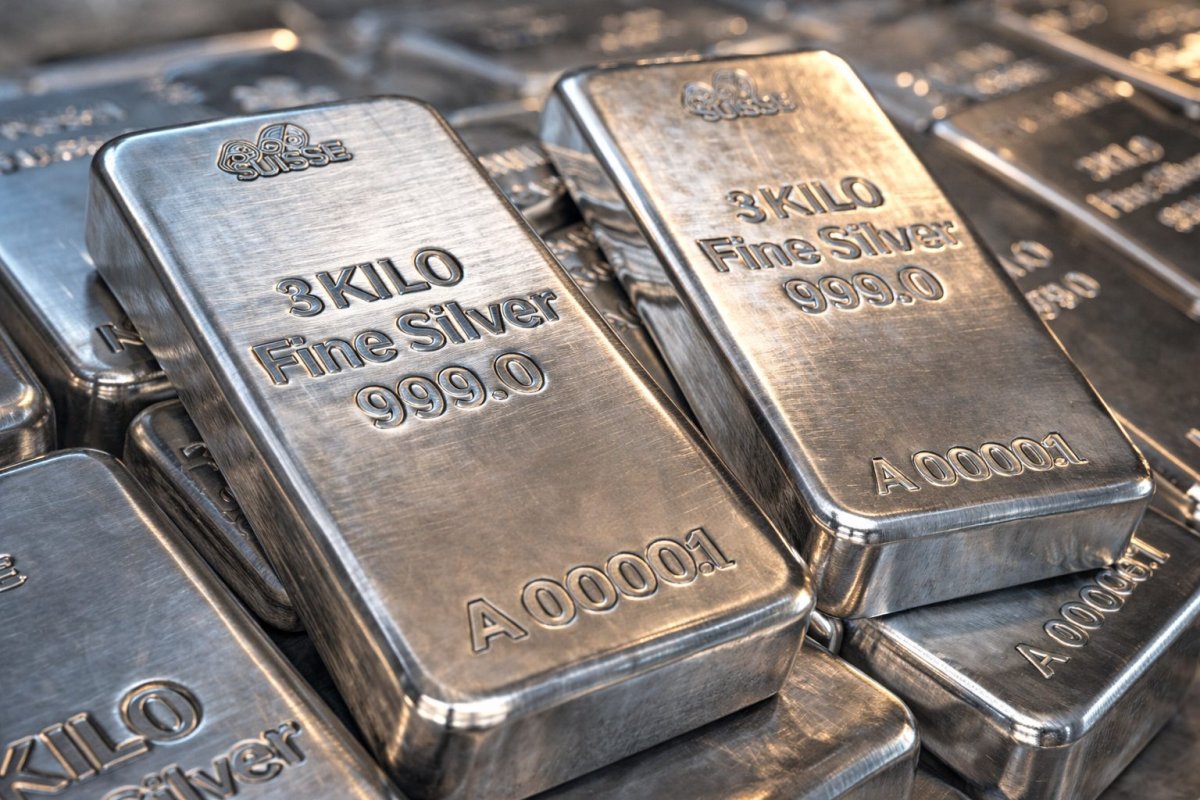
Silver prices exhibited modest weakness during Wednesday's trading session, with the spot metal declining 0.2% to settle at $79.40 per ounce. This movement represents a consolidation phase following Tuesday's closing level of $79.48, which itself came after a substantial 5.2% surge earlier in the week. The precious metal remains significantly below its historic peak of $121.60 reached in January, a level driven by vigorous retail investment, expanding U.S. stockpiles, and strong inflows into silver-backed exchange-traded products.
Structural Deficits Define Market Outlook
A newly released survey from the Silver Institute, conducted in collaboration with Metals Focus, underscores a challenging supply-demand landscape. The analysis projects a sixth consecutive annual structural deficit for 2026, marking an unbroken streak of supply failing to meet demand. Since 2021, global above-ground inventories have contracted by a substantial 762 million troy ounces, forcing the market to increasingly rely on dwindling stockpiles and elevating vulnerability to supply disruptions.
The projected deficit for 2026 is estimated at 46.3 million ounces, an increase from the 40.3 million ounces anticipated for 2025. This persistent imbalance creates a fundamentally supportive environment for prices, particularly if expectations for higher U.S. interest rates moderate. "Gold and silver are just seeing some mild and routine profit-taking after scaling overnight highs," observed Jim Wyckoff, senior analyst at Kitco Metals. He noted that trader focus has recently shifted toward inflation dynamics and interest rate trajectories rather than the traditional safe-haven attributes of precious metals.
Industrial and Investment Demand Diverging
Underlying demand components present a mixed picture. Industrial fabrication demand is on track to decline by approximately 3% in 2026, potentially reaching a four-year low, partly attributed to dampened global growth prospects. Conversely, physical investment demand for coins and bars is forecast to surge by 18%, fueled by renewed interest from U.S. investors. This dichotomy highlights silver's dual role as both an industrial commodity and a monetary asset.
Market participants received clearer macroeconomic signals on Tuesday, with the broader metals complex finding support from a softer U.S. dollar and declining crude oil prices. The latter followed remarks from former President Donald Trump suggesting potential diplomatic talks concerning Iran could resume in Pakistan. "If we see positive news, metals will continue higher," commented Bob Haberkorn, senior market strategist at RJO Futures.
London Market Liquidity Remains a Concern
Despite some normalization, physical supply conditions in key trading hubs like London continue to exhibit tightness. Data from Metals Focus indicates that of the 884 million ounces held in London vaults at the end of March, only 28% was unencumbered and available to support market liquidity—a notable improvement from September's low of 17% but still a constrained figure. The cost of borrowing silver, known as lease rates, has largely returned to typical levels. However, analysts caution that risks persist. "Lease rates in London have largely normalised, but risks of another liquidity squeeze this year remain," warned Philip Newman of Metals Focus.
The broader precious metals complex displayed divergent performance. Gold fell 0.9% to $4,798.89 per ounce. Platinum managed a 0.8% gain, finishing at $2,119.52, while palladium retreated 1.1% to $1,570.10.
Macroeconomic Crosscurrents and Future Catalysts
The path forward for silver is clouded by competing macroeconomic forces. Market-implied probabilities for a Federal Reserve interest rate cut this year stand near 32%. The U.S. dollar, while having relinquished much of its geopolitical risk premium, remains elevated compared to pre-conflict levels. Concurrently, oil prices advanced roughly 1% as shipping traffic through the critical Strait of Hormuz remained unusually light.
Silver faces specific headwinds, including potential pressure from a stronger dollar, higher energy costs, or a more pronounced slowdown in industrial activity. As a non-yielding asset heavily dependent on manufacturing demand, it is sensitive to these shifts. Broader equity indexes have recovered to near pre-conflict altitudes, and crude oil has dipped back below $100 per barrel. Yet silver remains far removed from its January zenith. Analysts identify several potential catalysts for a renewed price squeeze, including the return of Indian physical buyers, accelerating inflows into London-based ETPs, or a sudden spike in market volatility.