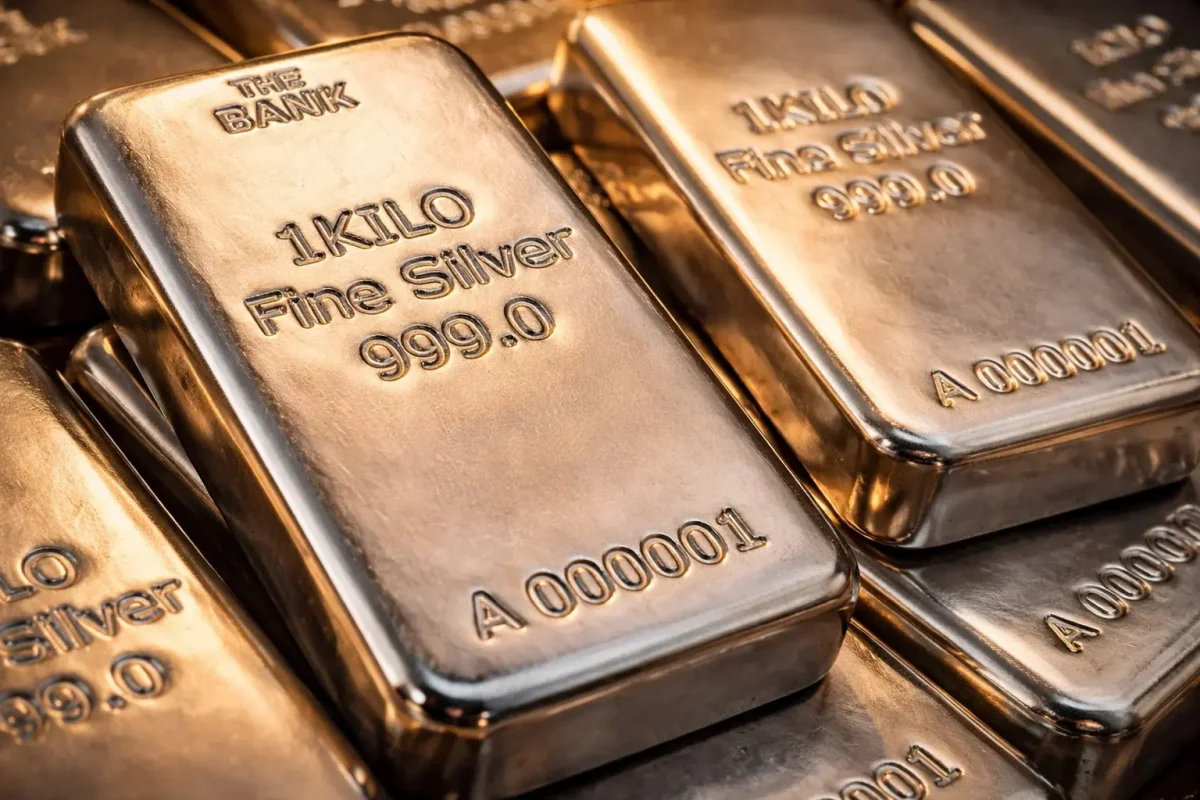
The precious metals complex faced significant selling pressure on Friday, with silver leading the declines. The white metal shed more than 3% of its value, trading down to approximately $81.00 per ounce by the afternoon session in New York. This downturn places silver on track for another weekly loss, extending a pullback from its remarkable performance last year, during which it surged over 146%.
The primary catalyst for the selloff was a resurgent U.S. dollar, which was poised to close the week higher. A stronger greenback makes dollar-denominated commodities like silver more expensive for holders of other currencies, dampening international demand. Concurrently, market participants reassessed the timeline for potential Federal Reserve interest rate cuts. While a recent U.S. inflation report came in cooler than anticipated, prompting traders to shift their bets toward a first rate cut in September instead of October, concerns persist that elevated and sticky inflation, coupled with high energy prices, will prevent the Fed from acting hastily.
Losses were broad across the precious metals sector. Gold, often viewed as a primary safe-haven asset, dipped 0.5% to $5,052.15 an ounce. The platinum group metals experienced steeper declines, with platinum sliding 4% to $2,047.20 and palladium falling 2.5% to $1,569.00. Analysts noted that tighter monetary policy expectations served as the key drag on gold, with the metal grinding toward recent lows as the dollar hovered near a four-month high.
The pressure on silver had been building throughout the week. On Thursday, the metal slipped 1% to $84.90. Market strategists pointed to a firmer U.S. Dollar Index, rising Treasury yields, and the continued absence of Fed rate cuts as persistent headwinds. These factors outweighed any safe-haven buying interest stemming from ongoing geopolitical tensions in the Middle East.
The decline in the underlying metal translated directly to weakness in the equity market for silver producers. On the Toronto Stock Exchange, the materials sector fell 3.1%, dragged lower by mining stocks. Companies such as Vizsla Silver and Fortuna Mining saw significant declines, tracking the more than 3.5% drop in spot silver prices.
Despite the current weakness, some analysts maintain a constructive longer-term view. BMI analysts reiterated their forecast for silver to average $93 per ounce in 2026. Their outlook hinges on robust investment demand, which they believe will compensate for potentially weaker industrial consumption from sectors like solar-panel manufacturing and jewelry, where high prices can sap buyer interest. Silver's dual nature as both a monetary safe-haven and a crucial industrial commodity means it remains highly sensitive to shifts in sentiment regarding interest rates, oil prices, and dollar strength.
The immediate outlook for silver remains uncertain and highly data-dependent. The path of the U.S. dollar and the evolving narrative around the Federal Reserve's policy trajectory will be the dominant drivers in the near term. While the prospect of rate cuts later in the year could eventually provide support, the prevailing environment of "higher for longer" interest rates and a firm dollar continues to present significant challenges for the precious metals complex.