Silver prices are holding above the $66-per-ounce threshold, but market participants are increasingly cautious, recognizing that a tight physical market does not guarantee a one-way rally. In late trading on Tuesday, September 8, front-month COMEX silver was indicated at $66.35, down 1.0% from the previous close. The iShares Silver Trust (NYSE Arca: SLV) ended the regular session at $59.37, a decline of 0.75%.
The current market landscape is defined by a clear tension: geopolitical risks and elevated oil prices are fueling demand for hard assets, while the inflationary implications of the oil shock are making upcoming U.S. economic data and the Federal Reserve's policy response increasingly critical for a metal that offers no yield. While a structural supply deficit supports the long-term bullish narrative, it does not negate the short-term influence of real yields and the U.S. dollar.
Why Silver and SLV Moved Together
COMEX silver futures slipped below the prior close of $67 in evening trading. SLV had already closed 45 cents lower at $59.37, having traded within a range of $59.21 to $60.15, according to historical price data from Stock Analysis. It is important to note that futures trade for longer hours than the ETF's New York session, so the two prices are not directly comparable as simultaneous quotes.
Silver possesses a dual economic identity. It can attract safe-haven buying alongside gold, yet a significant portion of its demand is industrial in nature. This makes it sensitive to both fear and expectations for manufacturing, solar installations, electronics, and vehicle production. The current oil shock pulls these two identities in opposing directions: it supports the inflation-hedge narrative, but it can also push bond yields higher, strengthen the dollar, and dampen growth-sensitive demand.
Upcoming Data Points More Important Than Deficit Headlines
The immediate test for silver comes from the economic calendar. The Bureau of Labor Statistics is scheduled to release August producer price data at 8:30 a.m. Eastern on Thursday, September 10, followed by the August consumer price index at 8:30 a.m. on Friday, September 11. The Federal Reserve's policy decision is set for 2 p.m. on Wednesday, September 16, with Chair Jerome Powell's press conference 30 minutes later.
A cooler inflation reading would ease pressure on real yields and could allow silver's scarcity and safe-haven appeal to reassert itself. Conversely, a hotter print would force traders to confront the less comfortable aspect of an inflation hedge: the Fed may respond by keeping monetary policy tight, which raises the opportunity cost of holding non-yielding assets like silver. The key market signal to watch after the data will be the combination of the two-year Treasury yield and the U.S. dollar. If both rise while silver fails to reclaim $67, the macro headwind is clearly dominant.
A 46.3 Million-Ounce Deficit Is Support, Not a Timing Signal
The physical backdrop remains constructive. The Silver Institute's April 2026 update forecasts a sixth consecutive annual market deficit, with the shortfall expected to widen to 46.3 million ounces this year, while mine supply remains broadly stable. The report also noted that industrial demand fell 3% to 657.4 million ounces in 2025 after four years of growth.
These figures are part of the same thesis. Repeated deficits can draw down available inventories, increase lease rates, and make the market more vulnerable to bursts of buying. However, high prices encourage thrift and substitution, particularly in price-sensitive solar applications, while slower fabrication can reduce demand. Above-ground stocks can bridge a flow deficit for a time. The deficit is a reason to take breakouts seriously, not proof that every dip must reverse immediately.
What SLV Investors Actually Own
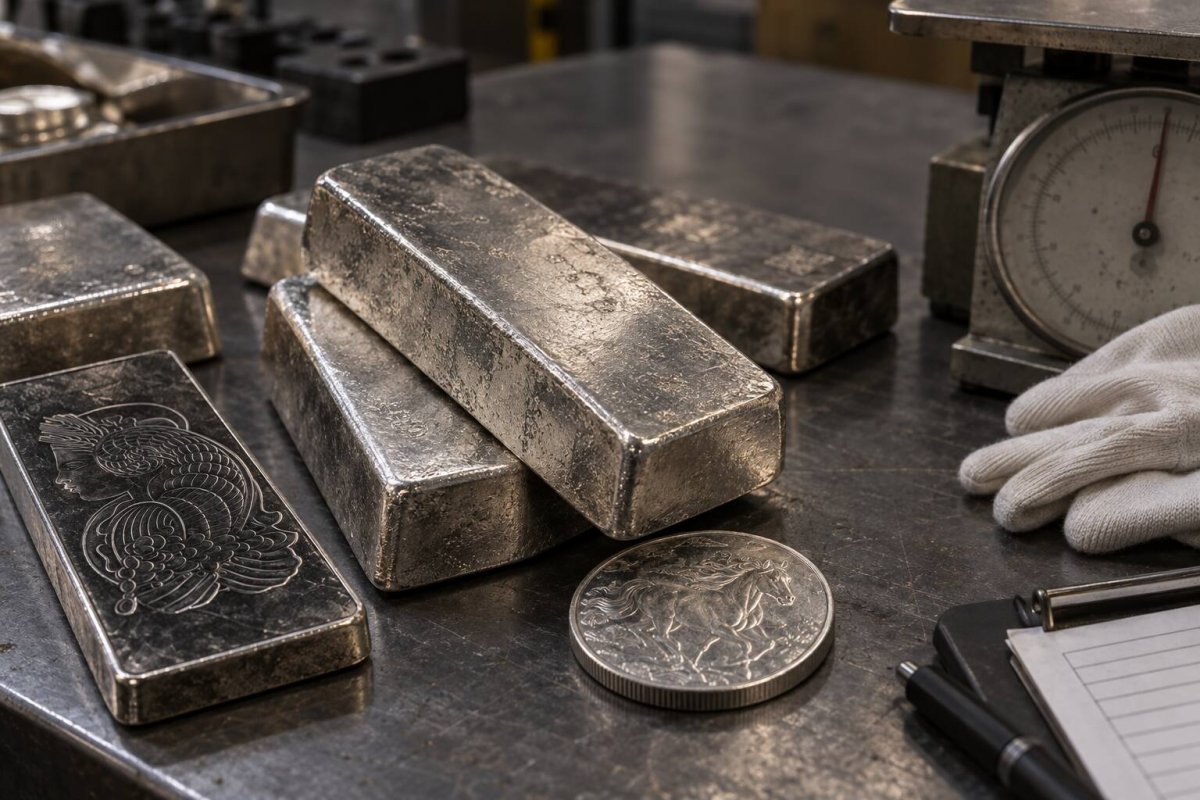
SLV offers liquid exposure to physical silver without requiring investors to store bars, but it is a trust share, not a futures contract or a mining company. iShares charges a 0.50% annual sponsor fee. The trust held approximately 492.5 million ounces and had roughly $32.3 billion in net assets in its early-September fund data. Its share price can briefly trade at a premium or discount to the underlying metal, and the fee gradually reduces the amount of silver represented by each share.
This distinction matters for choosing the right trade. SLV is the more direct vehicle for a view on bullion. Silver miners add operating costs, reserve quality, jurisdiction, financing, and management execution; they can outperform when margins expand, but they are not substitutes for the metal. Futures add leverage and contract-roll considerations. An investor whose thesis is simply “silver will rise” should decide which of those extra risks is actually intended.
Levels and Evidence That Would Change the Setup
For bulls, the clean confirmation would be silver recovering $67 while Treasury yields and the dollar stabilize or fall after the inflation reports. Sustained investment inflows alongside tight physical-market indicators would strengthen the case that the 2026 deficit is becoming relevant to price now, rather than merely later.
The bearish version is also testable. Hot inflation, rising real yields, and a stronger dollar could push safe-haven demand toward interest-bearing cash or Treasuries. Evidence of deeper industrial substitution would weaken the scarcity story. In that scenario, a nominally bullish supply deficit could coexist with a sizable correction because marginal financial demand, not annual mine output, sets the clearing price on any given day.
The useful conclusion is narrower than “buy” or “sell.” Silver’s long-term supply case remains intact, but the next directional move is likely to be decided first by Thursday’s producer prices, Friday’s CPI, and the September 16 Fed decision. At $66-plus, investors are paying for both scarcity and protection. The coming data will show how much protection the market still wants when rates are part of the bill.