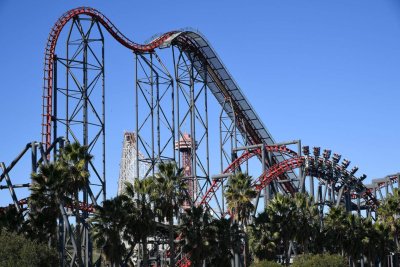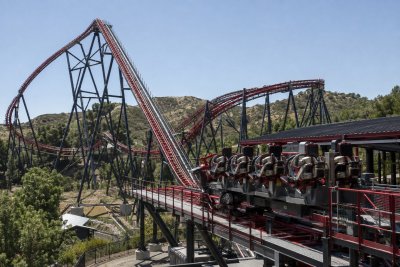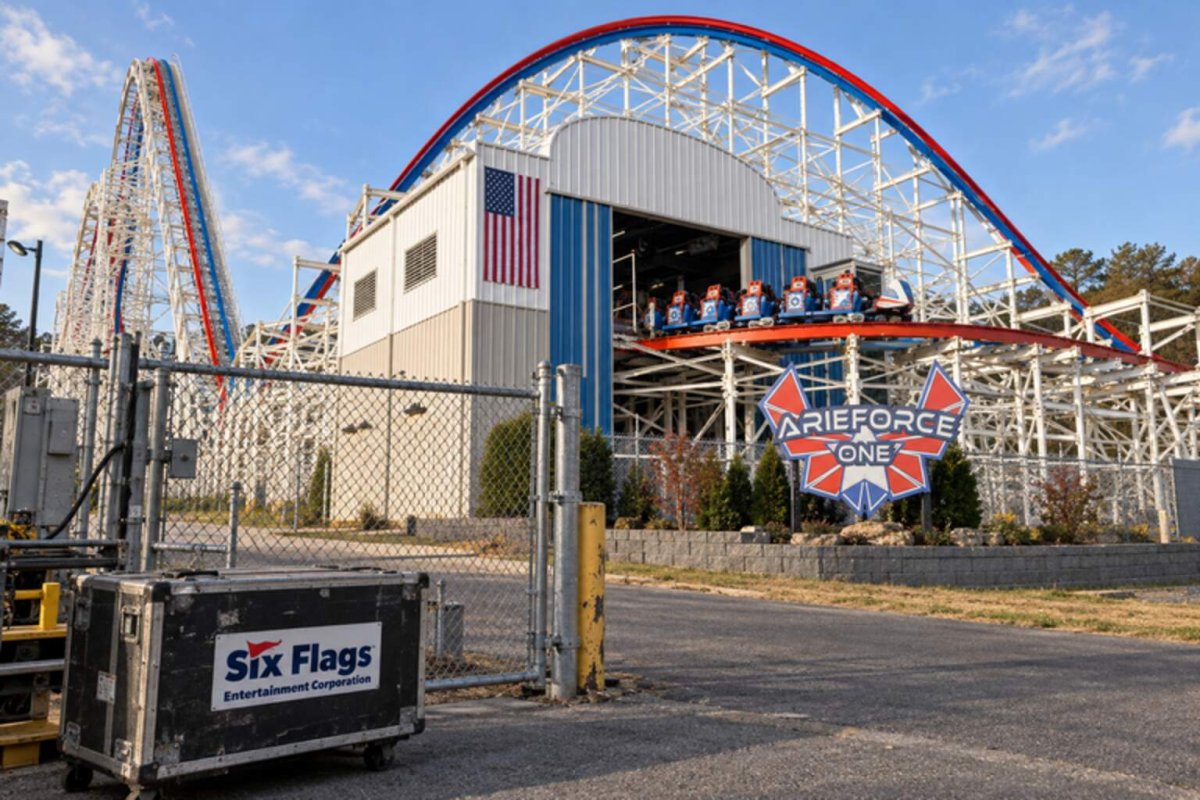
Six Flags Entertainment (NYSE: FUN) saw its shares close at approximately $15.75 on Tuesday, a modest 1.5% gain, following the announcement that the company has acquired the ArieForce One roller coaster. The market's restrained reaction mirrors the limited scope of the disclosure: Six Flags has secured a well-known attraction, but has not revealed the purchase price, the intended park location, or a definitive reopening timeline. The ride is slated to debut at one of its parks during the 2028 or 2029 season.
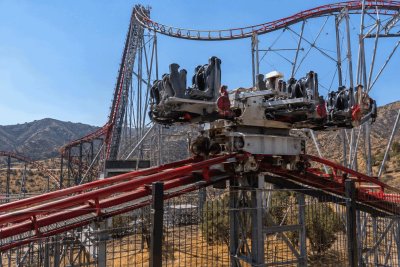
This acquisition is more a test of capital discipline than an immediate earnings catalyst. ArieForce One, a 154-foot steel coaster with a top speed of 64 mph across roughly 3,400 feet of track and four inversions, cannot contribute to attendance or guest spending for at least two operating seasons. Meanwhile, Six Flags is already burdened with $4.9 billion in net debt and plans to spend $400 million to $425 million on capital expenditures this year.
What Six Flags Bought—and What It Left Out
The company confirmed that the coaster will retain its name and be reintroduced during the 2028 or 2029 season. ArieForce One originally opened at Fun Spot America Atlanta in March 2023, where it operated until the park's closure on August 2, 2026. However, the purchase price remains undisclosed, and the announcement did not specify the destination park, construction schedule, reopening budget, or expected return on investment.
These omissions are significant because relocating a coaster is not a simple plug-and-play operation. The economics depend on dismantling and transport costs, site preparation, foundations, reassembly, testing, and the attendance base at the receiving park. A historical yardstick exists: Fun Spot's original 2021 announcement described ArieForce One as a $13 million project, the largest single ride investment in that company's history. While that figure does not reflect the coaster's current value or Six Flags' relocation expenses, it underscores the necessity of knowing the transaction price to judge whether acquiring used equipment is more economical than commissioning a new attraction.
A Famous Ride Must Still Earn Its Space in the Capital Plan
The bull case is straightforward: ArieForce One arrives with a following, an established identity, and specifications that can anchor a marketing campaign. Moving it to a higher-traffic park could convert the enthusiasm that proved insufficient at its old location into season-pass sales, repeat visits, and spending on food, games, and premium products. Acquiring an existing ride may also be cheaper or faster than starting a comparable project from scratch, though Six Flags has not provided the figures to verify either advantage.
The counterargument centers on time and concentration. A 2028 or 2029 opening offers no help to current cash flow, and the choice of park will determine whether the coaster creates genuinely incremental demand or merely shifts visits within the portfolio. A destination with strong attendance may monetize the ride best but could need it least; a weaker park offers more upside but also raises execution risk. By withholding the location, Six Flags prevents investors from testing that trade-off.
Six Flags' own operating data sets a useful hurdle. In the second quarter, revenue from its current park portfolio rose 2.4% and attendance increased 4%, while per-capita spending fell 1%. Same-park adjusted EBITDA climbed 7% to $249 million. In other words, the company is already producing operating leverage from more visits, but it is not getting more dollars from each guest. ArieForce One eventually needs to strengthen that attendance engine without requiring discounts that worsen admissions yield.
The Debt Math Is Larger Than the Coaster
The latest Six Flags earnings filing reported $5.0 billion of debt, $135 million of cash, and $4.9 billion of net debt as of June 28. It also showed $837 million of liquidity and $840 million of adjusted EBITDA for the trailing twelve months. Dividing net debt by adjusted EBITDA yields a ratio of approximately 5.8 times—a simple investor calculation, not the company's covenant measure.
Interest expense reached $102 million in the quarter, exceeding the $88.6 million of operating income reported under GAAP. Meanwhile, the company's annual filing projected $400 million to $425 million of 2026 capital spending. Against these numbers, even a ride with a reported original cost in the low tens of millions is not automatically material—but an undisclosed purchase and relocation program still has to compete with debt reduction and projects already promised across the park portfolio.
Tuesday's $15.75 last trade valued Six Flags at roughly $1.6 billion, using the market-data provider's share count. Net debt is therefore about three times the equity value. That is why shareholders should demand more than fan excitement: a modest capital-allocation miss can matter disproportionately when creditors have a much larger claim on the enterprise than stockholders do.
What Would Make the Acquisition Investable?
Three disclosures would turn the announcement into something investors can model: the all-in acquisition and relocation cost, the destination park and its recent attendance economics, and a firm opening season. The next quarterly filing may also show whether the ride was recorded as a meaningful asset purchase or is too small to break out separately.
For now, ArieForce One is a credible marketing asset and a potentially savvy piece of equipment sourcing. It is not yet a visible earnings driver. The stock's 1.5% rise says investors welcomed the news without treating it as a solution to Six Flags' leverage or near-term cash-flow challenge—and that is the right distinction until management supplies the missing math.