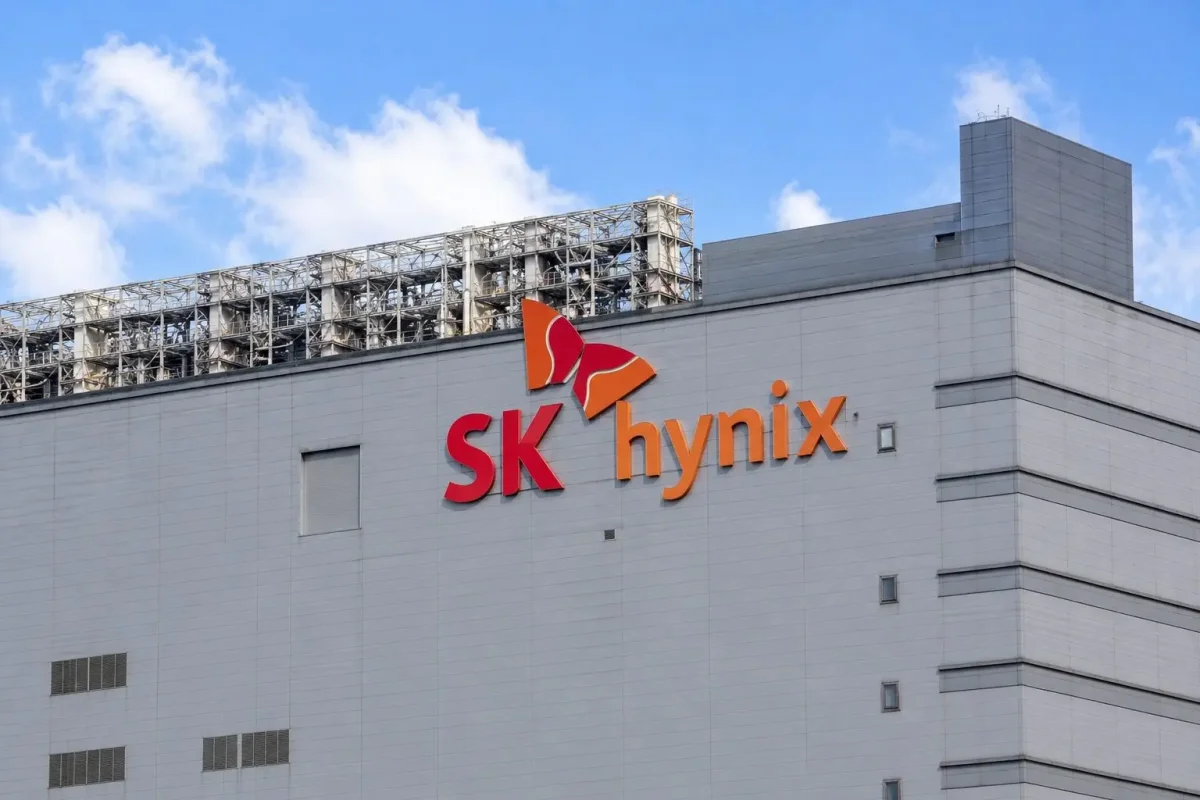
SK Hynix (000660.KS) saw its shares plunge 9.92% to close at 2,070,000 won on Friday, extending a five-session slide that has erased approximately 12% from the stock's value since it hit a record high on June 2. The sharp decline was part of a broader global selloff in technology stocks, with the KOSPI index dropping 5.54% to 8,160.59. A 'sidecar' circuit breaker halted program trading on the Seoul exchange during the morning session as tech shares came under heavy pressure.
The stock's rapid descent from its all-time peak of 2,407,000 won has left investors questioning whether this is a temporary pullback in a sustained AI-driven rally or the beginning of a more significant trend reversal. SK Hynix remains a bellwether for the AI memory trade in Asia, and its performance is closely watched as a proxy for regional tech sentiment.
Global Chip Sector Rout
Wall Street's semiconductor index, the PHLX Semiconductor Index, suffered its worst single-day decline since March 2020, closing down 10.3%. The selloff erased roughly $1.3 trillion in market value from U.S.-listed chipmakers. Micron Technology (MU) fell 13%, Nvidia (NVDA) gave up 6%, and AMD (AMD) slid nearly 11%. The downturn was triggered by Broadcom's (AVGO) earnings report, which dampened hopes for further gains in AI-related stocks.
HBM Demand and Supply Dynamics
SK Hynix's fortunes are closely tied to high-bandwidth memory (HBM) demand, particularly for Nvidia's AI accelerators. The company captured 58% of the global HBM market in the first quarter, according to Counterpoint data, with Samsung Electronics and Micron each holding 21%. Nvidia CEO Jensen Huang, speaking in Seoul, confirmed that Samsung, SK Hynix, and Micron have all qualified to supply HBM4 chips for Nvidia's upcoming Vera Rubin AI platform. 'Memory is constrained,' Huang noted, highlighting the critical role of HBM in next-generation AI systems.
SK Hynix's parent, SK Group, has ambitious expansion plans. Chairman Chey Tae-won told Computex that the company aims to 'double the whole capacity' over the next five years, but cautioned against excessive HBM price increases that could harm the AI sector.
ADR Listing and Analyst Views
SK Hynix provided an update on its planned U.S. ADR listing, stating that it received 'tremendously positive' feedback and intends to issue ADRs within 2026. However, key terms such as size and timing remain undecided, and the plan is still under SEC review. The listing could broaden the investor base, but any delays or a smaller-than-expected offering would leave the stock dependent on Nvidia memory orders.
Despite the recent selloff, some analysts remain bullish. Kim Young-gun at Mirae Asset Securities in Seoul reiterated that memory-chip demand will outpace supply through 2028 and raised target prices for both SK Hynix and Samsung Electronics. Ohsung Kwon, chief equity strategist at Wells Fargo, described the chip sector as 'way overbought' but added, 'I don't think it's the end' for the bull run in chips.
What to Watch Next
Investors will closely monitor Seoul's Monday open for signs of stabilization. Key factors include further comments from Nvidia on supply, the trajectory of U.S. chip stocks, and any developments regarding SK Hynix's ADR plan. A quiet U.S. session could support the view that Friday's drop was a healthy correction, but continued weakness may undermine the AI-memory trade's one-way appeal.