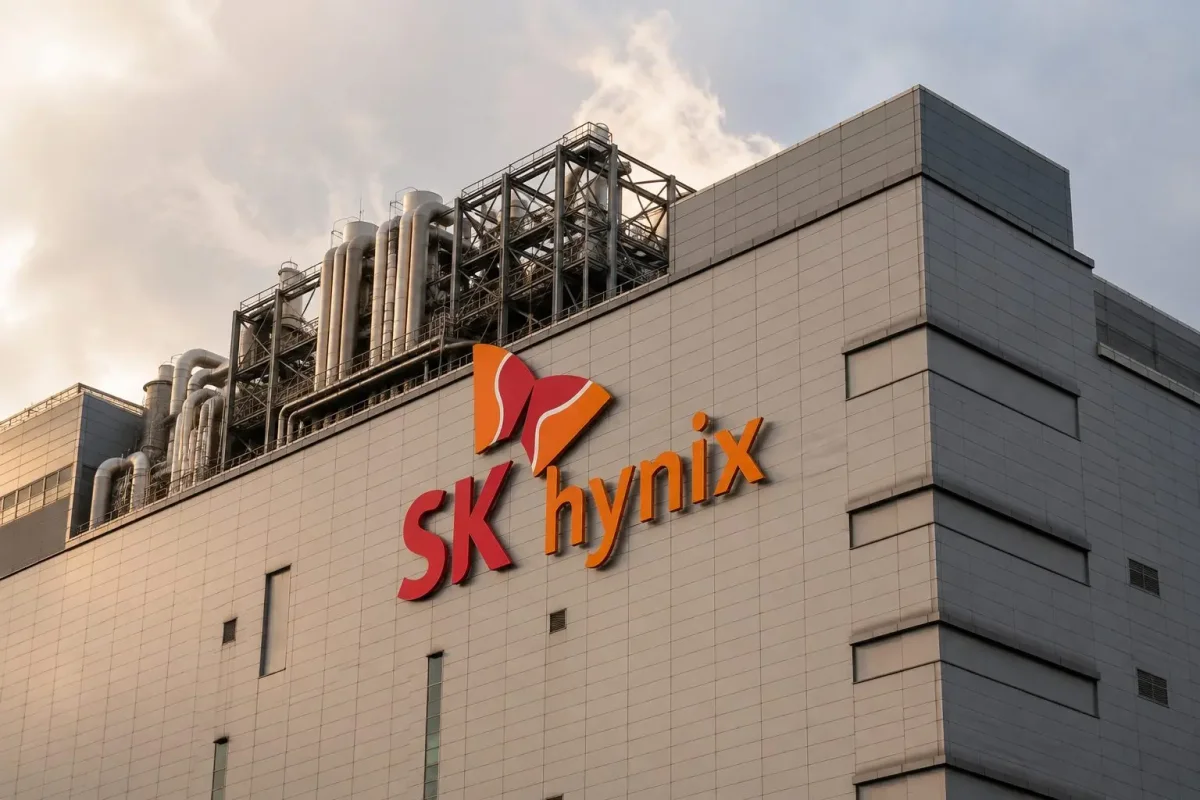
SK hynix Inc. (KRX:000660; NASDAQ:SKHY) has given the green light to a massive 54.3 trillion won ($38.3 billion) investment to construct two new semiconductor fabrication plants in South Korea. While the scale of the commitment is substantial, it will not translate into a near-term supply increase, redirecting investor attention toward the company's cash return strategy.
According to the detailed proposal, the first cleanrooms at the new facilities will not be ready until December 2028 (Cheongju M17) and June 2029 (Yongin Y2). This timeline means the sanctioned projects will not contribute any new production capacity within the next two years, a crucial factor for memory market dynamics. Consequently, the key issue for investors shifts from supply expansion to how SK hynix plans to allocate its substantial cash reserves.
The announcement came after the regular market close at 15:30 KST on Friday. In U.S. trading, SK hynix's American Depositary Receipts (ADRs) fell 3.9% to $137.91. The first full trading session response will be seen on Monday, August 10, when the Korea Exchange (KRX) resumes trading at 09:00 KST.
Last week's closing figures painted a stark picture. SK hynix's Seoul-listed shares plummeted 17.2% over the week, closing at 1,422,000 won on Friday, August 7. The U.S.-listed ADRs fell 4.0% to $137.91 during the same period. In comparison, Samsung Electronics (KRX:005930) dropped 12.0%, and the broader KOSPI index declined 5.1%. Notably, Micron Technology (NASDAQ:MU) bucked the trend, rising 6.6%. This divergence underscores that concerns over SK hynix's capital allocation are amplifying the broader selloff in Korean equities.
The investment is split between two major projects. The Yongin Y2 facility will receive 35.2 trillion won and is slated to begin construction in July 2027, with its first cleanroom coming online in June 2029. This plant will focus on HBM (High Bandwidth Memory) and advanced DRAM production. Meanwhile, the Cheongju M17 plant, with an approved budget of 19.1 trillion won, is scheduled to start construction in February 2027 and will produce NAND flash memory, with its first cleanroom expected in December 2028.
Despite the massive capital outlay, SK hynix's financial position appears robust, suggesting that funding is not the primary constraint. The company's preliminary second-quarter results showed an operating profit of 60.54 trillion won, with cash and cash equivalents totaling 88 trillion won and a net cash position of 69.4 trillion won. The company also began mass shipments of HBM4 during the quarter, a key product for AI applications.
The scale of the investment relative to the company's cash position is significant. The 54.3 trillion won commitment represents approximately 61.7% of its cash and equivalents and 78.2% of its net cash position. However, the expenditure will be spread over several years through 2031, and the quarterly data are still subject to revision.
This heavy investment plan intensifies the debate over shareholder returns. Both SK hynix and Samsung have committed to returning 50% of free cash flow to shareholders, while U.S. competitor Micron has pledged to return 100%. Portfolio manager Richard Clode criticized the 50% policy as an “incredibly inefficient balance sheet” and urged SK hynix to increase payouts to at least 80%. In response, SK hynix stated that it can raise shareholder returns while maintaining investment and financial stability.
In Friday's filing, the company announced plans for additional return initiatives in the third quarter and set a dividend of 375 won per share. This dividend now serves as the immediate catalyst for investors, as the new fabs remain several years away from contributing to revenue.
Wall Street remains optimistic despite the recent selloff. Among 14 analysts covering the ADR, the consensus rating is Strong Buy, with an average price target of $244.92, implying a potential upside of 77.6% from Friday's closing price. Notable targets include Rosenblatt Securities at $320, Cantor Fitzgerald at $300, and Needham and Wolfe Research both at $200.
William Blair analyst Sebastien Naji highlighted “an unprecedented level of revenue and free cash flow growth,” driven by sluggish supply expansion. SK hynix executive Kim Chun-sung noted that competitiveness is “no longer determined by the performance of individual memory products alone,” suggesting a broader strategic vision.
However, execution remains critical. The preliminary second-quarter operating profit fell short of the consensus estimate of 64 trillion won, and revenue also missed projections. Analysts attributed this partly to slower HBM4 shipments and deferred revenue recognition. The market will closely monitor Monday's KRX response, as well as Applied Materials' (NASDAQ:AMAT) fiscal third-quarter earnings on Thursday for insights into semiconductor equipment demand. Investors are also awaiting further details on SK hynix's third-quarter payout plan.
Risks to the outlook include potential delays in HBM4 scaling, a slowdown in AI-related spending, faster-than-expected supply growth from competitors, or underwhelming payout figures. Additionally, Thursday's flash crash on the Nextrade platform highlighted how minor trades can amplify local price swings in the current volatile environment.