Oilfield services giant SLB (NYSE: SLB) saw its shares close 0.7% higher at $52.12 on Tuesday, with an additional 0.27% gain in after-hours trading. The uptick came as the company's new offshore seismic survey in Brazil's Amapá region attracted fresh customer attention, underscoring the strategic value of its multiclient data business.
The move stood out against a weaker session for peers. Halliburton (NYSE: HAL) fell 1.6% to $32.85, while Baker Hughes (NASDAQ: BKR) slipped 1.0% to $57.26. SLB's relative strength suggests company-specific catalysts, rather than broad sector sentiment, drove investor interest.
Amapá survey: A strategic play
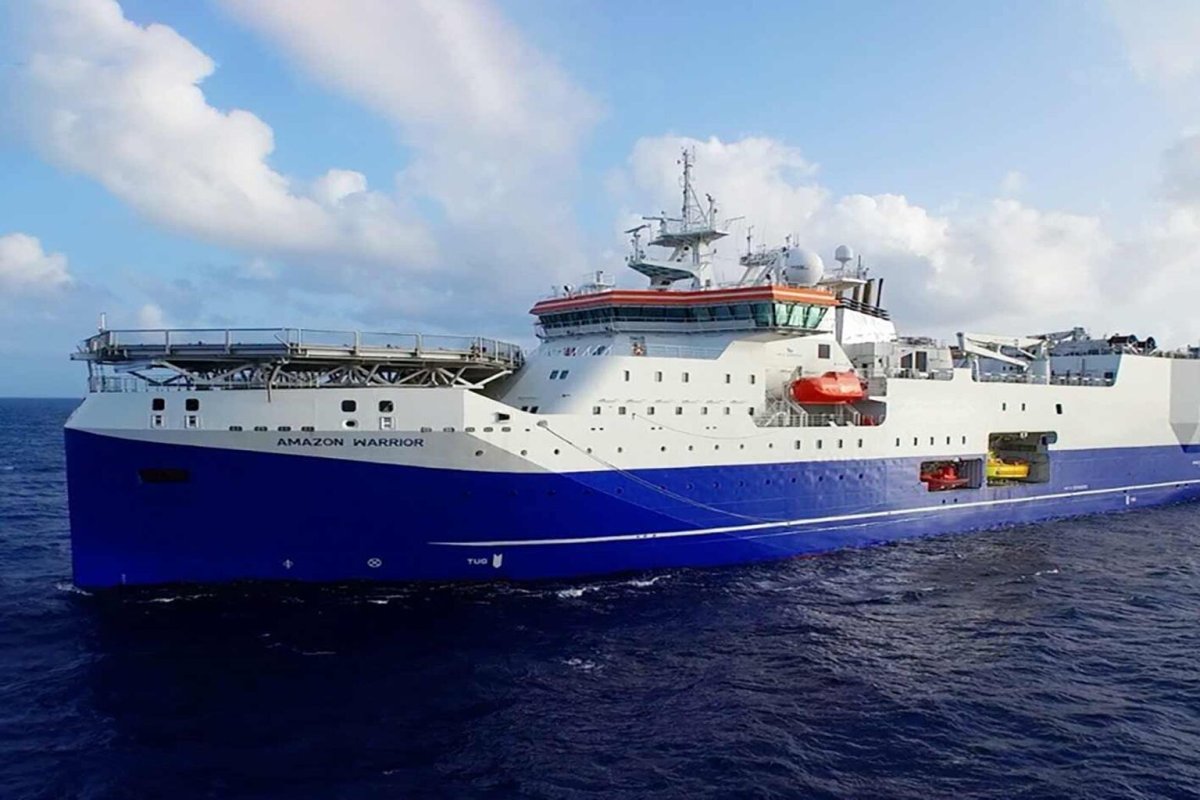
SLB, in partnership with private firm Shearwater GeoServices, is launching the Amapá 3D seismic survey offshore northern Brazil. The project is situated approximately 130 kilometers from Petrobras's (NYSE: PBR) Morpho discovery, a high-profile find that has heightened regional exploration interest. SLB executive Andrea Lovatini said the survey would “provide a clearer picture of the subsurface,” aiding potential drillers.
Chevron (NYSE: CVX) exploration vice president Kevin McLachlan confirmed Monday that a Chevron-led consortium, holding nine regional blocks, is about to begin work. Petrobras and Exxon Mobil (NYSE: XOM) lead consortia that secured ten additional blocks, indicating robust interest in the area.
Digital business: The growth engine
The investor focus is whether multiclient seismic data can deepen SLB's digital revenue mix. In the second quarter, digital revenue reached $697 million, up 9% sequentially and 18% year over year. Its pretax margin of 27.8% topped all other operating divisions, highlighting the profitability of this segment.
In contrast, other divisions showed mixed results: Reservoir Performance revenue fell 8% YoY, Well Construction dropped 7%, while Production Systems surged 29% YoY. Digital's strong performance underscores its importance to SLB's long-term strategy.
Market snapshot and valuation
SLB's trading volume on Tuesday was 15.4 million shares, near its one-month average of 14.9 million. The company's market capitalization stands at $77.35 billion, with a forward P/E of 18.45x. The relative outperformance against peers is notable, but the valuation remains elevated compared to Halliburton's 12.88x and Baker Hughes's 21.19x.
The business case for the Amapá survey relies on repeat licensing. If multiple explorers license the same dataset, SLB can achieve significant operating leverage. However, the project remains exposed to regional demand fluctuations and potential delays in Brazilian licensing or environmental approvals.
Analyst outlook and risks
Wall Street remains constructive on SLB. The consensus rating is Buy, with an average price target of $62.34, implying 19.6% upside from Tuesday's close. Targets range from $43 to $75, reflecting a wide divergence in views. Recent analyst actions include UBS's Josh Silverstein raising his target to $75 on Sept. 14, while BMO Capital's Phillip Jungwirth cut his to $62 on Sept. 1.
Key risks include the $4.1 billion cash-and-debt consideration for the Kelvion acquisition, which management values at 11x estimated 2026 EBITDA before synergies. The deal is expected to generate $120 million in annual synergies within three years. Additionally, Middle East revenue disruptions continue to weigh on the company.
Looking ahead
Investors will watch for further details at TD Cowen's conference on Sept. 24 and Pickering's event on Sept. 29. The key question is whether SLB discloses booked Amapá clients before its next quarterly report. With Latin America revenue up 12% sequentially to $1.71 billion, the region's potential is clear, but the company has not yet revealed the survey's cost or payment schedule.
As SLB navigates these opportunities and challenges, its digital and multiclient data businesses could provide a competitive edge. The stock's recent resilience suggests investors are cautiously optimistic, but the wide analyst target range indicates uncertainty remains.