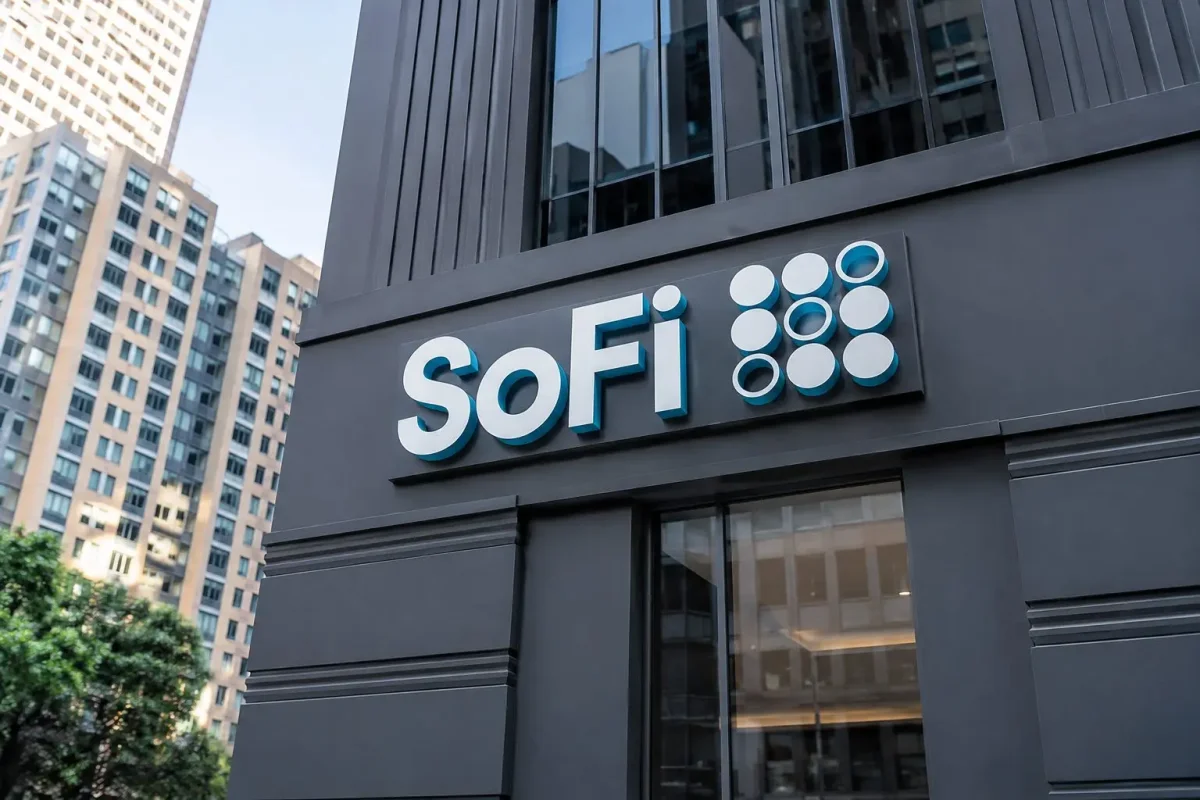
SoFi Technologies (SOFI) ended the trading week at $15.62, down just 3 cents on Friday and essentially flat from the prior week's close of $15.61. The digital lender's stock has been hovering near that level for weeks, reflecting ongoing investor caution despite a series of positive quarterly results.
In a move that had largely flown under the radar, SoFi has acquired Peach Finance, a California-based startup that provides loan servicing software for banks, credit unions, and fintechs specializing in non-mortgage lending. The deal was first reported by FinTech Futures, though financial terms were not disclosed. The acquisition is not a minor add-on; Peach will be integrated into SoFi Technology Solutions, alongside its existing Galileo and Technisys platforms.
Peach CEO Eddie Oistacher noted that the combination brings together processing, core banking, payments, and risk management "under one roof." This aligns with SoFi's broader strategy to convince Wall Street that it is more than just a consumer lender. The company's Technology Platform segment, however, has been a laggard, posting a 27% year-over-year drop in revenue in the first quarter. In contrast, lending revenue surged 55% and financial services revenue rose 41%.
Overall, SoFi reported first-quarter adjusted net revenue of $1.09 billion, up 41%, with adjusted EBITDA of $339.9 million, a 62% increase. Net income reached $166.7 million. CEO Anthony Noto described the quarter as one of "durable growth and strong returns." Yet the stock has not responded as a typical growth story might, partly because the company maintained its 2026 revenue guidance despite the strong quarter, as noted by Reuters. William Blair analyst Andrew Jeffrey flagged that the lack of an upward revision after beating earnings and EBITDA estimates disappointed some investors.
Analyst sentiment remains mixed. Mizuho's Dan Dolev lowered his price target to $29 from $38 but maintained an Outperform rating, citing a "solid" quarter and robust member growth. Truist's Matthew Coad trimmed his target to $17 from $20, keeping a Hold rating, and pointed to lower second-quarter revenue forecasts and weakening tech platform expectations.
Peer performance offered little direction. Affirm (AFRM) fell about 2.9% on Friday, while Upstart (UPST) slipped 0.9%. Both stocks are sensitive to the same themes—loan demand, credit quality, funding costs, and growth prospects. SoFi's options market reflected caution, with call volume outpacing puts but the put-call skew steepening, indicating traders sought more downside protection.
Looking ahead, markets will resume trading Tuesday after the Memorial Day holiday. Investors will watch for any additional filings or commentary related to the Peach acquisition. Broader economic signals are also on the radar, with the Bureau of Economic Analysis set to release the personal consumption expenditures (PCE) price index on May 28, a key inflation measure for the Federal Reserve.
The upside from the Peach deal is not guaranteed. If it fails to meaningfully boost Technology Platform growth, or if fintech lenders continue to face pressure from interest rates and credit concerns, the acquisition could be viewed as a stopgap rather than a catalyst. Further analyst downgrades would reinforce that narrative. For now, SoFi shares remain stuck near $15, with traders looking past the headline and focusing on whether the company can simultaneously drive software and lending growth without squeezing margins.