NEW YORK, July 13, 2026 – A broad selloff in space-related equities erased approximately $88.6 billion in market capitalization on Monday, as investors grappled with a combination of geopolitical tensions, macroeconomic headwinds, and a significant technological milestone from China. The decline, which hit both launch providers and satellite operators, underscored growing unease about valuation sustainability in the sector.
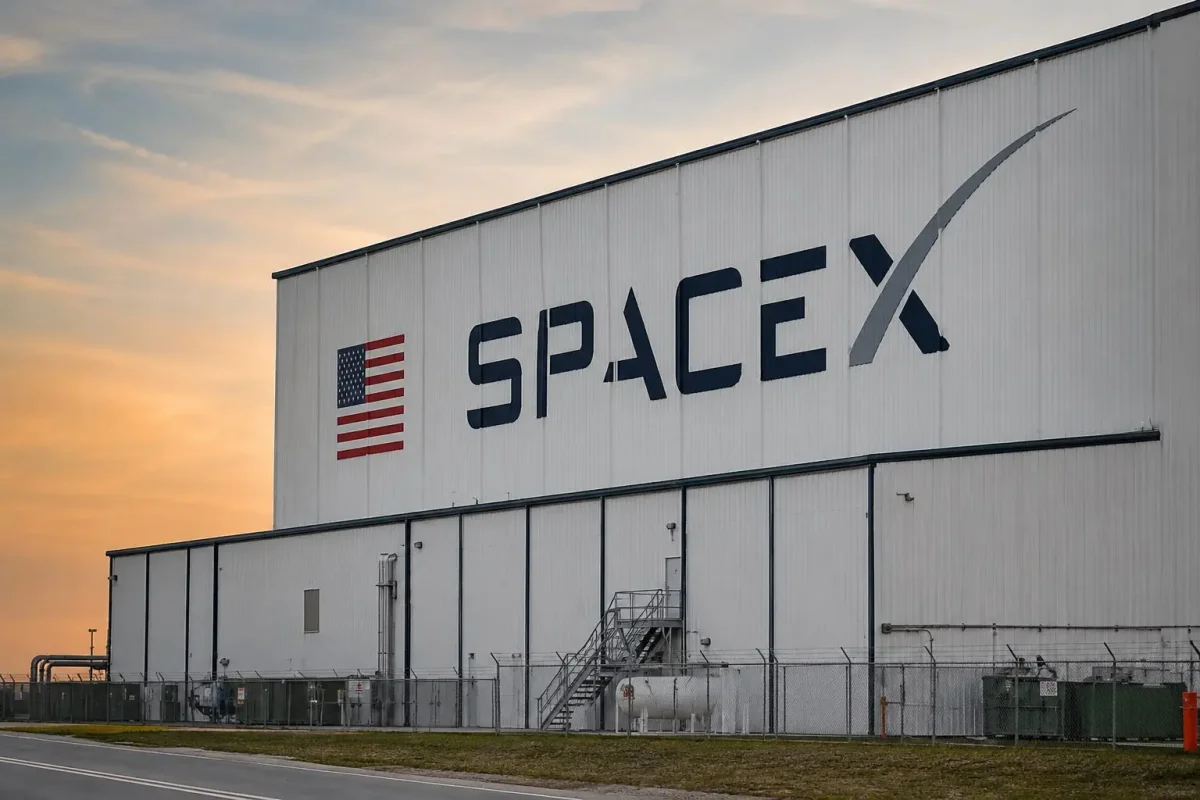
SpaceX (NASDAQ:SPCX) fell 4.4% to close at $139.19, contributing roughly $84.2 billion of the total market value loss. The company's market capitalization ended the session at $1.833 trillion, just below Broadcom (NASDAQ:AVGO), ranking seventh among U.S. companies. Shares now trade only 3.1% above their $135 initial public offering price.
Rocket Lab USA (NASDAQ:RKLB) dropped 5.3% to $76.75, while AST SpaceMobile (NASDAQ:ASTS) slid 7.7% to $67.64, the steepest decline in the group. Intuitive Machines (NASDAQ:LUNR) closed 6.3% lower at $15.13. The broader market also retreated, with the Invesco QQQ Trust (NASDAQ:QQQ) falling 1.9% and the SPDR S&P 500 ETF (NYSEARCA:SPY) declining 0.8%.
An equal-weighted basket of the four stocks declined 5.9%, underperforming QQQ by 4.0 percentage points and SPY by 5.1 percentage points. The basket's performance suggests that investors reduced exposure to space stocks more aggressively than to large-cap technology names.
The combined market value wiped out from the three smaller companies—Rocket Lab, AST SpaceMobile, and Intuitive Machines—amounted to $4.39 billion, equivalent to 10.9 times their aggregate latest quarterly revenue of $401.7 million. Rocket Lab's $2.58 billion loss represented 12.9 times its Q1 revenue of $200.3 million, while AST SpaceMobile's $1.65 billion hit was a staggering 112.3 times its $14.7 million quarterly sales. Intuitive Machines lost $149 million, or 0.8 times its $186.7 million revenue.
China's Long March 10B rocket successfully placed a satellite into orbit on Friday and recovered its first-stage booster using an offshore net, marking the country's first orbital-class booster recovery. Chen Muye of the China Academy of Launch Vehicle Technology told state media that net-based recovery simplifies rocket structure, reduces mass, and increases payload capacity. China aims to reuse the booster by year-end.
Morgan Stanley (NYSE:MS) noted that China's reusable rocket push represents the primary long-term challenge to SpaceX's dominance. However, the bank maintained its overweight rating and $300 price target on SpaceX, citing that China has yet to demonstrate repeat launches or reflight capability. "The stock still has significant upside potential relative to peers," the bank stated.
Monday's selloff cannot be attributed solely to the Chinese test. Crude oil surged 9.4% amid escalating U.S.-Iran tensions, fueling inflation concerns. The Nasdaq Composite lost 1.56%. "When you move something this far, this fast, you invite the question: how sustainable is it?" said Thomas Martin, senior portfolio manager at GLOBALT. He noted that if China fails to relaunch the booster, some risk could dissipate, but a string of cheap reflights could pressure launch prices and valuations of SpaceX and Rocket Lab's upcoming Neutron rocket.
Investors now look ahead to SpaceX's Starship Flight 13, scheduled no earlier than Thursday, July 16. The mission will test modifications from Flight 12 and carry 20 Starlink V3 satellites. A successful launch could refocus attention on SpaceX's reusability advantages, while a failure would amplify concerns about rising competition and execution risk.