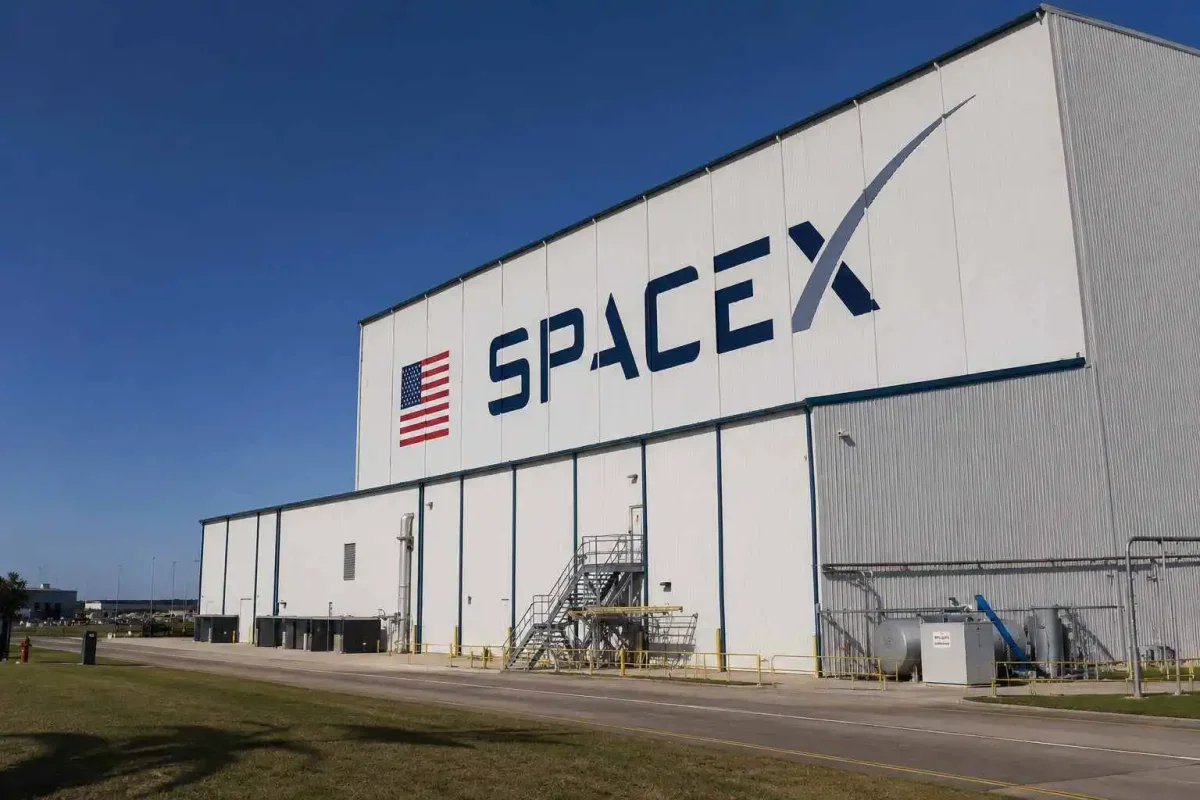
SpaceX (NASDAQ:SPCX) shares edged lower in pre-market trading on Wednesday, declining 1.3% to $114.90, as renewed environmental concerns surrounding the company's orbital artificial intelligence program weighed on investor sentiment. The dip follows a 2.6% gain in the previous session, highlighting the stock's recent volatility.
The environmental focus stems from a report by NBC News on Tuesday, which highlighted scientists' worries about pollution from spacecraft re-entry. This comes as SpaceX's market capitalization remains substantial at $1.53 trillion, with an initial valuation estimate of 81.9 times the company's projected 2025 sales of $18.67 billion. This high multiple underscores the market's emphasis on future growth rather than current earnings.
SpaceX's stock ended Tuesday at $116.41, representing a 13.8% decline from its $135 IPO price and a 22.4% drop from its initial trade of $150. Over the five most recent sessions ending Tuesday, the stock fell 5.8%, reflecting ongoing market uncertainty.
Environmental and Regulatory Hurdles
A coalition led by Earthjustice has petitioned the Federal Communications Commission to halt licensing for SpaceX's orbital AI project, calling for a comprehensive environmental review before any further approvals. Ruskin Hartley, executive director of DarkSky, warned that "these projects could permanently alter the night sky as we know it." The scientific community has raised concerns, with a NOAA-led analysis detecting spacecraft metals in approximately 10% of stratospheric sulfuric-acid aerosol samples, a figure that could rise to nearly 50% with continued satellite expansion.
The FCC received SpaceX's application in February, which proposes deploying up to one million satellites at altitudes between 500 and 2,000 kilometers. However, acceptance for filing does not guarantee final approval. This scale sets SpaceX apart from competitors: Starcloud has applied for up to 88,000 data center satellites, while Blue Origin's Project Sunrise involves up to 51,600. SpaceX's proposed maximum is 11.4 times higher than Starcloud's and 19.4 times greater than Blue Origin's, though these are application limits, not deployment targets.
Financial Dynamics and Segment Performance
Filings from SpaceX highlight the significance of timing for its two key segments. Connectivity is already generating operating profit, while AI continues to require substantial capital investment. In Q1 2026, connectivity revenue reached $3.26 billion with an operating profit of $1.19 billion (a 36.5% margin), while AI revenue was $0.82 billion with an operating loss of $2.47 billion (a -301.8% margin). Capital spending in 2025 on AI was approximately triple that of connectivity, at $12.73 billion versus $4.18 billion, meaning connectivity only partially offsets the cost of AI investments.
Analysts are expressing increased caution regarding the timeline for orbital AI. "Any kind of displacement of terrestrial data centers is 10 years plus out," Altman Solon partner Anthony Milovantsev told Reuters. SpaceX states that orbital AI deployment may start as soon as 2028, creating a significant gap between initial hardware rollout and substantial commercial impact. Phenomenal World offers a strategic counterpoint, arguing that orbital slots and radio spectrum are limited resources, and early control may provide advantages that are difficult for competitors to overturn.
Investors must therefore consider two timelines: connectivity revenues are apparent today, while returns from orbital AI depend on regulatory approval, Starship's success, and deployment costs. The next financial update is scheduled for Tuesday, August 4, when SpaceX will announce its second-quarter earnings after markets close, followed by a management webcast at 4:30 p.m. EDT. Key areas of focus include connectivity profit, AI-related expenditures, and any revisions to the 2028 schedule.
Risks include the possibility that a more extensive environmental review could delay licensing and postpone orbital investments. Greater Starship reuse or reduced launch expenses may help mitigate some of that delay. Notably, the one-million satellite figure remains a requested cap, not a deployment target set by the company.