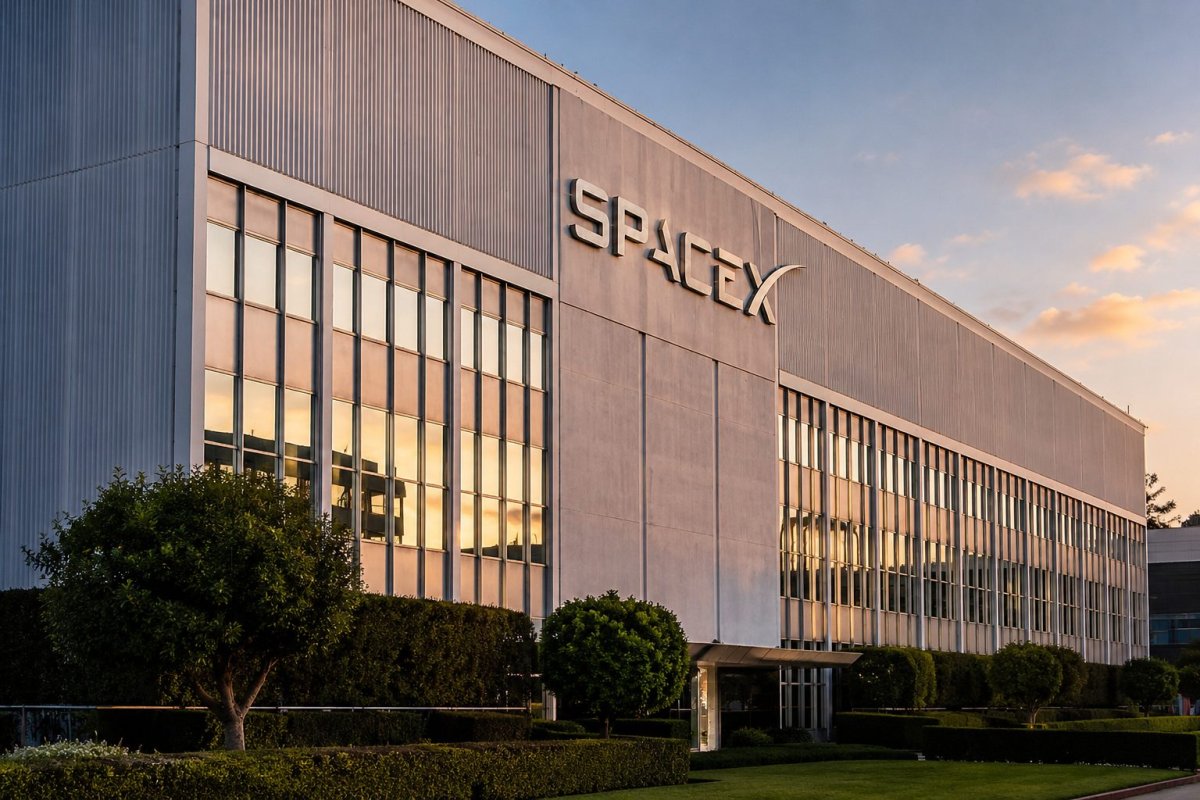
Space Exploration Technologies Corp (NASDAQ:SPCX) has seen its stock price tumble sharply following its initial public offering and subsequent inclusion in the Russell U.S. indexes. The company, which debuted on June 12, 2026, has already lost nearly a third of its value from its post-IPO high, closing at $153.23 on Friday, down 32.1% from its peak of $225.64 on June 16. This decline has significant implications for index funds, particularly those focused on growth stocks.
Russell Inclusion Details
As part of the FTSE Russell reconstitution, SpaceX was added to the Russell 1000, Russell Top 200, and Russell Small Cap Completeness indexes. The allocation split between growth and value styles is heavily skewed: 90.4% of the stock's notional value was assigned to growth, with only 9.6% tagged as value. Based on a projected share count of 527.777 million shares and Friday's closing price, the total Russell notional exposure to SpaceX is approximately $80.9 billion. Of that, $73.1 billion is classified as growth, while $7.8 billion is value.
This imbalance is crucial because passive Russell growth index funds must now purchase a disproportionate amount of SpaceX shares to maintain alignment with their benchmarks. Quant analysts at Stephens estimate that these funds will need to buy over $4 billion in SpaceX stock. That order represents about 5% of the total notional and roughly 21% of Friday's dollar turnover, which saw approximately $19 billion in SpaceX shares traded, with nearly half of that volume occurring in the final minutes of trading.
Market Context and Valuation
At current levels, SpaceX trades at an estimated 107 times 2025 sales, a stark contrast to NVIDIA Corp (NASDAQ:NVDA), which trades at about 21 times sales. The high valuation reflects the company's dominant position in the space industry, but the small public float—only about $100 billion in shares are listed for trading, compared to a near $2 trillion market value—makes the stock volatile and sensitive to index rebalancing. The majority of shares remain held by Elon Musk, insiders, and employees.
The reconstitution event has been described by equity analysts as potentially triggering a "really massive trade" due to the dramatic turnover. FTSE Russell, which benchmarks about $12.2 trillion in investor assets, has returned to a semi-annual reconstitution schedule, and the June 2025 event saw $217.2 billion traded at the close.
Future Index Triggers
The next forced-buy catalyst for SpaceX could come as early as July 6, 2026, when the stock becomes eligible for inclusion in the Nasdaq-100 index. Under Nasdaq rules, an IPO in the top 40 by market cap can join after 15 trading sessions. If added, ETFs like the Invesco QQQ Trust (NASDAQ:QQQ) would be required to purchase shares, potentially providing fresh demand.
However, S&P 500 trackers will remain on the sidelines for now. S&P Dow Jones Indices, owned by S&P Global (NYSE:SPGI), has confirmed it will not adjust its eligibility rules, which require at least 12 months of trading, positive GAAP net income in the last quarter and the trailing four quarters, and a minimum investable weight. SpaceX does not meet these criteria, so S&P 500 inclusion is not imminent.
For now, the market watches as SpaceX navigates its post-IPO volatility and the mechanics of index-driven demand. The company's high growth profile ensures it remains a focal point for growth investors, but the recent price decline underscores the risks of elevated valuations and concentrated index exposure.